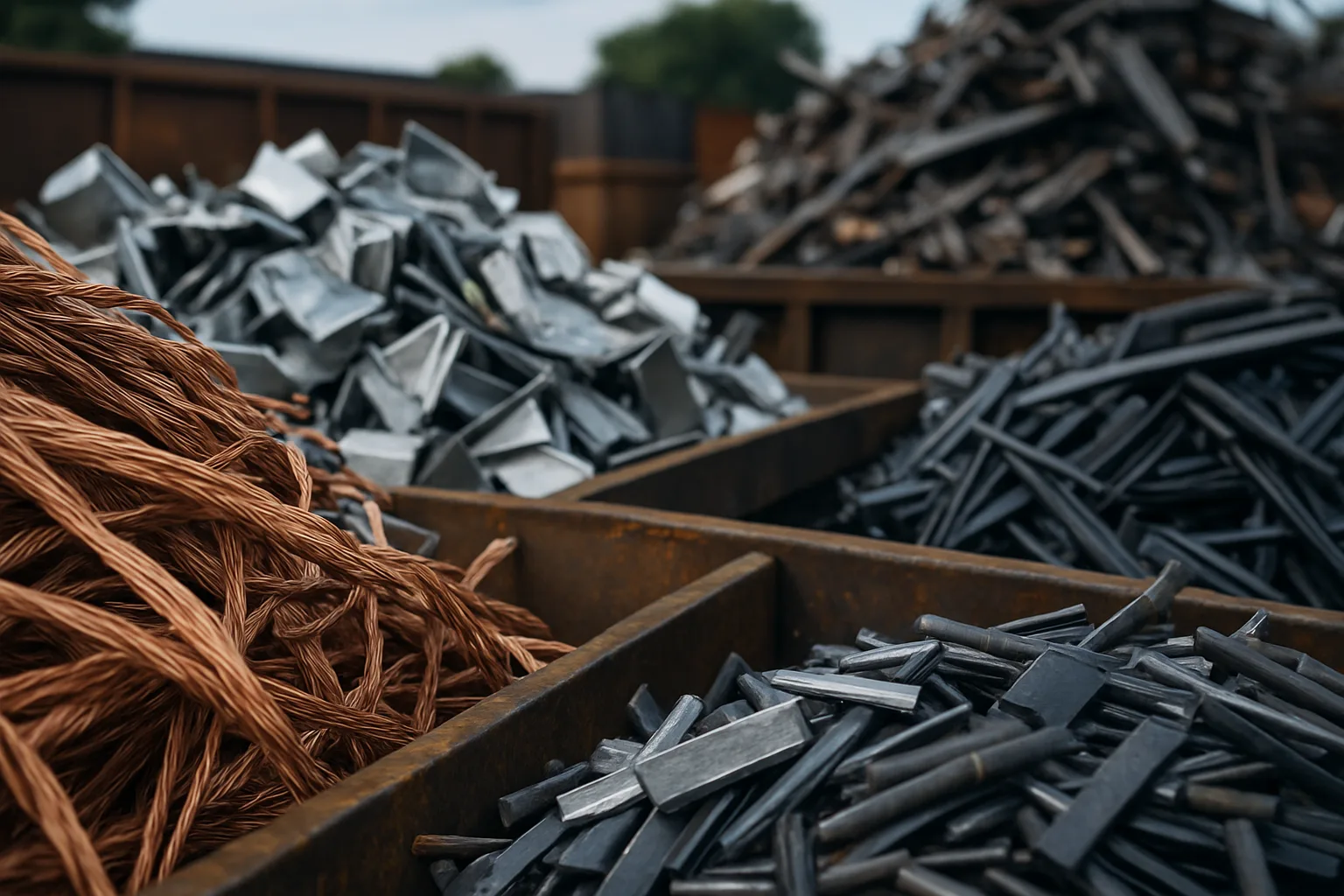
Steel vs. Iron Scrap: Why the Price Gap Matters More Than You Think
Most sellers show up at the yard with a load and just call it "metal." That's money left on the table. Steel and iron are not the same commodity, they don't price the same, and lumping them together almost always means you get paid for the lower-value material in the pile. If you're selling scrap in Saskatoon or anywhere across Saskatchewan, understanding this distinction is one of the fastest ways to get a better return on your loads.
This guide breaks down the real differences between steel and iron scrap, why their prices diverge, and how smarter documentation and competitive bidding can close the gap between what you're getting and what you should be getting. And yes — copper scrap prices Saskatoon sellers track obsessively is a useful benchmark, but iron and steel pricing has its own logic worth understanding separately.
Steel vs. Iron: They're Not the Same Material
Here's the short version. Iron is the base element. Steel is iron that's been processed with carbon and other alloys added to improve strength, flexibility, and durability. That processing difference affects how mills and smelters handle each material — and it directly affects what they'll pay for it.
Cast iron — the heavy, brittle stuff you find in engine blocks, radiators, woodstoves, and old plumbing — typically prices lower than steel because it requires more energy to process and has fewer end-use applications. Steel, especially clean #1 or #2 steel, is more versatile and in higher demand from electric arc furnaces (EAFs) across North America.
- Cast iron: Engine blocks, brake rotors, radiators, cookware, old pipe
- Structural steel: I-beams, angle iron, pipe, rebar, plate
- #1 Steel (HMS 1): Clean, heavy, uncoated — highest ferrous grade
- #2 Steel (HMS 2): Mixed, lighter gauge, may include sheet metal
- Shredded steel: Processed mixed ferrous, lower per-ton value
Knowing which category your material falls into before you check current Canadian scrap metal prices gives you a real negotiating position. Showing up without that knowledge puts the buyer in control of the conversation.
Why Scrap Metal Prices in Saskatoon Fluctuate by Grade
Scrap metal prices Saskatoon yards post are tied to North American market benchmarks — primarily the AMM (American Metal Market) indices and mill demand signals out of the U.S. Midwest and Canadian steel regions. When mill production is high and EAF demand is strong, the spread between cast iron and clean steel narrows. When demand drops, that spread widens and cast iron takes the harder hit.
Saskatchewan sellers are also subject to freight economics. Mills are concentrated further east and south, meaning your load has to travel further to reach its end market. That transportation cost gets baked into what local yards offer — and it hits lower-value materials like cast iron harder than it hits premium grades of steel. The heavier the material relative to its value, the more freight erodes your return.
This is exactly why sell scrap metal price decisions should never be made on a single quote from a single buyer. A yard offering a flat rate for "ferrous" on a load that's 60% #1 steel and 40% cast iron is pricing the whole load to the lowest common denominator. You're subsidizing their margin. Platforms like SMASH exist precisely to break that dynamic — more buyers, more competition, better price discovery on the actual material you have.
Copper Scrap Prices Saskatoon Sellers Watch — and What Iron Can Teach You
There's a reason copper scrap prices Saskatoon is one of the most searched terms among local sellers. Copper pricing is transparent, volatile, and heavily benchmarked — sellers have learned to track it because the money is obvious. Bare bright copper, #1 copper, #2 copper, and copper wire all have distinct grades with distinct prices, and no experienced seller shows up calling it all "copper wire."
Iron and steel deserve the same discipline. The price difference between a ton of clean HMS #1 steel and a ton of cast iron can be meaningful — and on a larger load, that difference adds up fast. Yet most sellers still let yards sort and grade the material themselves, handing over the price-setting power entirely.
The fix is documentation. Know what you have before you arrive. If you're managing larger volumes — say, a demolition haul, a fleet buyout, or ongoing yard inventory — scrap metal inventory management practices matter. Sorting by grade, photographing loads, and tracking weights by material type gives you the data to push back when a buyer undervalues your steel or blends it into a lower grade.
To find the best Canadian scrap metal prices today, you need to know what you're selling — not just that it's metal.
How SMASH Helps You Get Paid for What You Actually Have
SMASH is a B2B scrap metal auction platform built around one idea: competition reveals the real market price. You list your load — with grades, weights, photos, and documentation — and vetted buyers bid on it. The auction format means no more one-call, one-offer situations where you have no leverage.
For sellers managing ferrous loads in Saskatoon or across Saskatchewan, this matters for a few specific reasons:
- Grade-specific listings. You can list your #1 steel separately from your cast iron. Buyers who specifically want HMS #1 will bid on it accordingly — you're not letting one buyer blend everything into a single low offer.
- Photo documentation. Buyers bid with more confidence when they can see the material. Confidence means higher bids.
- VIN lookup and serial tracking. For automotive ferrous loads, proper documentation protects both sides and supports better price discovery.
- No subscription fees. SMASH only wins when you win. There's no monthly cost for using the platform — the model is built on aligned incentives.
- Auto-invoicing and BOL documentation. The paperwork side is handled, which matters when you're moving multiple loads.
More buyers means better price discovery. That's not a pitch — it's basic market mechanics. Get competitive bids for your scrap in Canada and find out what your loads are actually worth on the open market.
Practical Sorting Tips for Saskatchewan Sellers
Whether you're a recycling yard, a demolition contractor, or a private seller with a yard full of accumulated metal, the sorting habits you build now directly affect the prices you get. This isn't complicated — it's just about separating material before someone else does it for you and profits from the difference.
Here's a practical baseline for ferrous sorting:
- Separate cast iron from steel. Cast iron is brittle, heavier per volume, and won't bend — steel bends before it breaks. When in doubt, a grinder spark test helps: cast iron throws a reddish spark pattern, steel throws bright white sparks.
- Pull your non-ferrous before you sell ferrous. Copper wiring, aluminum components, and brass fittings attached to steel assemblies are worth far more per pound than the steel they're attached to. Strip them before the load goes on a scale.
- Keep stainless separate. Stainless steel is non-magnetic and commands a premium over regular carbon steel — don't let it disappear into a mixed steel load.
- Document weight by grade. Even a rough tally — "approximately 800 lbs HMS #1, 300 lbs cast iron" — gives you a baseline to evaluate any offer against.
- Photograph loads before transport. It protects you in disputes and builds credibility with buyers on platforms like SMASH.
For more guidance on maximizing your returns, read Canadian scrap metal pricing guides that cover material grades, market timing, and how to interpret yard pricing sheets.
If you're based in the city, Saskatoon scrap metal services can help you connect with local pricing and buyers who are active in your market.
Where Copper, Aluminum, and Other Non-Ferrous Metals Fit In
Steel and iron dominate by volume, but the real per-pound value in most loads sits in the non-ferrous fraction. Copper scrap prices Saskatoon sellers track closely because even a small weight of copper — bare bright, #1, or insulated wire — can represent a significant portion of a load's total value.
In 2026, North American non-ferrous markets have stayed active, driven by infrastructure build-out, EV manufacturing supply chains, and continued demand from Asian mills. Aluminum and copper in particular remain strong relative to ferrous. That means properly segregating your non-ferrous from your ferrous load isn't just good practice — it's meaningful dollars.
For a complete picture of what your mixed loads are worth, tracking scrap metal prices Canada-wide benchmarks alongside local Saskatoon yard quotes gives you context. A price that looks reasonable in isolation can look low once you know where the broader market is sitting.
The bottom line: steel and iron aren't the same, their prices aren't the same, and treating them as one material category costs sellers money on every load. Sort smarter, document better, and put your loads in front of more buyers. That's the model that actually works.
Ready to stop guessing at your price? Find the best Canadian scrap metal prices today and see what competitive bidding can do for your next load. Prices fluctuate — always verify current rates before finalizing any sale.
Frequently Asked Questions
Q: What's the price difference between cast iron and steel scrap in Saskatoon?
The gap varies with market conditions, but cast iron typically prices lower per ton than clean HMS #1 or #2 steel. The difference can be meaningful on larger loads. Always get a grade-specific quote — don't let a buyer blend your steel into a flat ferrous rate. Check current scrap metal prices Saskatoon yards are posting before you commit to a sale.
Q: How do copper scrap prices in Saskatoon compare to iron and steel?
Copper scrap prices per pound are substantially higher than iron or steel — typically by a significant multiple. That's why segregating non-ferrous material from your ferrous loads before selling is one of the highest-return habits a scrap seller can develop. Even a small weight of copper mixed into a steel load can be worth more than several times its weight in steel.
Q: How do I know if I have cast iron or steel scrap?
Cast iron is brittle and heavy — it won't bend without breaking and is common in engine blocks, brake rotors, and old cookware. Steel is more flexible and typically comes from structural sources like beams, pipe, and sheet metal. A basic spark test using an angle grinder can confirm the difference: steel produces bright white sparks, cast iron produces a shorter, reddish-orange pattern.
Q: Can SMASH help me sell ferrous scrap loads from Saskatchewan?
Yes. SMASH is a vetted buyer auction platform that operates across North America, including Saskatchewan sellers. You list your load with grade details, weights, and photos — then buyers compete. It works well for larger ferrous loads where grade separation makes a material difference in the final price. There are no subscription fees; SMASH earns only when a deal closes.
Q: When is the best time to sell steel scrap in Canada?
Ferrous prices tend to strengthen when North American mill production is running high and EAF demand is strong — typically in periods of active construction and manufacturing output. Prices soften when mill inventories back up or global demand weakens. Tracking weekly index movements and holding sorted, documented loads ready to move quickly when prices tick up gives you the best positioning. Platforms like SMASH can help you move fast when the market is in your favour.
Stay current on scrap metal market trends and pricing shifts — follow SMASH on LinkedIn for regular industry updates and Canadian scrap metal market insights.