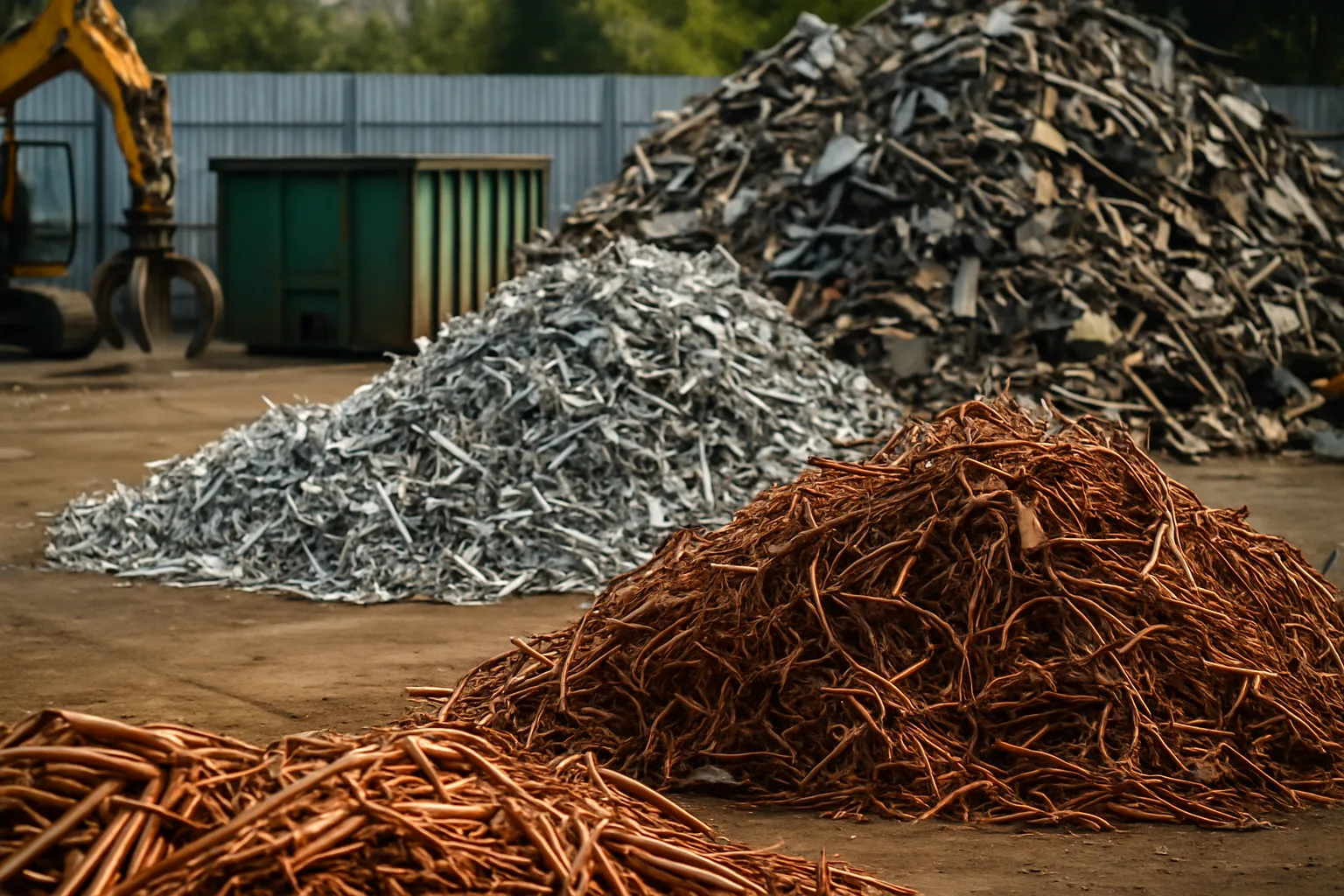
Why Scrap Metal Prices Change Every Single Day — And What That Means for Your Yard
If you checked copper prices on Friday and assumed Monday's rate would be the same, you already know how that story ends. Scrap metal prices move constantly — sometimes overnight, sometimes mid-week, sometimes between the time you loaded the truck and the time you pulled onto the scale. Understanding why they move is how you stop guessing and start selling smarter.
For yards and sellers in Scarborough and across Ontario, daily price volatility isn't just an inconvenience — it's money left on the table or money in your pocket, depending on how well you understand what's driving the market. This isn't abstract economics. It's the difference between a good week and a great one.
What Drives Daily Scrap Metal Price Fluctuations in Canada
Scrap metal prices don't move randomly. They respond to real signals — global commodity markets, currency shifts, industrial demand, and regional supply. Knowing which signals matter most gives you an edge when timing a load or deciding whether to hold inventory.
Here are the key drivers behind daily price movement:
- London Metal Exchange (LME) benchmarks: Copper, aluminum, nickel, and other non-ferrous metals are priced against LME spot rates. When the LME moves, Canadian yard prices typically follow — often within 24 to 48 hours.
- USD/CAD exchange rate: Most commodity contracts price in USD. When the Canadian dollar weakens against the U.S. dollar, the CAD equivalent of your scrap goes up — even if the underlying commodity price hasn't changed.
- Steel mill demand: Ferrous prices — steel, iron, shredded — track closely with what domestic and U.S. mills are buying. Mill schedules, maintenance shutdowns, and order books all create short-term demand swings.
- Fuel and freight costs: Scrap is heavy. Hauling costs matter. When diesel prices spike, margins tighten and buyers may lower their offers to compensate.
- Trade flows and export demand: Aluminum and copper scrap exports to overseas markets create demand pressure that feeds back into Canadian yard pricing.
- Seasonal supply patterns: Demo season, automotive scrap cycles, and construction timelines affect local supply volumes — and supply affects price.
None of these factors operate in isolation. On any given Monday in July, you might be looking at a strong LME copper number offset by a stronger Canadian dollar, producing a net price that looks flat from last week. That's the daily puzzle every seller has to solve.
Best Scrap Metal Prices Scarborough: Why Local Rates Don't Always Match the Headlines
You've probably seen commodity price headlines that don't match what you're being offered at the scale. That gap is real — and it's normal. National or global copper prices are benchmark numbers. What you actually receive depends on grade, contamination, volume, haul distance, and how many buyers are competing for your material.
In a market like Scarborough, Ontario, you have access to multiple yards and buyers operating in a dense industrial corridor. That's an advantage — but only if you're actually reaching all of them. If you're calling one buyer, getting one offer, and booking the load, you're treating a competitive market like it's a fixed-price market. Those are not the same thing.
To consistently find the best scrap metal prices today in Scarborough and the surrounding region, you need to create competition around your loads. More buyers bidding means better price discovery. That's not a theory — it's how auctions work.
Platforms like SMASH are built specifically for this. Rather than calling one contact and hoping for a fair number, you list your inventory — whether it's a load of clean copper wire, a pallet of aluminum extrusions, or a container of shredded steel — and vetted buyers across North America compete for it. No subscription fees. No guessing. Just documented loads, competing bids, and transparent outcomes.
Reading the Market: Copper, Aluminum, and Steel in Mid-2026
Commodity markets in mid-2026 continue to reflect the pressures that have defined the past several years: infrastructure spending cycles, EV-driven demand for copper and aluminum, and ongoing volatility in global steel production. Sellers who understand the macro picture can make better short-term decisions about when to move material and when to hold.
Copper remains the most price-sensitive of the common scrap metals. #1 bare bright copper commands a significant premium over #2 copper and insulated wire — so grade preparation pays off. Stripping wire before you sell isn't always worth the labour, but on high-volume loads, the math often works out. Clean, documented copper loads consistently attract stronger buyer interest, especially on a B2B scrap metal marketplace where buyers can evaluate material before committing to a bid.
Aluminum has strong fundamentals right now. The push for lightweight materials in automotive and construction, combined with the energy efficiency advantage of recycled aluminum over primary smelting, keeps recycled aluminum value competitive. Cast aluminum, extrusions, and clip all trade at different rates — and those spreads matter when you're pricing a mixed load. If you're tracking aluminum recycle value in Ontario, expect regional variation based on mill proximity and local buyer demand.
Steel and ferrous pricing is more sensitive to domestic mill conditions. Shredded steel, #1 heavy melt, and auto bodies all trade at different levels. July mill schedules and summer construction demand typically support ferrous prices — but it's worth checking current Canadian scrap metal prices before committing to a sale date, since mill demand can shift quickly.
Disclaimer: Scrap metal prices fluctuate daily based on commodity markets, exchange rates, and regional demand. Always verify current rates before making selling decisions. The price information in this article reflects general market context as of July 2026 and should not be used as a basis for transactions.
Scrap Metal Inventory Management: The Hidden Factor in Getting Better Prices
Here's something that doesn't get talked about enough: how you document your inventory directly affects what buyers are willing to pay. A load described as "misc. copper" will attract less confident bids than a load with grade breakdowns, weight estimates, photos, and accurate contamination notes. Buyers price in uncertainty. Reduce the uncertainty, and you reduce the discount they build into their number.
Effective scrap metal inventory management isn't just about organization — it's a pricing tool. When buyers can see exactly what they're bidding on, they compete more aggressively. When they're guessing, they bid conservatively to protect their margin.
SMASH includes built-in tools for exactly this: photo documentation, serial tracking for cores and cats, VIN lookup for auto parts, and structured packing lists that give buyers the information they need to bid with confidence. Auto-invoicing and BOL generation reduce the back-office friction that slows transactions down. The result is a cleaner process from listing to close — and cleaner processes tend to produce better outcomes for sellers.
If you want to read Canadian scrap metal pricing guides that go deeper on grade documentation and how it affects your sale price, there's more detail available on the resource side of this site.
How to Time Your Scrap Sales Around Daily Price Movement
Timing a scrap sale isn't about predicting the market — no one does that reliably. It's about making informed decisions with the information available to you today, not last week.
A few practical principles that hold up across market conditions:
- Watch the LME Monday open. Monday prices often set the tone for the week. Significant moves on the London Metal Exchange over the weekend can ripple into Canadian yard pricing by midday Monday.
- Track the USD/CAD pair. If you sell scrap regularly, the exchange rate is as important as the commodity price. A 2% swing in the dollar can effectively move your price by the same amount without the underlying metal changing at all.
- Don't hold material waiting for a "perfect" price. Holding has carrying costs — space, insurance, risk of contamination or theft. The cost of waiting is real even when it's invisible.
- Create competition before you commit. In Scarborough and across Ontario, there are buyers who want your material. The question is whether they know it's available. Listing on a platform where vetted buyers can bid ensures you're not leaving price discovery to a single phone call.
- Grade before you sell. Mixed loads get mixed prices. Separating your copper grades, pulling aluminum from ferrous, and documenting your cats by OEM and substrate all translate into more accurate — and often better — bids.
For yards using SMASH, the process is already built around these principles. Your inventory is documented, your loads are visible to multiple qualified buyers, and the auction format handles the price discovery mechanically. You don't have to guess what the market is — the bids tell you.
Sell Scrap Metal Near Me: Why Geography Still Matters (But Less Than You Think)
Searching for sell scrap metal near me makes sense when you're thinking about haul cost. Local buyers mean shorter trips, lower freight, and faster turnaround. For Scarborough sellers, the Greater Toronto Area provides strong buyer density — so local competition is real and accessible.
But "near me" has a different meaning on a digital marketplace. When you list on SMASH, your load isn't visible to just one or two local contacts — it's visible to vetted buyers across North America who may have specific demand for exactly your material. A buyer in another region running short on a particular grade of copper or aluminum may bid above your local market rate to secure the load. That kind of demand doesn't reach you through a phone call to your usual contact. It reaches you through a platform designed to connect supply with demand at scale.
Local pickup logistics still matter. But limiting your price discovery to local buyers only is leaving part of the market on the table. The smarter approach is to find the best price for your scrap in Canada by opening your loads to the widest qualified buyer pool available — then let logistics sort itself out after the best bid comes in.
The market for scrap in Scarborough, Ontario is competitive enough that you should expect strong offers. But competition only works in your favour when you're actually creating it. Check rates, document your loads, and put your material in front of buyers who are actively looking for it. That's how you stop guessing and start selling at the number the market actually supports.
Frequently Asked Questions
Q: How often do scrap metal prices change in Scarborough?
Scrap metal prices in Scarborough — and across Ontario — can change daily. Non-ferrous metals like copper and aluminum track closely with LME benchmarks and the USD/CAD exchange rate, which move every business day. Ferrous prices tend to shift less frequently but can move significantly when mill demand changes. Always verify current rates before scheduling a load.
Q: Where can I find the best scrap metal prices in Scarborough today?
The most reliable way to find the best scrap metal prices in Scarborough is to get multiple offers from competing buyers rather than relying on a single yard's posted rate. Platforms like SMASH connect sellers with vetted buyers across North America, creating genuine competition for your material. You can also find the best Canadian scrap metal prices today through this site's pricing resources.
Q: What scrap metals are most valuable right now in Ontario?
Copper — particularly clean #1 bare bright — consistently commands the highest per-pound rates among common scrap metals. Aluminum also carries strong recycle value, especially clean extrusions and clip. Catalytic converters can be high-value depending on the vehicle and PGM content. Prices vary by grade, volume, and current market conditions, so accurate documentation of your material matters significantly.
Q: Does documenting my scrap inventory actually affect the price I get?
Yes — significantly. Buyers price uncertainty into their bids. A well-documented load with photos, grade breakdowns, accurate weights, and contamination notes gives buyers the confidence to bid more aggressively. Vague descriptions produce conservative bids. Good scrap metal inventory management is one of the most practical ways to improve your sale price without changing the metal itself.
Q: Is SMASH available to scrap sellers in Scarborough?
Yes. SMASH operates across North America and is fully available to yards and sellers in Scarborough, Ontario. There are no subscription fees — SMASH earns only when a transaction completes, which aligns the platform's interest directly with yours. You can reach the team directly at jeff@smashscrap.com for selling or buying inquiries.
Scrap metal prices reward sellers who pay attention. If you're moving material in Scarborough or anywhere across Ontario, the difference between a good sale and a great one often comes down to documentation, timing, and whether you put your load in front of the right buyers. Start by knowing what your material is worth today — check current Canadian scrap metal prices at best-scrap-metal-prices.ca and build your selling strategy from there.
Stay sharp on market movements and industry trends — follow SMASH on LinkedIn for ongoing scrap metal market insights, pricing context, and platform updates.