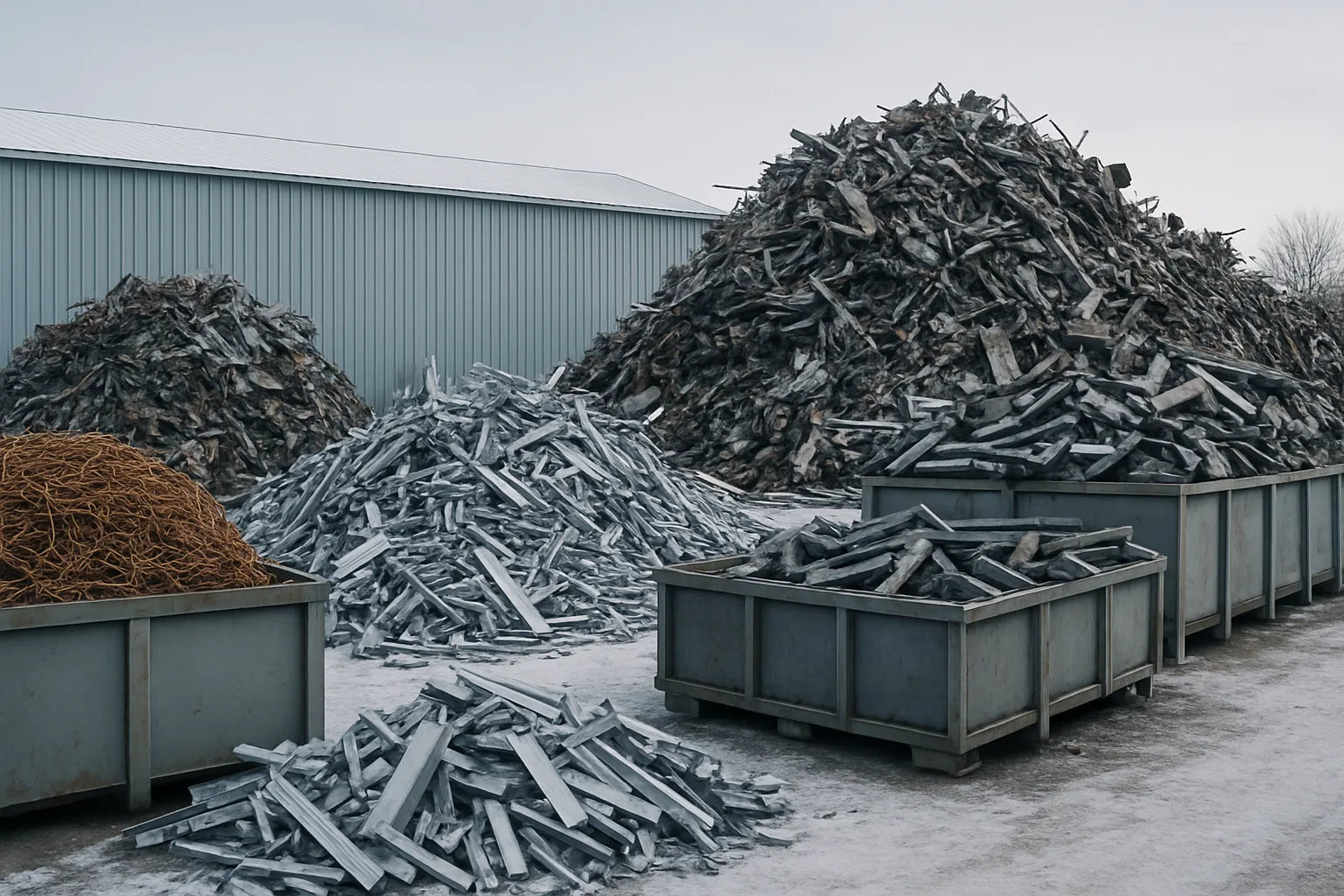
Why Sorting Your Scrap Metal Before You Sell Is Worth the Extra Hour
Most sellers leave money on the table before they ever reach the yard. Not because the buyer is cheating them — but because mixed, unsorted loads get priced at the lowest common denominator. If your copper is tangled with steel wire and plastic insulation, the buyer isn't paying copper prices. They're paying you scrap rate for the whole mess. In a place like Corner Brook, where your options for walk-in yards are limited, getting this right before you show up matters even more.
Sorting and preparing your scrap metal isn't complicated. But it does require knowing what you have, what buyers actually want, and how to present it in a way that triggers competitive pricing rather than a shrug and a lowball offer. This guide walks you through exactly that — from identifying your metals to understanding how platforms like sell your scrap metal on SMASH Recycling change the equation entirely.
Know What You Have: Identifying Your Metals Before You Load the Truck
The first step to maximizing value is identification. Scrap yards price by metal type, grade, and cleanliness. Showing up with a mixed pile and hoping for the best is the old way. The better approach is knowing what's in that pile before you load.
Here's a quick field guide to the most common metals you'll encounter:
- Copper: Reddish-orange when clean. Found in electrical wire, plumbing pipe, coils, and transformers. Consistently one of the highest-value non-ferrous metals. Copper scrap prices in Corner Brook — like everywhere — vary by grade: bare bright, #1 copper, #2 copper, and insulated wire all fetch different rates.
- Aluminum: Lightweight, silver-grey, non-magnetic. Found in window frames, engine components, cans, and siding. Aluminum price in Canada varies by alloy — cast aluminum and extruded aluminum are not the same grade.
- Steel and iron: Heavy, magnetic. The backbone of most loads. Sheet steel, rebar, structural beams, and cast iron all fall here. Steel price in Canada is typically lower per pound than non-ferrous metals, but volume makes it worthwhile.
- Brass: Yellow-gold in colour. Heavier than it looks. Found in fittings, valves, and fixtures. Solid brass pays well. Contaminated or plated pieces drop in value fast.
- Stainless steel: Non-magnetic or weakly magnetic. Found in kitchen equipment, medical hardware, and industrial fittings. Don't mix it with regular steel — it prices differently.
- Lead: Very heavy, dull grey. Found in old pipes, wheel weights, and batteries. Handled separately due to weight and environmental regulations.
A cheap magnet from any hardware store is the most important tool in your sorting kit. If the magnet sticks, it's ferrous. If it doesn't, you're likely looking at non-ferrous metal worth significantly more per pound. Start there.
How to Sort Scrap Metal by Grade — The Detail That Changes Your Payout
Sorting by metal type is step one. Sorting by grade within each metal type is where real money gets recovered. Yards don't just pay for copper — they pay for grades of copper. Mixing grades is leaving cash behind.
Take copper as an example. Bare bright copper — clean, uncoated, unalloyed wire — commands the top rate. Strip the insulation off your wire and you immediately move from insulated copper pricing to #1 or bare bright pricing. That gap can be meaningful depending on volume. Here's a general breakdown of copper grades:
- Bare bright copper: Clean, stripped wire with no insulation, no solder, no plating. Highest grade, highest price.
- #1 copper: Clean pipe and heavy gauge wire. No paint, no solder. Slightly below bare bright.
- #2 copper: Copper with minor oxidation, light soldering, or mixed fittings. Still solid value.
- Insulated copper wire: Priced based on the recovery percentage of copper inside the insulation. Don't mix thin-gauge wire (low recovery) with thick-gauge (high recovery) — they price differently.
The same logic applies to aluminum. Clean extruded aluminum profiles are a different grade from cast aluminum engine blocks. Know the difference. Separate them. When you check current Canadian scrap metal prices, you'll see these grades listed separately — because they pay separately.
Preparing Your Load: Cleanliness, Documentation, and What Buyers Actually Want
Sorting is half the job. Preparation is the other half. A clean, documented load inspires buyer confidence. An uncleaned, unlabeled pile forces the buyer to guess — and when buyers guess, they guess low to protect themselves.
Here's what preparation looks like in practice:
- Strip wire where it makes economic sense. Stripping thick-gauge wire with high copper content is almost always worth the time. Stripping thin communications wire may not be, depending on current copper scrap prices. Do the math before you commit the labour.
- Remove non-metal attachments. Plastic end caps, rubber seals, painted hardware. These contaminate your grade and reduce your payout. Take 10 minutes with a screwdriver and a pair of snips.
- Separate ferrous from non-ferrous. Never let copper, aluminum, or brass sit in a steel pile. The magnet test takes seconds. Mixing costs you real money.
- Bundle or bag like materials together. Loose, scattered material is harder to weigh accurately and creates more room for grade disputes. Keep your #1 copper separate from your #2. Keep your bare bright in its own bag.
- Photograph everything before it leaves your yard. This matters more than most sellers realize, especially for high-value loads. Photo documentation protects you if there's a dispute over grade or weight. It's also a core part of how platforms like SMASH handle transparent transactions — photo records travel with the load.
- Have your paperwork ready. BOLs, packing lists, and any supporting documentation for large loads or regulated materials. Buyers who receive documented loads bid with more confidence — and that confidence shows up in the price.
Sellers in Corner Brook and across Newfoundland and Labrador dealing with smaller volumes especially benefit from preparation. When you can't rely on walking your load into a busy urban yard with a dozen buyers on the floor, documentation and cleanliness become your competitive advantage. They signal to buyers that you know what you have and you're ready to transact seriously.
Sell Scrap Metal Online — Why More Competition Means Better Price Discovery
Here's the uncomfortable truth about the one-buyer model: you have no idea if you got a good price. The yard operator tells you a number. You take it or walk away. There's no reference point, no competition, no transparency. That's been the reality for sellers in smaller markets for decades.
The alternative is using an online auction platform to expose your prepared load to multiple vetted buyers at once. That's exactly what SMASH is built for. When buyers compete for your load — whether you're selling in Corner Brook, across Newfoundland and Labrador, or anywhere in North America — the price that emerges reflects actual market demand, not one buyer's margin target.
SMASH uses photo documentation, serial tracking for catalytic converters and cores, VIN lookup tools, and auto-invoicing to make the process clean on both ends. No subscription fees. The platform only wins when you win. More buyers means better price discovery. That's not a slogan — it's how competitive markets work.
If you want to understand current market rates before listing a load, find the best Canadian scrap metal prices today to get a baseline. Then use that baseline to evaluate what buyers are actually offering you.
Want to go deeper on pricing strategy and market trends? Read Canadian scrap metal pricing guides that break down commodity movements, grade-by-grade pricing, and when to hold versus sell.
Timing and Market Awareness: When to Sell and When to Wait
Preparation gets you the best price for your grade. Timing gets you the best price for the market. These are two separate variables — and ignoring the second one is a common mistake.
Copper price in Canada, aluminum price in Canada, and steel price in Canada all move with global commodity markets. Chinese manufacturing demand, U.S. infrastructure spending cycles, energy costs at smelters — these factors ripple through to what your local buyer offers per pound. You don't need to be a commodity trader to benefit from basic market awareness.
A few practical timing principles:
- Watch the trend, not the daily tick. Prices move up and down daily. What matters is whether the 30-day trend is rising or falling. Selling into a rising market beats selling into a dropping one.
- Larger loads have more timing flexibility. If you're accumulating material, you can be more selective about when you sell. Smaller, urgent loads don't have that luxury — but preparation still gives you grade protection.
- Non-ferrous metals are more time-sensitive than ferrous. Copper and aluminum prices can shift meaningfully in a short window. Steel and iron are less volatile but also lower-value, so the urgency is lower.
- Don't stockpile indefinitely hoping for a price spike. Storage costs, deterioration, and tied-up capital work against you. Know your floor price and move material when the market meets it.
Disclaimer: Scrap metal prices fluctuate daily based on commodity markets, regional demand, and material grade. Always verify current rates before selling.
Frequently Asked Questions
Q: Is it worth stripping copper wire before bringing it to a scrap yard in Corner Brook?
It depends on the gauge and the current price gap between insulated wire and bare bright copper. Thick-gauge wire with high copper content is almost always worth stripping — the labour investment pays off. Thin communications wire with low copper recovery is a judgment call. Check current copper scrap prices in Corner Brook before you commit the time.
Q: How do I find the best scrap metal prices in Newfoundland and Labrador?
Start by identifying your metals and grades accurately — a mixed load always gets priced at the lowest grade in the pile. Then compare what local yards offer against what online platforms like SMASH can generate through buyer competition. Listing on a vetted auction platform exposes your load to more buyers, which supports better price discovery than a single walk-in quote.
Q: What metals are typically worth the most at scrap yards?
Non-ferrous metals consistently outprice ferrous on a per-pound basis. Bare bright copper, clean brass, and high-recovery aluminum are typically at the top of the value scale. Stainless steel prices higher than regular steel. Catalytic converters (cats) and certain electronic components can also carry significant value depending on precious metal content.
Q: Can I sell scrap metal online from a smaller city like Corner Brook?
Yes. Platforms like SMASH connect sellers across North America with vetted buyers, which means your location matters less than the quality and documentation of your load. A well-sorted, photographed, and documented load from Corner Brook competes on the same playing field as one from a major city.
Q: How does SMASH handle payment and invoicing for scrap loads?
SMASH uses auto-invoicing built into the platform, so paperwork is handled without phone tag or manual tracking. The platform also manages GST/HST documentation for Canadian transactions, which simplifies the compliance side for both sellers and buyers.
Sorting, preparing, and timing your loads correctly is the unglamorous work that separates sellers who consistently get strong returns from those who accept whatever the yard offers. If you're in Corner Brook or anywhere across Newfoundland and Labrador, that preparation matters even more — it's your leverage in a market with fewer walk-in options. Get your baseline right, document what you have, and use every tool available to put your material in front of competitive buyers. When you're ready to move your load, sell your scrap metal on SMASH Recycling — and make sure you find the best Canadian scrap metal prices today before you do.
Follow SMASH on LinkedIn for scrap metal market updates, pricing trends, and industry insights that help you sell smarter.