Your old laptop sitting in a drawer could contain more valuable metal per kilogram than a low-grade ore mine. Most people don't realize that circuit boards, processors, and connectors in consumer electronics pack in gold, silver, palladium, and copper at concentrations that make dedicated e-waste recovery one of the most profitable corners of the recycling industry. But if you're selling that material without understanding what's inside it — or what it's worth — you're leaving real money on the table.
This guide breaks down what metals come out of old electronics, how recovery works, and how to make sure you're getting competitive pricing whether you're in New Westminster, Toronto, or anywhere else across Canada. We'll also cover how aluminum scrap price today factors into e-waste loads, since aluminum chassis and housings are often the bulk of the weight — even when the precious metals get all the attention.
What Metals Are Actually Inside Your Old Electronics?
E-waste is not a single material. It's a layered mix of ferrous and non-ferrous metals, plastics, glass, and trace precious metals — all packed into one unit. The breakdown varies significantly by device type, but here's what you're typically working with:
- Aluminum: Laptop housings, heat sinks, chassis frames, and some smartphone bodies. Often the heaviest single metal category by weight in a mixed e-waste load.
- Copper: Wiring, PCB traces, motor windings, transformers. Copper scrap price today per kg is a key benchmark for e-waste loads with high wire content.
- Steel and iron: Server racks, desktop cases, hard drive platters.
- Gold: CPU pins, connector contacts, PCB edge connectors. Present in small but meaningful quantities.
- Silver: Solder points, membrane switches, some RF components.
- Palladium: Capacitors in older boards, particularly in military or industrial-grade electronics.
- Tin and lead: Solder on older pre-RoHS boards.
The precious metal content sounds exciting, but context matters. A standard desktop computer motherboard might contain less than one gram of gold. At scale — processing tonnes of boards — that adds up fast. For an individual seller with a handful of devices, the aluminum and copper fractions are where you'll see the most immediate, trackable return. That's why understanding the aluminum scrap price today matters even when you think you're selling "valuable" e-waste.
How E-Waste Precious Metal Recovery Actually Works
There are two main recovery pathways for precious metals in e-waste: physical separation and hydrometallurgical processing (essentially, chemical leaching). Most commercial e-waste recyclers start with physical separation — shredding, eddy current separation, magnetic separation — to pull out the bulk metals before sending concentrated fractions to a smelter or refinery.
Hydrometallurgy is where the precious metal extraction happens at scale. Processors use acid baths (often aqua regia or a nitric acid solution) to dissolve gold and other precious metals from concentrated PCB material, then precipitate and refine the recovered metals. This is sophisticated industrial chemistry — not something you're doing at home, and not something a standard scrap yard handles.
What this means practically for sellers: most local scrap yards in British Columbia will buy your e-waste but won't pay you for precious metal content directly. They're buying it by weight, based on category, and sending it downstream to a processor or smelter who handles the refining. The precious metal value gets captured in the commodity price the yard receives — and that margin doesn't always flow back to you unless you're dealing with a buyer who specializes in e-waste and prices it accordingly.
This is exactly the kind of pricing gap that competitive platforms exist to close. When you find the best Canadian scrap metal prices today, you're not just checking a number — you're finding out whether your local buyer is pricing your material fairly relative to what the market actually pays for it downstream.
Aluminum Scrap Price Today and Why It Dominates E-Waste Weight
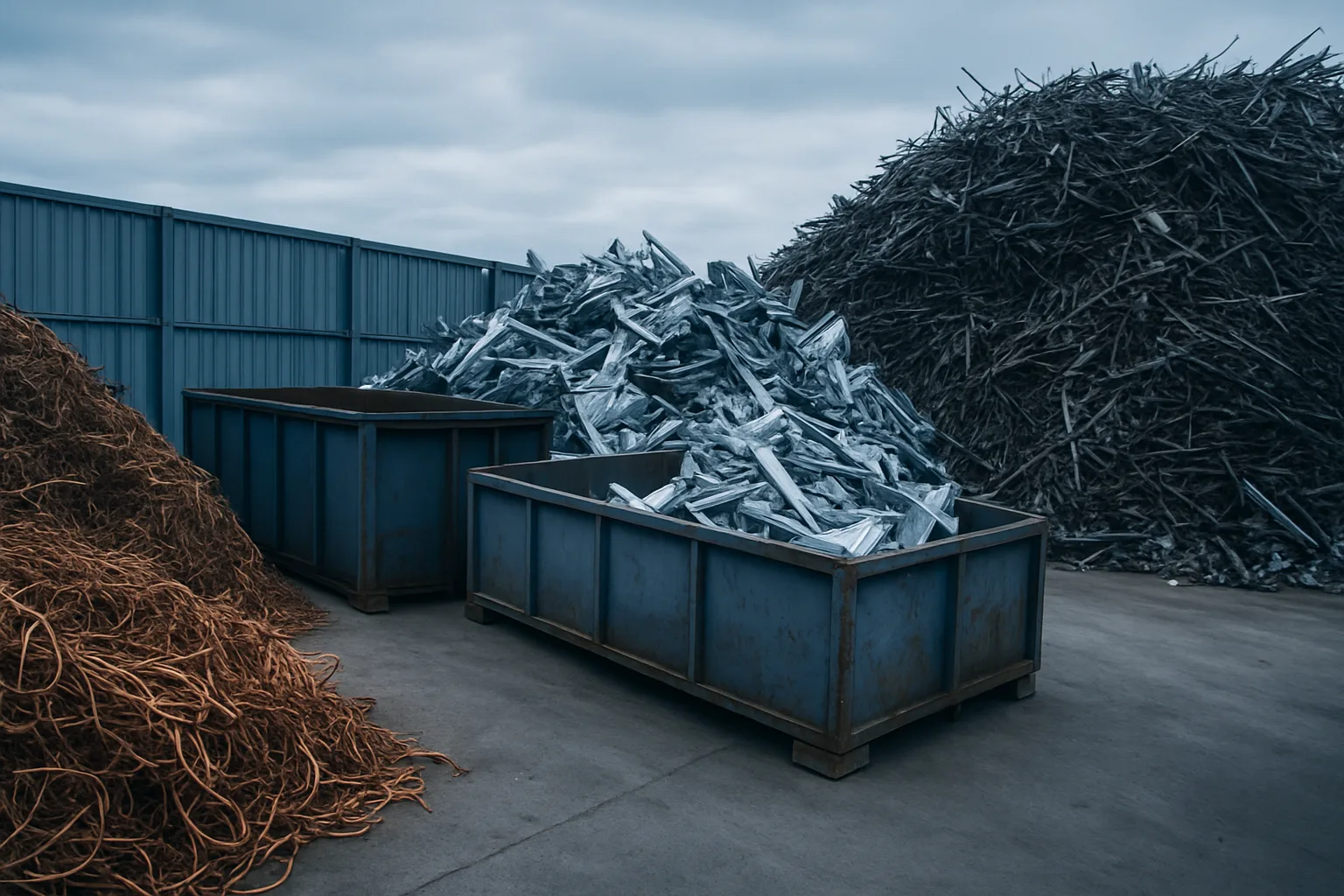
Walk into any e-waste processing facility and you'll see towering bins of aluminum chassis, heatsinks, and extruded frame sections. Aluminum is everywhere in modern electronics — it's lightweight, conducts heat well, and looks premium. For recyclers, it's also one of the most straightforward metals to process and resell.
The aluminum scrap price today fluctuates with global demand, energy costs (aluminum smelting is energy-intensive), and currency exchange rates. In Canada, the aluminum market tracks closely with LME (London Metal Exchange) benchmarks, adjusted for regional supply and logistics. Yards in New Westminster and the surrounding Lower Mainland price aluminum based on grade: clean extrusion fetches more than mixed painted aluminum, which fetches more than contaminated or painted clip.
For e-waste sellers, sorting matters. A laptop stripped of its screen and battery — leaving a clean aluminum chassis — is worth more per kilogram than the same laptop sold whole. The extra ten minutes of disassembly can meaningfully change your payout, especially when you're moving volume. If you want to check current Canadian scrap metal prices for aluminum grades before you sort, that's time well spent.
Best Scrap Metal Prices in New Westminster and British Columbia: What E-Waste Sellers Should Know
New Westminster sits in the heart of Metro Vancouver's recycling corridor. You've got access to some of the most active scrap buyers in British Columbia within a short drive, which is both an advantage and a trap. More buyers sounds like more competition — but if you're calling one yard, getting one price, and accepting it without comparison, you're not actually benefiting from that market density.
The best scrap metal prices in New Westminster aren't found by calling the closest yard. They're found by knowing what your material is worth, separating it into clean grades, and getting competing offers. For bulk e-waste loads — think IT asset disposals, office cleanouts, or electronics retail returns — the difference between a single-buyer quote and a competitive offer can be significant.
British Columbia's scrap market also has some specific dynamics worth knowing:
- High concentration of tech industry activity means more e-waste in circulation than in many other provinces.
- Port access in Metro Vancouver creates export demand for non-ferrous metals that can support stronger pricing.
- Environmental regulations around hazardous components (batteries, CRTs, mercury-containing devices) mean you need to separate those materials before selling — buyers will discount or refuse loads with improper inclusions.
- GST and PST apply to commercial scrap transactions in British Columbia — factor that into your net payout comparison.
Sellers outside the Lower Mainland — in the Interior, on Vancouver Island, or in northern BC — face different logistics but the same pricing principles apply. Compare offers, know your grades, and don't let distance be the only reason you accept a low number.
Selling E-Waste Scrap Online: How SMASH Changes the Equation
The traditional way to sell e-waste scrap: call a buyer, describe your load over the phone, accept their price or don't. There's no documentation, no competing offer, and no way to know if that price reflects current market conditions or just what that buyer wants to pay today.
SMASH flips that model. As Canada's B2B scrap recycling marketplace, SMASH puts your load in front of vetted buyers who bid competitively. You document your material — photos, weights, grades, serial tracking where applicable — and buyers compete for it. Competition drives price discovery. That's not marketing language; it's how auctions work.
For e-waste specifically, documentation is particularly valuable. A load described as "mixed computer scrap" gets priced at the low end. A load with photos showing separated aluminum chassis, copper wire bundles, and clean motherboard fractions gets priced on what it actually is. SMASH's inventory tools let you build that documentation before your load ever goes to market.
The ability to sell scrap metal online through a platform like SMASH also matters for sellers in areas with limited local buyer competition. If you're in New Westminster with three yards nearby, you have some options. If you're in a smaller market, the platform brings the buyers to you.
No subscription fees. SMASH earns when you sell. That alignment matters — their incentive is the same as yours.
How to Maximize Your Payout on E-Waste and Scrap Electronics
Getting the best price for e-waste comes down to preparation. Here's what experienced sellers do before any load goes to market:
- Separate by material, not by device. Don't sell a mixed "computer lot." Pull the aluminum chassis, bundle the copper wire, stack the steel cases, and bag the circuit boards separately. Each grade has its own price.
- Remove hazardous components. Lithium batteries, CRTs, and fluorescent backlights need to be handled separately. Most buyers will refuse or heavily discount loads with these included.
- Photograph everything. Before it moves, document it. Weight tickets, condition photos, any serial numbers or asset tags that prove chain of custody. This matters for commercial sellers doing IT asset disposal.
- Know the copper content. High-grade copper — think stripped copper wire or copper heat pipes — is worth significantly more per kilogram than the same weight in mixed e-waste. Pull it out and price it separately using current copper scrap price today per kg benchmarks.
- Get more than one offer. This is the single highest-leverage action you can take. One buyer gives you one data point. Multiple buyers give you the market.
- Time larger loads to market conditions. If you're holding significant volume, check current pricing trends. Aluminum and copper prices move with global markets, and selling into strength rather than weakness adds up over time.
For ongoing pricing benchmarks across all major metal categories, read Canadian scrap metal pricing guides to stay current on what the market is doing before you negotiate.
Disclaimer: Scrap metal prices fluctuate daily based on commodity markets, grade, and regional demand. Always verify current rates before selling.
Frequently Asked Questions
Q: What is the aluminum scrap price today in New Westminster, BC?
Aluminum scrap prices in New Westminster vary by grade and change with market conditions. Clean aluminum extrusion typically fetches a higher rate per kilogram than mixed or painted aluminum. Check current rates at best-scrap-metal-prices.ca before selling — don't rely on a single yard's posted price as your benchmark.
Q: Is it worth separating metals from old electronics before selling?
Yes, in most cases. Selling a sorted load — aluminum chassis separate from copper wire, steel cases pulled out — almost always yields a better total payout than selling a mixed lot by weight. The extra time is especially worth it when you're moving larger volumes. Buyers price uncertainty into mixed loads; sorted material removes that discount.
Q: How do I find the best scrap metal prices in British Columbia for e-waste?
Compare multiple buyers rather than accepting the first offer. Platforms like SMASH put your documented load in front of vetted buyers who compete for it, which helps reveal the actual market price rather than a single buyer's preferred margin. Knowing your material grades before you approach any buyer also strengthens your position.
Q: What is the copper scrap price today per kg in Canada?
Copper prices in Canada track global LME benchmarks and are adjusted for regional logistics and grade. Bare bright copper (stripped, clean) commands the highest rate; insulated wire, mixed copper, and light copper each have lower tiers. Prices fluctuate daily — always check current rates before selling significant quantities.
Q: Can I sell e-waste scrap online in Canada?
Yes. Platforms like SMASH allow B2B sellers to list documented e-waste loads and receive competing offers from vetted buyers across Canada. This is particularly useful for larger commercial lots — IT asset disposals, office cleanouts, retail returns — where getting a single local quote likely undersells what the material is actually worth on a competitive market.
---If you're sitting on a pile of old electronics, a commercial IT disposal, or even a few sorted loads of aluminum and copper pulled from devices, the market in 2026 is active and pricing is competitive — but only if you're approaching it with the right information. Start by knowing what you have, separate it properly, and don't accept the first number you hear. Get the best Canadian scrap metal prices — check rates at best-scrap-metal-prices.ca before your next sale.
Stay sharp on market moves and industry pricing trends by following SMASH on LinkedIn — it's where scrap industry professionals track what's happening in the market before it hits the yard floor.