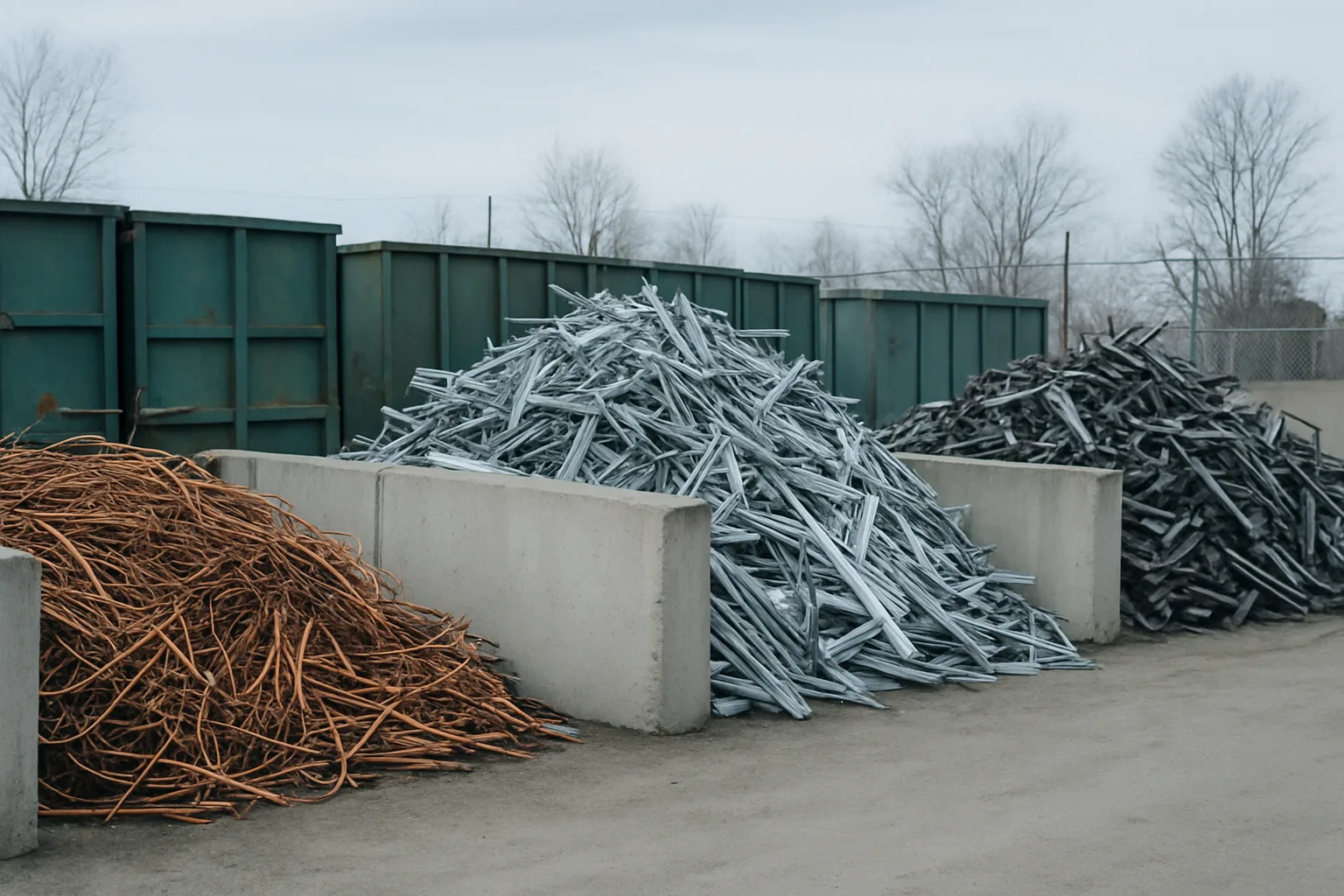
Most yards pay you based on what they think you've got. Learn to identify your metals yourself — and you'll never leave money on the table again.
If you haul scrap regularly in Barrie or anywhere across Ontario, knowing what you're carrying matters. A load misidentified as mixed metal can pay a fraction of what clean copper or aluminum would fetch. And with scrap metal prices today shifting week to week based on global demand, currency movements, and commodity markets, the difference between knowing your metals and guessing them can be significant.
This guide gives you the practical tools to sort your scrap before you sell — using nothing more than a magnet, your eyes, and a few simple tests you can do in any yard or garage.
Why Metal Identification Directly Affects What You Get Paid
Yards price by category. Clean copper wire pays more than insulated wire. Aluminum extrusion pays more than cast aluminum. Sheet steel pays less than stainless. When you hand over a mixed, unsorted load, the buyer sorts it — and they sort it conservatively, because that's how they protect their margin.
That's the old way. One buyer, one call, one price — and you accept it because you don't have better information. Sorting your metals before you show up changes the conversation entirely. You walk in knowing what you've got. That knowledge is leverage.
Platforms like SMASH are built around this idea: documented, identified loads attract more confident buyers. When buyers know exactly what they're bidding on — metal type, grade, weight, photos — competition increases. More buyers bidding on your load means better price discovery. But that process starts with you knowing what's in your pile.
To stay current on what different metals are fetching, find the best Canadian scrap metal prices today before you head to any yard.
The Magnet Test: Your First and Fastest Tool
A strong rare-earth magnet is the single most useful tool in scrap sorting. It takes about three seconds to use and immediately splits your pile into two major categories: ferrous and non-ferrous.
Ferrous metals (iron, steel, most cast iron) stick to a magnet. They're the workhorses of the scrap world — high volume, lower price per pound. Non-ferrous metals (copper, aluminum, brass, zinc, lead, stainless steel) don't stick. They're lighter, often more valuable per kilogram, and what most sellers want to identify and separate.
Here's how to use the magnet test effectively:
- Strong pull = steel or iron. Common in car bodies, beams, pipes, and appliances. Priced by the tonne at most Ontario yards.
- Weak pull = some stainless steels. Not all stainless is non-magnetic. 400-series stainless is slightly magnetic. 304-grade (common in food equipment and kitchen appliances) is non-magnetic.
- No pull at all = non-ferrous. This is your copper, aluminum, brass, lead, or zinc. Separate it immediately — it's worth more.
The magnet doesn't tell you which non-ferrous metal you've got. That's where visual identification and a few additional tests come in.
Visual Identification: What Each Metal Actually Looks Like
Color, weight, and texture tell you most of what you need to know once you've confirmed a metal is non-ferrous. Here's a practical field guide.
Copper
Fresh copper is a distinctive reddish-orange — the color is unmistakable. Over time, it oxidizes to a dull brown, and with enough exposure, it goes green (that's patina, also called verdigris). Copper is dense and heavy for its size. If you pick up a short piece of pipe and it's heavier than you expect, that's a good sign.
Common sources in Barrie: plumbing pipe from renovations, electrical wire, roofing flashing, HVAC components, and old radiators. Check current Canadian scrap metal prices for copper before sorting — the spread between insulated, bare bright, and #2 copper can be significant.
Aluminum
Aluminum is light gray, often with a dull matte finish. It's extremely lightweight — noticeably lighter than steel or copper of the same size. It doesn't rust the way steel does; instead, it develops a chalky white oxidation layer. Aluminum is everywhere: window frames, screen doors, engine blocks, wheels, ladders, and beverage cans.
Grade matters with aluminum. Cast aluminum (engine blocks, wheels) pays less than extruded aluminum (window frames, heat sinks) in most Ontario yards. Sorting by grade before you sell puts more money in your pocket.
Brass
Brass is a yellow-gold color — brighter than copper, not as shiny as actual gold. It's an alloy of copper and zinc, and it's denser than aluminum but lighter than copper. Common sources include plumbing fittings, valves, door hardware, musical instruments, and shell casings. Brass consistently sits above aluminum in price per kilogram at most Canadian yards.
Stainless Steel
Shiny, silver-gray, and resistant to rust — that's stainless. The key test: does a magnet stick? If it sticks weakly, it's likely 400-series. If it doesn't stick at all, it's 304 or 316 grade, which pays more. Stainless comes from kitchen equipment, industrial piping, medical devices, and automotive exhausts.
Lead
Lead is dark gray and extremely heavy for its size. It's also soft — you can scratch it with a fingernail. Common in old plumbing pipe (pre-1990s construction), wheel weights, and battery terminals. Handle it with gloves. It pays well per kilogram but it's denser than almost anything else in your load.
Scrap Metal Prices Today in Barrie: What to Expect by Metal
Prices fluctuate based on global commodity markets, currency exchange rates, and local supply conditions. No published number stays accurate for long — always verify current rates before you sell.
That said, the general hierarchy of scrap value per kilogram in Ontario yards tends to follow this pattern (from highest to lowest):
- Bare bright copper wire (clean, uncoated)
- #1 copper (clean pipe, no solder, no fittings)
- Brass
- #2 copper (soldered, dirty, or mixed)
- Stainless steel (304-grade, clean)
- Aluminum extrusion
- Cast aluminum
- Lead
- Zinc
- Steel and iron (priced per tonne, not per kg)
For anyone in Barrie or across Ontario looking to maximize returns, sorting to the top of each category is worth the extra time. Read Canadian scrap metal pricing guides to understand what each grade commands and why.
And if you're moving volume — multiple loads, catalytic converters, or specialty non-ferrous — sell your scrap metal on SMASH Recycling to access vetted buyers competing for your material. That's how price discovery actually works.
The Spark, Float, and Sound Tests (When You Need More Certainty)
Sometimes visual and magnet tests aren't enough — especially when metal is painted, coated, or corroded. A few additional field tests can help narrow things down.
The float test: Not practical for large pieces, but useful for small samples. Aluminum floats in a bucket of saltwater. Lead sinks fast. Most metals sink, but the speed and density tell you something.
The sound test: Drop a piece of metal on concrete. Copper rings with a distinct tone. Aluminum sounds duller. Steel clangs. Cast iron thuds. With practice, you can tell a lot from the sound of an impact.
The file test: Run a metal file across the surface. Aluminum files easily and produces a fine, pale dust. Copper files with a reddish dust. Lead smears more than it files. This is useful when a piece is painted or heavily oxidized.
The spark test: Grinding different metals produces different spark patterns. Steel produces bright, branching sparks. Cast iron produces shorter, duller sparks. Non-ferrous metals like copper and aluminum produce very few sparks. Only do this in a safe environment with proper eye protection.
If you're dealing with catalytic converters, identification gets more specialized. Cats are graded by vehicle type, year, and precious metal content — not by a simple visual test. SMASH handles catalytic converter sales through an auction format that connects sellers with buyers who specialize in this material. That means no guessing, no single-buyer pricing, and full documentation through serial tracking and photo documentation. For anyone in Barrie moving cats regularly, that process is worth understanding.
You can learn more about Barrie scrap metal services and how local yards handle specialty materials like cats and non-ferrous loads.
Sort Before You Sell: A Practical Checklist for Barrie Scrap Sellers
Before your next trip to a yard in Barrie or anywhere in Ontario, run through this quick sorting process. It adds fifteen to thirty minutes to your prep time and can meaningfully change what you get paid.
- Step 1 — Magnet sweep: Run your rare-earth magnet across everything. Pull out anything that sticks (ferrous). Set the non-ferrous aside separately.
- Step 2 — Color sort: From your non-ferrous pile, identify red/orange (copper), yellow-gold (brass), silver-gray (aluminum or stainless), and dark gray/heavy (lead or zinc).
- Step 3 — Grade your copper: Separate bare bright from insulated wire, and #1 pipe from soldered or dirty #2. Each grade pays differently.
- Step 4 — Grade your aluminum: Cast versus extruded versus sheet. Don't mix them in the same container if you can avoid it.
- Step 5 — Document what you've got: For larger loads, take photos before you leave. Weight estimates, metal types, and images give any buyer — especially online buyers through platforms like SMASH — the confidence to bid higher.
- Step 6 — Check prices before you go: Markets move. Check rates the morning of, not the week before.
The sellers who consistently get strong returns aren't necessarily moving the biggest loads. They're the ones who know what they have, document it properly, and put it in front of the right buyers. That's what SMASH is built for.
If you want to start every sale with better information, find the best Canadian scrap metal prices today and know your baseline before you negotiate anything.
Disclaimer: Scrap metal prices fluctuate based on global commodity markets, exchange rates, and local yard conditions. All price references in this article are general and illustrative only. Always verify current rates directly with your buyer or through a live pricing platform before selling.
Frequently Asked Questions
Q: How do I know if my metal is worth separating before I sell?
If it's non-ferrous — meaning a magnet doesn't stick to it — it almost always pays to separate it from your steel and iron. Copper, aluminum, and brass all command significantly higher prices per kilogram than ferrous metals. Even small quantities add up quickly when scrap metal prices today are moving.
Q: Where can I check scrap metal prices today near Barrie?
Local yards in Barrie post prices, but they update at their own schedule. For a broader market view, check best-scrap-metal-prices.ca to see current Canadian scrap metal price benchmarks before you head out. Knowing the market rate before you walk in is always an advantage.
Q: Is it worth selling catalytic converters separately from my regular scrap load?
Yes — almost always. Catalytic converters contain platinum group metals and are priced completely differently from your copper or aluminum. Mixing them into a general load means you're almost certainly undervaluing them. Platforms like SMASH handle catalytic converter sales through a dedicated auction format with vetted buyers who specialize in this material.
Q: What's the easiest metal to misidentify, and what does it cost me?
Aluminum and zinc are frequently confused — they look similar, and zinc is noticeably heavier. Selling zinc as aluminum (or the reverse) can cost you real money since they price differently. The file test helps: aluminum files cleanly, zinc feels slightly grainy and harder. When in doubt, weigh a small piece relative to its size — zinc is much denser.
Q: Does SMASH work for smaller loads, or only large commercial volumes?
SMASH works across a range of load sizes, but it's especially useful when you have identified, documented material that you want in front of multiple buyers. The inventory tool, photo documentation, and auction format are built to give any seller — small yard or large — access to competitive pricing rather than a single take-it-or-leave-it offer.
Sorting your metals before you sell is the simplest habit you can build to improve what you earn from every load. Whether you're clearing a renovation site in Barrie, scrapping vehicles across Ontario, or moving specialty non-ferrous material, the more precisely you can identify and document what you have, the more confidently buyers can price it. Check rates at best-scrap-metal-prices.ca before your next trip to a yard — it takes two minutes and costs nothing.
Follow SMASH on LinkedIn for ongoing scrap metal market updates, pricing trends, and industry insights across North America.