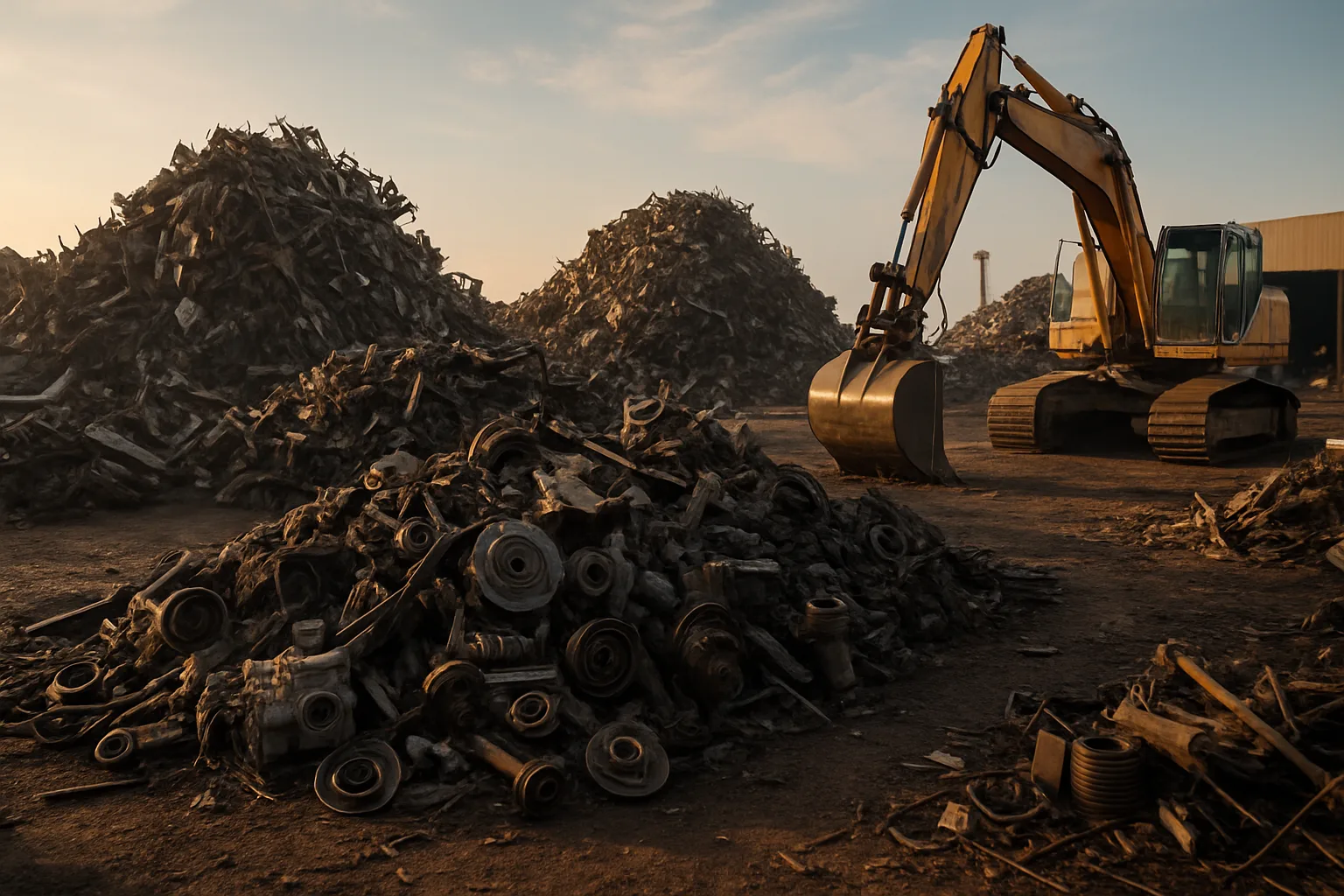
Most people scrap a car and walk away with a check. Few stop to think about what actually happens next — or how much money they left on the table by not knowing which parts carried the most value.
Auto parts like radiators and alternators aren't just junk. They're concentrated sources of copper, aluminum, and steel. When you understand what's inside them — and what drives scrap metal prices Fredericton buyers are paying — you stop guessing and start selling smarter. This article breaks down exactly which parts hold value, why, and how to make sure you capture it.
Whether you're clearing out a shop in Fredericton, scrapping a fleet vehicle in New Brunswick, or just trying to understand the market before you haul a load, this one's for you. You can also find the best Canadian scrap metal prices today before you make your next move.
Why Auto Parts Are a Hidden Source of Scrap Metal Value
A single end-of-life vehicle contains anywhere from 2,000 to 3,500 pounds of recyclable material. Most of it is steel. But the parts that get overlooked — the radiator sitting in the corner, the alternator pulled off during a repair, the starter motor in a bin — often carry a higher value per pound than bulk shredded steel does.
The reason is material concentration. A radiator isn't just metal. It's a specifically engineered component built from high-grade copper tubing, brass fittings, and aluminum fins — all selected for heat transfer efficiency. That engineering translates directly into scrap value. The same logic applies to alternators, starters, and electric motors. They're wound with copper wire, housed in cast aluminum, and mounted with steel hardware. Buyers pay more per pound for these parts because they don't have to sort and process bulk mixed metal loads.
For yards and individual sellers in Fredericton, knowing this distinction matters. Mixing a copper-heavy radiator into a general steel pile is the fastest way to get paid steel prices for copper content. Strip it out, identify it, and sell it separately. That's basic metal literacy — and it's worth real money.
Radiators: Copper, Brass, and Aluminum — What's Actually Inside
Radiators come in two main types: older copper-brass units and newer aluminum models. Each has a distinct scrap profile.
Copper-brass radiators are found on older vehicles — typically pre-2000 cars and many heavy equipment applications. These are among the more valuable auto parts to scrap. The core is made of thin copper tubing, and the tanks are often solid brass. Stripped clean with no plastic attached, a copper-brass radiator fetches a stronger per-pound return than most auto parts. The copper scrap price today in Canada directly influences what you'll get paid — copper has historically traded at a significant premium over aluminum and steel, making clean copper-brass radiators a priority item to identify and separate.
Aluminum radiators dominate modern vehicles. They're lighter and cheaper to manufacture, but the scrap value per pound is lower than copper-brass. That said, they're still worth separating from bulk shred. A clean aluminum radiator — plastic tanks removed — grades out as a better material than contaminated mixed auto aluminum. Aluminum pricing in Canada fluctuates with global demand, particularly from automotive and construction markets, so it pays to check current Canadian scrap metal prices before you commit to a sale.
Key things that affect radiator scrap value:
- Material type — copper-brass versus aluminum
- Cleanliness — plastic tanks and rubber hoses reduce grade
- Weight — heavier units obviously yield more
- Current market rates for copper and aluminum in Canada
Alternators, Starters, and Electric Motors: The Copper Wire Play
Alternators and starters are wound components. Inside every alternator is a rotor and stator — both wound with copper wire. That copper content is what gives these parts value beyond their steel shell weight. Sell them whole and you typically get a "whole unit" price. Strip the copper windings and you can potentially get copper wire pricing on that fraction — though the labor calculus matters and varies by operation.
For most individual sellers, selling alternators and starters as complete units to a yard that buys electric motors and wound components is the practical approach. Yards that specialize in these materials have their own processing lines. They'll buy the unit, process it efficiently, and price accordingly. What you want to avoid is lumping alternators into a general auto parts bin where they get weighed out at bulk iron prices.
Electric motors from larger industrial equipment follow the same principle at a bigger scale. A large three-phase motor from a piece of shop equipment can weigh hundreds of pounds — and the copper content inside is substantial. If you're running a repair shop or a yard in New Brunswick and you're accumulating electric motors, treat them as a separate commodity line. They deserve their own weight ticket.
A few other wound components worth identifying separately:
- Starter motors — similar copper content to alternators, similar pricing logic
- Power steering pumps — often aluminum housings with steel internals
- AC compressors — aluminum body, worth separating from shred
- Wiring harnesses — pure copper wire, one of the better per-pound returns in auto scrap
Catalytic Converters: The High-Value Outlier in Auto Recycling
No list of high-value auto parts is complete without addressing catalytic converters. They're in a category of their own — not because of copper or aluminum, but because of platinum group metals (PGMs): platinum, palladium, and rhodium. These metals are present in small quantities but carry extreme per-ounce value.
The challenge with catalytic converters is that pricing is notoriously opaque in traditional scrap channels. A converter's value depends on the vehicle it came from, the specific substrate inside, and live PGM commodity prices. Selling a converter to a local buyer who offers a flat rate without transparency is a gamble — and historically, that gamble hasn't favored sellers.
This is exactly where auction-based platforms change the game. A catalytic converter auction format puts your converters in front of multiple vetted buyers competing for the material. Competition drives price discovery. Instead of accepting the first offer from the only buyer in the room, you let the market tell you what your material is actually worth. Platforms like the SMASH Recycling auction platform are built around this principle — vetted buyers, competitive bids, documented inventory, and full transparency. If you're holding converters and haven't explored auction-based selling, you're leaving money on the table.
For more on understanding how different auto metals are valued in Canada, read Canadian scrap metal pricing guides that break down commodities and market trends.
How Fredericton Sellers Can Maximize Auto Part Scrap Returns
Fredericton sits in a market where competition among buyers can be thinner than in major urban centers. That's not a complaint — it's a reality that shapes how you should approach selling. When local buyer competition is limited, the gap between what a material is worth and what you're offered can widen. The solution isn't to complain about the market. It's to introduce more competition into your selling process.
Here's a practical approach for sellers in Fredericton and across scrap metal recycling New Brunswick operations:
- Sort before you sell. Copper-brass radiators, aluminum radiators, alternators, and catalytic converters should never go into a bulk iron pile. Separate them at the source.
- Document what you have. Photos, approximate weights, part descriptions. Buyers who are bidding competitively need information to bid confidently. Better documentation leads to stronger bids.
- Know the current rates. Copper, aluminum, and steel prices shift with commodity markets. Checking rates before you sell tells you whether today is a good day to move material or whether you should hold.
- Use platforms that create competition. SMASH puts your material in front of multiple vetted buyers. That competitive pressure is the single most effective way to improve your price discovery — especially in markets where local options are limited.
- Ask how the converter is being priced. If a buyer can't explain their pricing methodology for catalytic converters, that's a signal to explore other options.
For sellers asking how to sell scrap metal near me for cash, the answer isn't just about finding the nearest yard. It's about finding the right process — one that ensures your material reaches buyers who value it appropriately and compete for it.
What Drives Scrap Metal Prices in 2026 — and What to Watch
Canadian scrap metal markets in mid-2026 are shaped by several converging forces. Global steel demand, North American manufacturing activity, and electric vehicle adoption all influence the commodity prices underlying what your auto parts are worth. Copper demand in particular has been driven higher by electrification — EV motors, charging infrastructure, and grid upgrades all consume copper at scale. That structural demand trend supports copper pricing in ways that matter to anyone scrapping copper-bearing auto parts.
Aluminum markets track automotive and aerospace production. As vehicle manufacturers continue lightweighting programs, aluminum demand stays supported. Platinum group metals tied to catalytic converters are influenced by gasoline and diesel vehicle production rates globally — with EV adoption creating some longer-term headwinds for PGM demand, though internal combustion vehicles still dominate current fleet composition.
The practical takeaway: the metals inside your auto parts aren't static in value. They move with markets. Sellers who check rates, time their loads when possible, and use competitive selling channels consistently outperform those who just take whatever the phone quote offers. Whether you're in Fredericton or comparing scrap metal prices Barrie operations use against your local market, the principle is the same — information and competition are your two best tools.
If you want to stay current on where the market is heading, the SMASH Recycling auction platform gives sellers access to transparent bid data and competitive buyer networks across North America. No subscription fees. They win when you win.
Ready to stop guessing what your auto parts are worth? Fredericton scrap metal services are available to help you benchmark local rates and connect with buyers who compete for your material. And if you want a broader view of the Canadian market, find the best Canadian scrap metal prices today — sort by metal type, check current rates, and go into your next sale informed.
Prices fluctuate based on commodity markets, material grade, and regional buyer demand. Always verify current rates before selling.
Frequently Asked Questions
Q: What are the most valuable auto parts to scrap in Fredericton?
Catalytic converters, copper-brass radiators, and wiring harnesses tend to carry the strongest per-pound value among auto parts. Alternators and electric motors are also worth separating from bulk scrap. The key is identifying and sorting these materials before you sell rather than lumping them into a general iron pile.
Q: How do I find current scrap metal prices Fredericton buyers are paying?
Scrap metal prices vary by buyer and change with commodity markets. The most reliable approach is to check multiple sources — including online price trackers and auction platforms — before committing to a sale. You can check current Canadian scrap metal prices to benchmark what your material should be worth before you call around locally.
Q: Is copper scrap price today different in New Brunswick than in other provinces?
Copper pricing generally tracks global commodity markets across Canada, but regional premiums and discounts exist based on local buyer competition, transportation costs, and demand. Sellers in areas with fewer local buyers may see slightly lower offers — which is why introducing competition through auction-based platforms can help close that gap.
Q: Should I strip my radiator before scrapping it, or sell it whole?
For copper-brass radiators, removing plastic end tanks and rubber hoses before selling can improve your grade classification and price. For aluminum radiators, clean units command better pricing than contaminated mixed loads. Whether stripping is worth the labor depends on the quantity you're processing — for high volumes, separation almost always pays.
Q: How does a catalytic converter auction work compared to selling to a local buyer?
In a traditional sale, one buyer gives you one offer — often a flat rate without detailed explanation. In an auction format, multiple vetted buyers see your documented inventory and compete with bids. That competition tends to produce better price discovery. Platforms like SMASH facilitate this process with photo documentation, serial tracking, and transparent bid management — without charging sellers a subscription fee.
The scrap in your yard — the radiators, the alternators, the converters — is worth more than a cold-call quote from a single buyer. Know what you have, sort it properly, and let competition do the work. If you want to see where the Canadian market sits right now, find the best Canadian scrap metal prices today at best-scrap-metal-prices.ca.
For ongoing scrap metal market insights and industry updates, follow SMASH on LinkedIn — it's worth keeping in your feed.
```