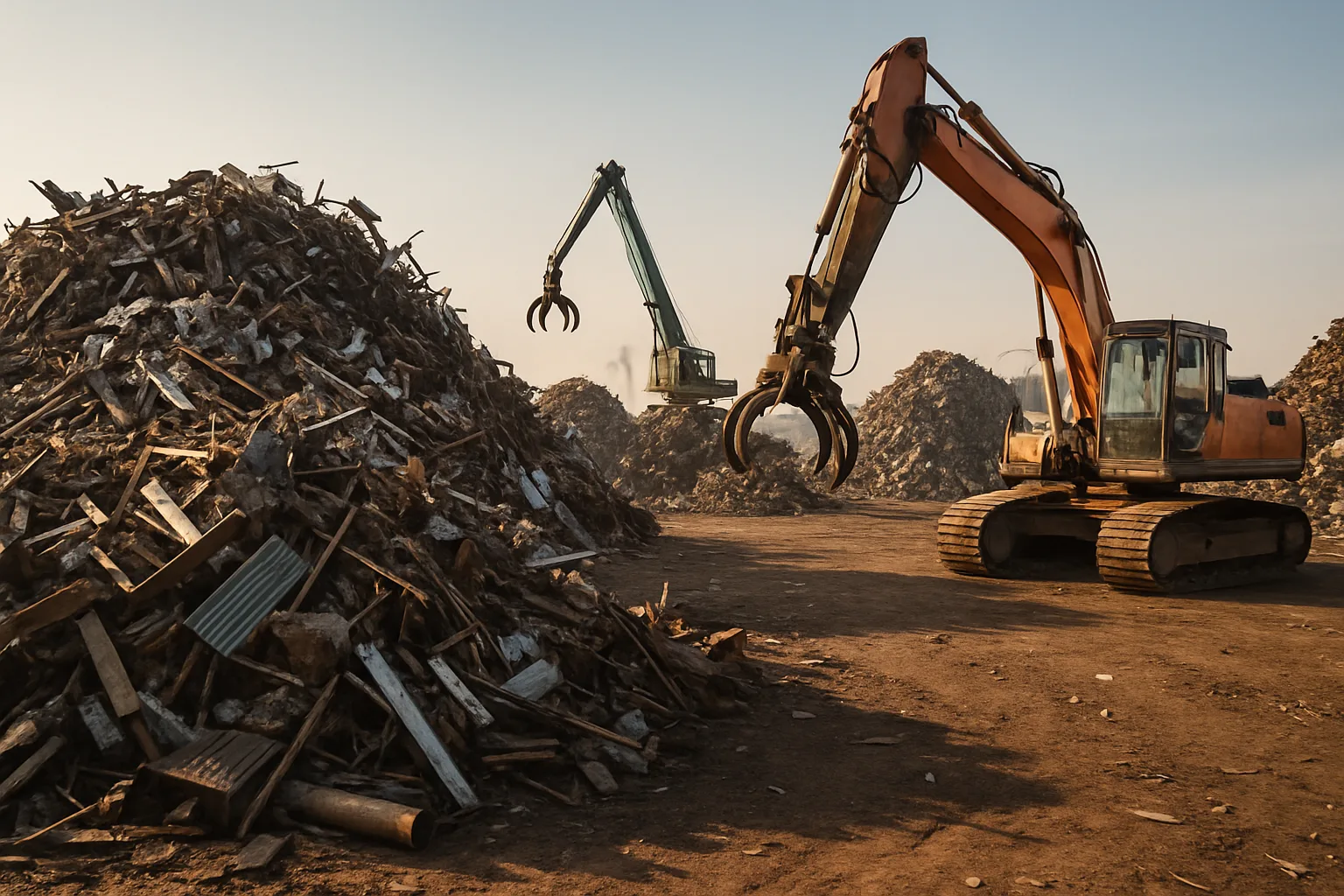
Why Sorting Your Scrap Before You Sell It Changes Everything
Most sellers leave money on the table before they even make a call. Not because the market is bad — because their metal isn't sorted. A mixed pile of steel, copper, and aluminum gets priced at the lowest common denominator. That's how it works. If a buyer can't quickly identify what they're buying, they'll protect themselves with a lower offer.
Here's the reality: the steel scrap price today is different from the copper price today. And both are different from what you'll get if they're tangled together in the same bin. Separation equals value. It's that simple.
This guide walks you through how to sort and prepare your scrap metal the right way — so you're not guessing, not underpriced, and not starting from zero every time you have a load ready to move.
Know What You Have Before You Move It
The first step isn't physical — it's knowing your metals. Ferrous metals contain iron. Non-ferrous metals don't. A magnet tells you which is which in seconds. If the magnet sticks, it's ferrous (steel, cast iron). If it doesn't, you're likely looking at aluminum, copper, brass, or stainless steel — and those non-ferrous materials almost always carry higher per-pound prices.
Breaking it down further:
- Copper: Bare bright, #1 copper, #2 copper, and insulated wire are all priced differently. Stripping wire adds value. Leaving insulation on costs you.
- Aluminum: Clean aluminum extrusion, cast aluminum, and mixed aluminum sheet trade at different rates. Contamination (paint, plastic, rubber) pulls the price down.
- Steel and iron: Bundled steel, plate and structural, cast iron — each has its own grade. A clean, consistent load gets better treatment at the scale.
- Stainless steel: Frequently misidentified. The magnet won't stick on most grades, but stainless commands its own price point — don't let it get mixed into your steel pile.
Sellers in Edmonton and across Alberta who take the time to identify their materials before calling a buyer show up prepared. Prepared sellers don't get lowballed as easily.
How to Sort and Stage Your Load for Maximum Return
Sorting isn't complicated — but it does require a system. Without one, you're constantly re-sorting or selling mixed loads that dilute your return. Here's a practical approach that works whether you're moving one truckload or running a full recycling yard.
Step 1: Separate ferrous from non-ferrous immediately. This is the foundation. Two bins, clearly labeled. Everything starts here. Don't let a copper elbow end up in your steel pile by accident.
Step 2: Break non-ferrous into sub-categories. Copper gets its own container. Aluminum gets its own. Brass, zinc, lead — each in a separate bin. The more specific your sort, the stronger your pricing position when you go to sell.
Step 3: Remove contamination. Steel bolts attached to aluminum brackets. Rubber hose fittings on copper lines. Plastic caps on fittings. Take five minutes to clean your material before it hits the scale. Buyers grade down contaminated loads. That grade-down comes straight out of your pocket.
Step 4: Document before you move. Photograph your sorted piles. Note estimated weights. This becomes your baseline for negotiation and keeps your records clean — especially useful for tracking patterns in what you're generating and when.
Platforms like smashrecycling.ca are built around this kind of documentation. When your inventory is photographed, categorized, and logged, vetted buyers can evaluate what they're actually buying — not just guess. That confidence translates into more competitive bids.
Scrap Metal Inventory Management: Stop Guessing, Start Tracking
Scrap metal inventory management isn't just for large yards. Even a small operator benefits from knowing what's on hand, what's moving, and what's sitting. Sitting inventory is a hidden cost. It takes up space, it doesn't earn interest, and the scrap metal prices today won't wait for you to get organized.
A basic tracking system — even a spreadsheet — should capture:
- Material type and grade
- Estimated weight (before scale — use your best judgment)
- Date material was received or sorted
- Photo documentation (especially for non-ferrous, cores, and catalytic converters)
- Source or job site (useful for operational planning)
The SMASH platform takes this further with built-in inventory tools, VIN lookup for vehicles, serial number tracking, and photo documentation that travels with your listing. When a buyer sees a well-documented load, they bid with more confidence. More confidence means stronger competition at auction — and better price discovery for the seller.
For Edmonton-area operators handling regular volumes of steel, aluminum, or mixed non-ferrous, getting your inventory system right before you go to market isn't optional — it's the difference between getting market rate and getting someone else's discount.
When to Sell and How the Market Affects Your Timing
Sorting your scrap gets you ready to sell. But timing matters too. Metal prices move with global commodity markets — copper tracks LME pricing, steel responds to manufacturing demand and tariff shifts, and aluminum follows its own supply and energy cost dynamics. In 2026, North American steel markets have seen ongoing volatility tied to trade policy adjustments and shifting domestic demand. That's not an excuse to wait forever — it's a reason to stay informed.
Watching the steel scrap price today before you commit to a sale is basic practice. Selling into a down week when you have flexibility to wait a few days could mean real dollars on a significant load. On the flip side, holding inventory in a falling market costs you twice — once on price, once on carrying cost.
The old approach — one phone call, one buyer, one price — gives you no data. You don't know if that offer is fair. You don't know if there's a better buyer two cities over. You just take it or leave it. That's not a market. That's a guess.
Auction-based selling changes the equation. When multiple vetted buyers are evaluating the same documented load at the same time, you get actual market feedback — not just one person's number. If you want to find the best Canadian scrap metal prices today, that kind of competitive process is what delivers real price discovery.
Edmonton scrap sellers who've moved away from single-buyer relationships toward multi-buyer competition often describe the difference as finally understanding what their material is actually worth. Not what someone was willing to offer — what the market will pay.
SMASH Scrap Metal Auction: Why Preparation Pays Off at Auction
The SMASH scrap metal auction platform is built for sellers who want their preparation to actually count. You've sorted your load. You've documented it with photos. You've pulled the BOLs or packing lists for a complex shipment. Now what?
On SMASH, that documentation becomes your listing. Vetted buyers across North America can evaluate what you've got — clearly, accurately, and with confidence. No subscription fees. No guessing. SMASH earns when you earn, which means the platform has a direct interest in helping you get the best result possible.
Auto-invoicing, GST/HST handling, and clean transaction records mean less administrative drag after the sale. For smaller yards or individual sellers, that back-end simplicity is often just as valuable as the competitive bidding itself.
If you're handling Edmonton scrap metal services on any kind of regular basis — whether that's automotive, demolition, or industrial — connecting with a platform that brings multiple buyers to your load is a straightforward upgrade from one-call selling. You've already done the work sorting and preparing. Let the auction do the rest.
You can also read Canadian scrap metal pricing guides to stay current on what's moving and what the market looks like before you list.
Practical Tips Before Your Next Load Goes to Market
You don't need to overhaul your whole operation to sell smarter. A few consistent habits add up fast.
- Sort at the source. If you're picking up from job sites or demolition, bring separate containers. Sorting at the source beats re-sorting back at the yard every time.
- Strip what you can. Insulated copper wire is worth more stripped. Aluminum with steel attachments gets graded down. Remove what you can, when it makes sense economically.
- Weigh before you call. Know your approximate weight going in. You'll negotiate from a stronger position and you won't be surprised at the scale.
- Photograph everything non-ferrous. Copper, aluminum, brass, stainless — photo documentation builds buyer confidence and reduces post-sale disputes.
- Check rates before you commit. Prices shift. A quick check of current market data before you lock in a deal is basic due diligence. Check current Canadian scrap metal prices before your next sale.
- Don't mix loads unnecessarily. A clean, single-grade load is easier to price, easier to sell, and almost always yields better returns than a mixed bin priced at the worst grade present.
Alberta's industrial base — oil and gas infrastructure, construction activity, and manufacturing — generates consistent scrap volumes across all major metal categories. Sellers in this region who get their sorting and documentation right are well-positioned to take advantage of competitive pricing when market conditions are favorable.
The closing point is straightforward: good preparation is what makes competitive selling possible. You can't auction what you can't describe. You can't get top-of-market bids on a load nobody trusts. Sort it, document it, and bring it to a market where more than one buyer is paying attention. That's how you stop guessing at what your scrap is worth — and start knowing.
When you're ready to move your next load, find the best Canadian scrap metal prices today and make sure you're selling into a real market, not just taking the first number you hear.
Disclaimer: Scrap metal prices fluctuate daily based on global commodity markets, local demand, and material grade. Always verify current rates before finalizing any sale.
Frequently Asked Questions
Q: How does sorting scrap metal affect the price I get?
Sorted, single-grade loads are priced on their actual value. Mixed loads get priced at the lowest grade present — because the buyer has to account for the cost of sorting it themselves. Separating your copper, aluminum, and steel before you sell almost always results in a better return per pound.
Q: What is the steel scrap price today in Edmonton?
Steel scrap prices in Edmonton vary based on current commodity markets, load grade, and buyer demand. Prices shift week to week and sometimes day to day. Check current rates at best-scrap-metal-prices.ca before you sell to make sure you're comparing against live market data, not old quotes.
Q: How do I know if I'm getting a fair scrap metal price in Alberta?
The best way to validate a price is to get more than one offer. Single-buyer transactions give you no benchmark. Using a competitive auction platform like SMASH puts your documented load in front of multiple vetted buyers simultaneously — giving you real market feedback rather than one person's number.
Q: What's the difference between ferrous and non-ferrous scrap, and does it matter for pricing?
Ferrous scrap contains iron — steel and cast iron are the most common examples. Non-ferrous scrap includes copper, aluminum, brass, and stainless steel. Non-ferrous metals typically carry significantly higher per-pound prices than ferrous scrap, which is why identifying and separating them before selling is so important.
Q: Does documenting my scrap inventory actually help me get better prices?
Yes — and the reason is buyer confidence. When a buyer can see clear photos, accurate weights by grade, and consistent documentation, they bid more aggressively because they know what they're getting. Undocumented or vague listings get lower bids because the buyer is pricing in uncertainty. Platforms like SMASH are built around this documentation model for exactly that reason.
Follow SMASH on LinkedIn for ongoing scrap metal market insights, pricing trends, and industry updates across North America.
```