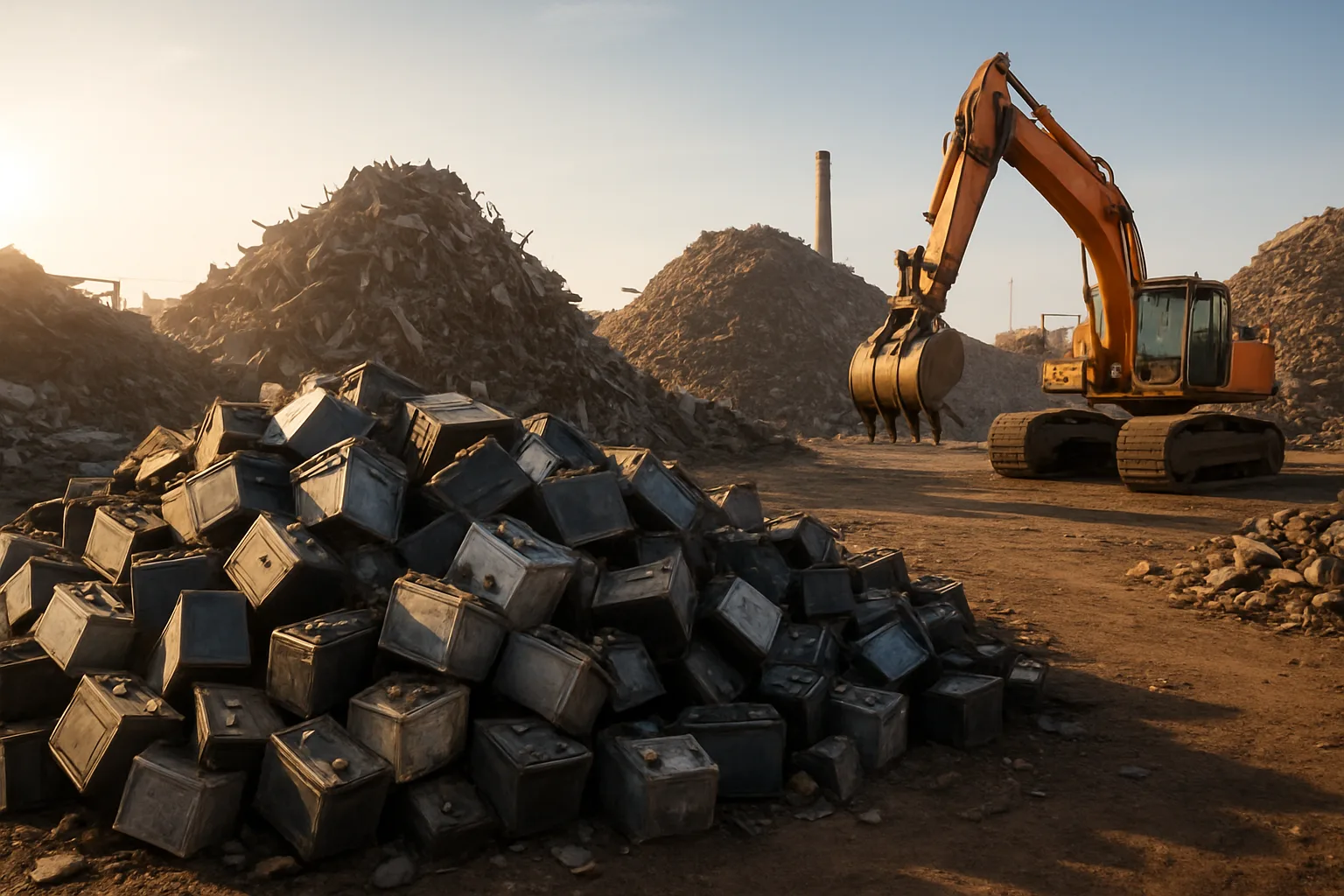
Lead-Acid Battery Scrap Is Worth More Than You Think — Here's How to Get Paid Right
Most scrap yards will take your lead-acid batteries without much fanfare. Drop them off, get a flat rate, move on. But if that's your entire strategy for moving battery scrap, you're probably leaving money on the table. Lead is a high-value, heavily recycled commodity — and in 2026, the market for it is anything but static. Understanding what drives lead scrap value, how battery regulations in Ontario affect your obligations, and where a scrap metal auction fits into your selling strategy can meaningfully change what you walk away with.
For yards and industrial sellers in Toronto and across Ontario, lead-acid batteries represent one of the most consistent non-ferrous revenue streams in the business. Let's break down what that scrap is actually worth, what the regulatory environment looks like right now, and how to stop guessing and start competing.
What's Inside a Lead-Acid Battery — and Why the Lead Price Matters
A standard automotive lead-acid battery weighs roughly 30 to 50 pounds. The majority of that weight — typically around 60 to 70 percent — is recoverable lead. The rest is polypropylene casing, sulfuric acid electrolyte, and minor copper and steel components. When recyclers talk about battery scrap value, they're primarily talking about lead content, because that's what the smelter is buying.
Lead scrap prices in Canada fluctuate with the London Metal Exchange (LME) benchmark, local demand from secondary smelters, and the availability of competing feedstock. Whole batteries (called "whole scrap batteries" or WSBs in the trade) are typically priced at a discount to refined lead because the processor still has to break them down. Broken or drained batteries may fetch different rates depending on the facility.
- Whole scrap batteries (WSBs): Most common form for yard-to-processor transactions
- Soft lead / hard lead: Recovered from grids, terminals, and plates — priced by purity
- Lead-antimony alloy: Found in older battery plates; slight discount to pure lead
- Drained vs. undrained: Acid-free batteries are often preferred for transport compliance
If you want to find the best Canadian scrap metal prices today, understanding which category your lead material falls into is the first step. Selling "batteries" as a single undifferentiated category is how you end up at the low end of the price range.
Ontario Regulations Affecting Lead-Acid Battery Recycling in 2026
Lead-acid batteries are a designated material under Ontario's extended producer responsibility (EPR) framework. In 2026, producers and importers operating in Ontario continue to work within the regulatory structure that expanded EPR obligations across a broader range of waste streams. What this means practically for scrap sellers is that your batteries should be moving through registered collection and recycling programs — not just being stockpiled or informally resold.
The regulatory environment also affects how yards document and transfer battery scrap. Proper manifesting, weight tracking, and buyer verification aren't optional at commercial volumes. If you're moving significant quantities of lead-acid batteries — from automotive dismantlers, industrial equipment turnover, or fleet operations — your documentation chain matters. This is where a platform built around inventory tracking and vetted buyers pays for itself.
Toronto-area yards in particular deal with high transaction volumes and scrutiny from both provincial and municipal waste oversight bodies. The pressure to demonstrate compliant, traceable transactions has only increased. Running your battery scrap through an informal buyer network is a regulatory risk, not just a pricing risk.
The Old Way of Selling Battery Scrap — and Why It Costs You
Here's how most battery scrap gets sold: one call, one quote, one buyer. The yard calls their usual contact, gets a number that may or may not reflect today's LME lead price, and books the load. No competitive pressure. No transparency. No way to know if that number is fair or not.
The buyer on the other end of that call knows your alternatives are limited. They know you're not going to spend two hours calling eight different processors for a load of batteries. So the number they quote you is the number that works for them — not necessarily the one that reflects actual market demand.
This is the problem that a scrap metal auction model directly addresses. When multiple vetted buyers see your load at the same time and compete against each other, the price discovery happens in real time. You're not guessing whether the market is up or down. The market tells you. More buyers means better price discovery — that's not a slogan, it's basic economics.
Platforms like the SMASH Recycling auction platform bring exactly this dynamic to non-ferrous scrap, including lead battery material. Documented inventory, photo evidence, weight verification — all of it goes into the listing so buyers can bid with confidence. That buyer confidence translates into stronger bids.
How SMASH Handles Lead and Non-Ferrous Auction Listings
When you list battery scrap through SMASH, you're not just posting a weight and hoping for the best. The platform is built around documentation: photos, weights, material categorization, and chain-of-custody information. For lead-acid batteries, that means buyers know exactly what they're bidding on — WSBs, broken batteries, drained material, or recovered lead components.
SMASH works on a no-subscription model. There's no monthly fee to list your material. The platform earns when the seller earns. That alignment matters. A model built around commissions on completed sales has every incentive to maximize your outcome — the opposite of a buyer who's negotiating against you.
Auto-invoicing and GST/HST handling are built in, which removes the administrative friction that often slows down non-ferrous transactions. For Toronto yards managing high transaction volumes, that's not a minor feature — it's hours back in the week. If you're ready to move material, contact jeff@smashscrap.com directly to get started.
Want context on where battery lead fits against other non-ferrous scrap categories? Read Canadian scrap metal pricing guides to understand how lead, copper, aluminum, and steel all interact in a diversified yard revenue strategy.
Lead Scrap vs. Other Non-Ferrous Metals: Where Does It Stack Up?
Lead isn't the flashiest non-ferrous metal in the yard. Copper scrap commands significantly higher per-pound values. Aluminum scrap value per pound is more volatile but often more abundant. Steel scrap price today tends to reflect a completely different set of industrial demand drivers. But lead has something those metals don't always have: consistent demand from a closed-loop recycling industry that needs secondary lead to function.
Secondary lead smelters in North America depend on battery scrap as their primary feedstock. There's no substitute. That structural demand creates a floor under lead prices that other scrap categories don't always have. During periods when copper and aluminum prices soften, lead often holds more steadily — because the recycling industry's demand for it is driven by battery manufacturing, not just general industrial activity.
- Copper: High value per pound, sensitive to global manufacturing demand and trade flows
- Aluminum: High volume, moderate value, closely tied to automotive and packaging sectors
- Lead (battery): Lower per-pound value than copper, but stable structural demand from battery manufacturers
- Steel: Highest volume in most yards, lowest per-pound rate, driven by construction and auto sectors
Diversifying across all four categories — and understanding the auction dynamics that affect each — is how experienced yards in Ontario optimize total revenue. If you're only tracking one metal price, you're managing with incomplete information. Check current Canadian scrap metal prices across categories to see the full picture.
What Toronto Yards Should Watch in the Lead Market Right Now
In mid-2026, a few factors are shaping the lead scrap market in Ontario and across North America. Battery demand continues to grow, driven not just by the traditional automotive sector but by energy storage applications, industrial equipment, and backup power systems. That demand growth supports secondary lead prices even as the energy transition shifts some long-term assumptions about internal combustion vehicles.
Toronto's position as a major Canadian logistics hub means that yards here have access to buyers and processors across a wide geographic range. That's an advantage — but only if you're actively working the market rather than defaulting to the nearest buyer. SMASH is built for exactly that: taking a yard's geographic position and connecting it to a vetted national buyer network, not just the closest phone number.
Regulatory compliance in Ontario also continues to tighten around material traceability. Yards that have already built documentation habits — photo records, weight tickets, material categorization — will find the transition to auction-based selling natural. Those that haven't will face increasing pressure from both regulators and downstream buyers who demand proof of origin.
For Toronto scrap metal services that match the scale and documentation requirements of a compliant 2026 operation, the gap between a casual approach and a structured one is widening. The yards that close that gap earliest will be in the strongest position as demand grows and regulatory oversight increases.
Don't guess what your lead scrap is worth. Use competition, documentation, and real market data to find out. If you want to find the best scrap metal prices in Ontario — for lead, copper, aluminum, steel, or any other material — start with the right tools and the right platform. Check rates and find the best Canadian scrap metal prices today at best-scrap-metal-prices.ca.
Disclaimer: Scrap metal prices fluctuate daily based on market conditions, LME benchmarks, and local supply and demand. All pricing information in this article is general in nature. Always verify current rates before making buying or selling decisions.
Frequently Asked Questions
Q: How are lead-acid battery scrap prices determined in Canada?
Lead-acid battery scrap prices in Canada are primarily tied to the London Metal Exchange (LME) lead benchmark, adjusted for local processing costs and buyer demand. Whole scrap batteries (WSBs) are typically priced at a discount to refined lead to account for the processing required. Prices can shift week to week — checking current rates through a transparent pricing platform is the best way to know where the market is before you sell.
Q: What is a scrap metal auction and how does it work for battery scrap?
A scrap metal auction is a competitive bidding process where multiple vetted buyers submit offers on a documented load of material. For battery scrap, this means listing your material with photos, weights, and material categorization, then allowing buyers to compete for the load. The auction format creates real price discovery — instead of accepting a single quote, you see what the market will actually pay. SMASH operates exactly this kind of auction platform for yards across North America.
Q: Are there regulations I need to follow when selling lead-acid battery scrap in Ontario?
Yes. Lead-acid batteries are a designated material under Ontario's extended producer responsibility (EPR) framework, which requires that they move through registered collection and recycling programs. At commercial volumes, documentation including weight records, buyer verification, and material manifests is expected. Selling through a platform like SMASH that handles documentation and works with vetted buyers helps yards stay on the right side of provincial requirements.
Q: Is it worth separating my lead scrap before selling, or should I just sell whole batteries?
It depends on your volume and processing capability. Whole scrap batteries (WSBs) are the most common transaction format between yards and processors, and they're the easiest to handle. If you have the capacity to sort broken batteries, drained cells, or recovered soft lead separately, you may be able to access better pricing for higher-purity material. For most Toronto-area yards, selling documented WSBs through a competitive auction is the most practical path to strong pricing without additional processing overhead.
Q: How does SMASH compare to just calling my regular scrap buyer for lead batteries?
Calling one buyer gives you one price — theirs. SMASH puts your documented load in front of multiple vetted buyers simultaneously, creating competition. That competition is what drives better price discovery. There are no subscription fees, and the platform handles invoicing and GST/HST automatically. If your current approach is a single phone call with no documentation and no competing bids, SMASH is a direct upgrade.
---Stay ahead of scrap metal market shifts — follow SMASH on LinkedIn for industry updates, pricing trends, and scrap metal insights across North America.