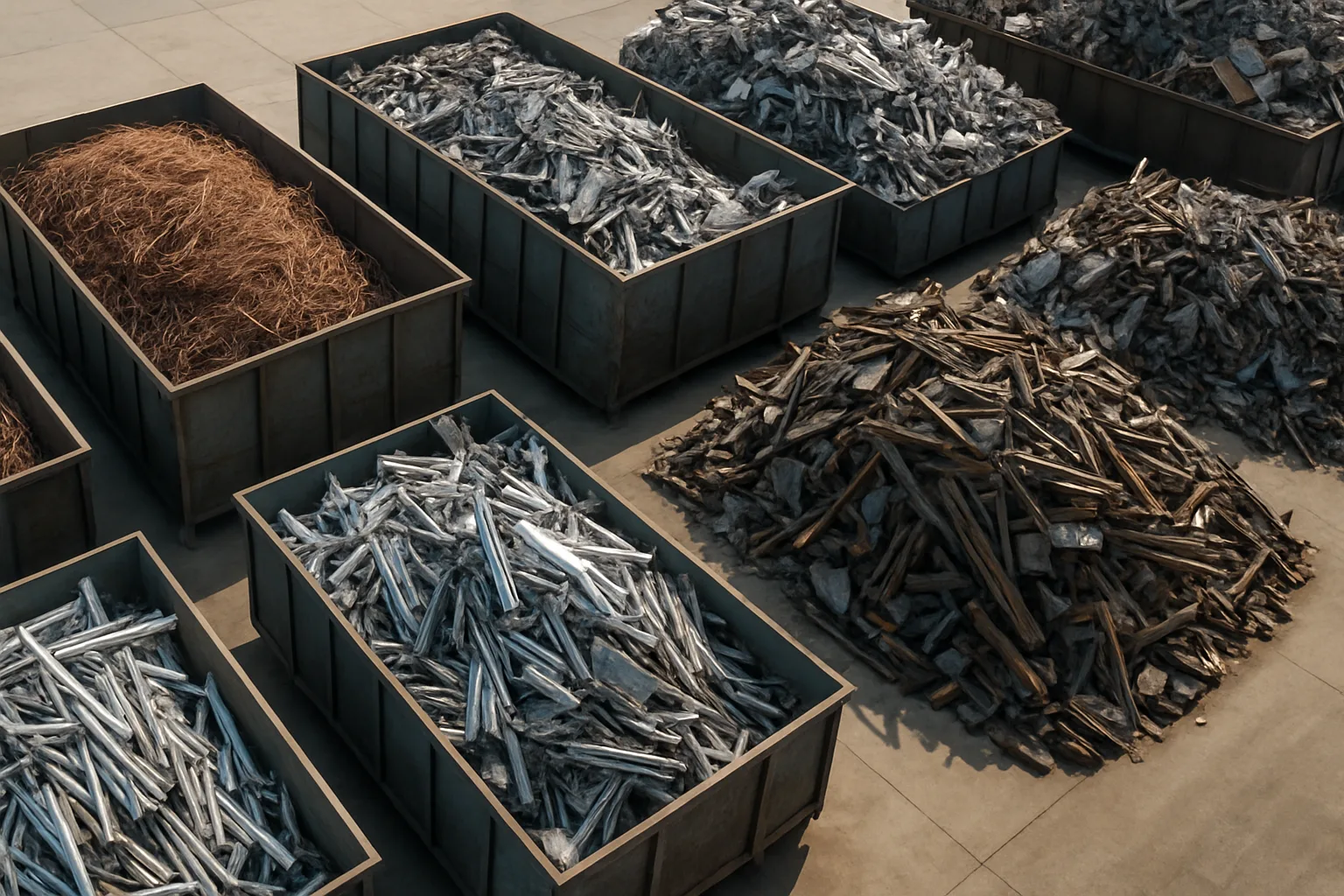
Most sellers leave money on the table before they even make a phone call. They show up at the yard with a mixed load of stainless steel and accept whatever price they're offered — because they don't know the difference between a 304 and a 316. That difference can be worth significantly more per pound. If you're hauling stainless out of a decommissioned plant, a kitchen renovation, or an oil patch job in Fort McMurray, knowing your grades is the first step to getting paid fairly.
This isn't just a guide to stainless steel grades. It's a practical breakdown of how grading affects your payout, why buyers care so much about grade identification, and how platforms like SMASH create the kind of competitive environment where your documented, graded load gets treated like what it actually is — valuable feedstock, not mystery metal.
While this article focuses on stainless steel grades and pricing, the same principles apply across the board. Whether you're tracking the copper scrap price today or trying to figure out what your 304 SS is worth, the answer is always the same: know what you have, document it, and find multiple buyers.
---What Makes Stainless Steel Different From Regular Steel Scrap
Stainless steel isn't just shiny. It contains chromium — typically a minimum of 10.5% — which gives it corrosion resistance. Most grades also contain nickel, molybdenum, or other alloys. Those alloying elements are what make stainless worth significantly more per pound than carbon steel or even standard iron scrap.
For a scrap buyer, stainless is valuable because mills and foundries use it as a direct input. The alloy content is recoverable and reusable. That's why grade identification matters so much — a mill buying 316L for its molybdenum content doesn't want 201 mixed in. The more clearly you can identify and separate your material, the stronger your position when negotiating.
In high-throughput industrial regions like Alberta, stainless scrap comes off pipelines, processing equipment, food-grade conveyors, and heat exchangers. Volumes can be significant. Getting the grade wrong — or not knowing it at all — can cost you real money on every load.
---The Main Stainless Steel Scrap Grades and What They're Worth
Not all stainless is created equal. Buyers use grade classifications that correspond to the alloy composition. Here's what you need to know about the most common grades moving through Canadian scrap yards right now.
Grade 304 / 304L Stainless Steel
This is the workhorse of the stainless world. Grade 304 contains roughly 18% chromium and 8% nickel. It's everywhere — kitchen equipment, food processing, brewing tanks, architectural trim. It's the most commonly traded stainless grade in scrap metal recycling Canada-wide. Because it's abundant and well understood, buyers price it competitively. If you're unsure what grade your stainless is, 304 is the most likely answer — but don't assume. Confirm it.
Grade 316 / 316L Stainless Steel
Grade 316 contains molybdenum in addition to chromium and nickel — typically around 2-3%. That makes it significantly more corrosion-resistant than 304, which is why it's used in marine environments, chemical processing, and pharmaceutical equipment. It also commands a meaningfully higher scrap price. Mixing 316 into a 304 load is one of the most common ways sellers leave money behind. Separate it. Label it. Get paid for it.
Grade 201 Stainless Steel
Grade 201 is a lower-nickel alternative to 304. It substitutes manganese for some of the nickel content, making it cheaper to produce — and cheaper at the scrap yard. It looks similar to 304 on the surface but pays less. Buyers with XRF analyzers will identify it immediately. If you try to pass 201 off as 304, you'll lose credibility with that buyer fast. Know what you have upfront.
Grade 430 Stainless Steel
Grade 430 is ferritic, meaning it contains chromium but little to no nickel. It's magnetic — which is actually a useful field test. If your stainless is magnetic, it's likely a ferritic grade like 430. It prices lower than 304 because nickel is the premium alloy. Appliance trim and automotive exhaust components often contain 430. Still worth recycling, just don't expect 304 pricing.
High-Alloy and Specialty Grades
Grades like 317, 321, 347, duplex grades (2205, 2507), and nickel-bearing super alloys are less common but significantly more valuable. These show up in aerospace components, chemical plants, and specialized industrial equipment. If you're pulling material out of a Fort McMurray oil sands facility, there's a real chance you have some of these higher-value grades in the mix. Don't sell them as generic 304. Get them tested.
---How Grade Identification Affects Your Scrap Metal Price
The pricing gap between grades isn't small. On a per-pound basis, the spread between 201 and 316 can be substantial — and that spread multiplies fast across a full load. A 5,000-pound load of misidentified stainless could mean a significant difference in your payout depending on how accurately the material is graded.
Buyers use XRF (X-ray fluorescence) guns to identify alloy composition on the spot. These devices give a chemical breakdown in seconds. If you walk in claiming 304 and the XRF says 201, you're repriced immediately. The better play is to know your grades before you show up. Pull spec sheets from the equipment you're scrapping. Look for mill certifications or stamps on the material. When in doubt, ask a buyer to test it in front of you — and get the results.
Documentation drives confidence. A load with photos, grade identification, and a clear packing list gives buyers more to work with — and more reason to bid competitively. That's exactly the logic behind how SMASH structures its auction listings. Sellers who document their loads attract more serious buyers. More buyers means better price discovery. It's not complicated — it's just not how the old single-buyer phone call ever worked.
If you want to find the best Canadian scrap metal prices today, documentation and grade clarity are your starting point — not an afterthought.
---Selling Stainless Scrap in Fort McMurray and Northern Alberta
Northern Alberta generates substantial stainless scrap volumes. Oil sands operations, upgrading facilities, and industrial maintenance cycles produce stainless pipe, fittings, heat exchanger bundles, and process equipment on a regular basis. Decommissioning projects in the region often yield thousands of pounds of mixed stainless that needs proper sorting before it moves.
The challenge in a city like Fort McMurray is that local yard options may be limited compared to southern Alberta or major urban centers. Sellers sometimes feel pressure to accept whatever a single local buyer offers — because the alternative seems like hauling material south at a cost that eats into the margin. That's a real constraint, but it's not a reason to undersell.
This is exactly where an online auction platform changes the math. Instead of calling one buyer and taking their number, you list your load with full documentation — grades identified, photos included, weights confirmed — and let vetted buyers across North America compete for it. SMASH is built for exactly this scenario. Yards and sellers in regions like Fort McMurray can access a broader buyer pool without physically transporting material before a sale is confirmed. To find the best price for your scrap in Canada, competition is the mechanism — not luck.
For more context on how regional pricing works and what affects your payout, read Canadian scrap metal pricing guides covering everything from base metal fluctuations to load logistics.
---Copper Scrap Price Today vs. Stainless — Why You Should Track Both
Sellers who focus only on one metal miss the bigger picture. The copper scrap price today is often used as a barometer for the broader non-ferrous scrap market. When copper moves up, it tends to signal strong industrial demand — which often correlates with stronger pricing across other grades, including nickel-bearing stainless. The two markets aren't perfectly correlated, but savvy sellers watch both.
Nickel is the key driver in stainless pricing. Nickel trades on the London Metal Exchange (LME), and its price movements flow directly into what mills will pay for 304 and 316 scrap. When nickel is up, stainless is up. When nickel pulls back, your 316 load is worth less than it was last month. Timing matters.
The same volatility that makes copper pricing hard to pin down applies to stainless. Prices fluctuate based on LME nickel, global mill demand, shipping costs, and domestic inventory levels. That's why locking in a sale at the right moment — through a competitive auction rather than a slow single-buyer negotiation — can make a real difference. To check current Canadian scrap metal prices before you commit to a sale, make it a habit, not an afterthought.
Disclaimer: All scrap metal prices fluctuate based on market conditions. The prices and grade values discussed in this article are general in nature. Always verify current rates with active buyers or pricing platforms before making selling decisions.
---How to Prepare Your Stainless Load for Maximum Value
Getting the grade right is step one. Here's the full checklist for presenting a stainless load that buyers take seriously — and bid on competitively.
- Sort by grade. Keep 304, 316, 430, and any specialty grades separate. Mixed loads get priced at the lowest common denominator.
- Remove contamination. Carbon steel attachments, rubber gaskets, and insulation all reduce value. Strip what you can.
- Weigh accurately. Know your weights before listing or calling. Buyers trust sellers who show up with accurate numbers.
- Take photos. Clear, well-lit photos of the material — including any stamps, tags, or identifiable markings — increase buyer confidence.
- Pull documentation. Mill certs, equipment spec sheets, or purchase records help confirm grade claims.
- Use an XRF if available. Some yards offer XRF testing. Use it before you sell, not after.
- List with multiple buyers. A single offer is a ceiling, not a market price. Competitive auctions reveal what your material is actually worth.
This process applies whether you're selling a single heat exchanger or a full trailer of decommissioned stainless pipe. The discipline of preparation pays off at the scale of real industrial loads.
---Frequently Asked Questions
Q: How do I know what grade my stainless steel scrap is?
The most reliable method is XRF (X-ray fluorescence) testing, which many scrap yards offer. You can also check for mill stamps, equipment spec sheets, or purchase documentation. A basic field test: if your stainless is magnetic, it's likely a ferritic grade like 430, which contains little to no nickel. Non-magnetic stainless is more likely to be 304 or 316, though XRF is the only way to confirm.
Q: Does the copper scrap price today affect what I get for stainless steel?
Not directly, but both markets respond to the same underlying driver: industrial demand. When the copper scrap price today is strong, it often signals broad manufacturing activity, which can support stainless pricing as well. The more direct driver for stainless is LME nickel — watch nickel prices if you want to time your stainless sales.
Q: Is scrap metal recycling in Fort McMurray different from selling in Edmonton or Calgary?
The grading standards and metal values are the same, but access to buyers can vary by region. Fort McMurray sellers may have fewer local yard options, which is why online auction platforms like SMASH are particularly valuable in northern Alberta — they give sellers access to a national buyer pool without limiting them to whoever is nearby.
Q: What's the difference between 304 and 316 stainless scrap prices?
Grade 316 contains molybdenum, a premium alloying element, which gives it higher corrosion resistance and a higher scrap value than 304. The price gap varies with market conditions but is consistently meaningful — enough that mixing the two grades into one load costs you real money. Always separate and identify your grades before selling.
Q: How can I get competitive pricing for my stainless scrap across Canada?
The most effective approach is to document your load thoroughly — grade identification, weights, photos, and any available mill certs — then present it to multiple buyers simultaneously. Platforms like SMASH create a competitive auction environment where vetted buyers bid against each other, which gives you a clearer picture of actual market value rather than one buyer's opening offer.
---Stainless steel is one of the more complex materials in the scrap market — but complexity rewards the sellers who do their homework. Know your grades. Document your loads. Don't settle for the first number you hear. If you're hauling stainless out of a job site in Fort McMurray or anywhere else across Canada, you deserve to know what it's actually worth before you commit to a sale. Get the best Canadian scrap metal prices — check rates at best-scrap-metal-prices.ca and put a number to your load before the next buyer call.
Stay sharp on market trends and scrap metal pricing by following SMASH on LinkedIn — regular updates on industry shifts, metal market movements, and practical tips for sellers across North America.