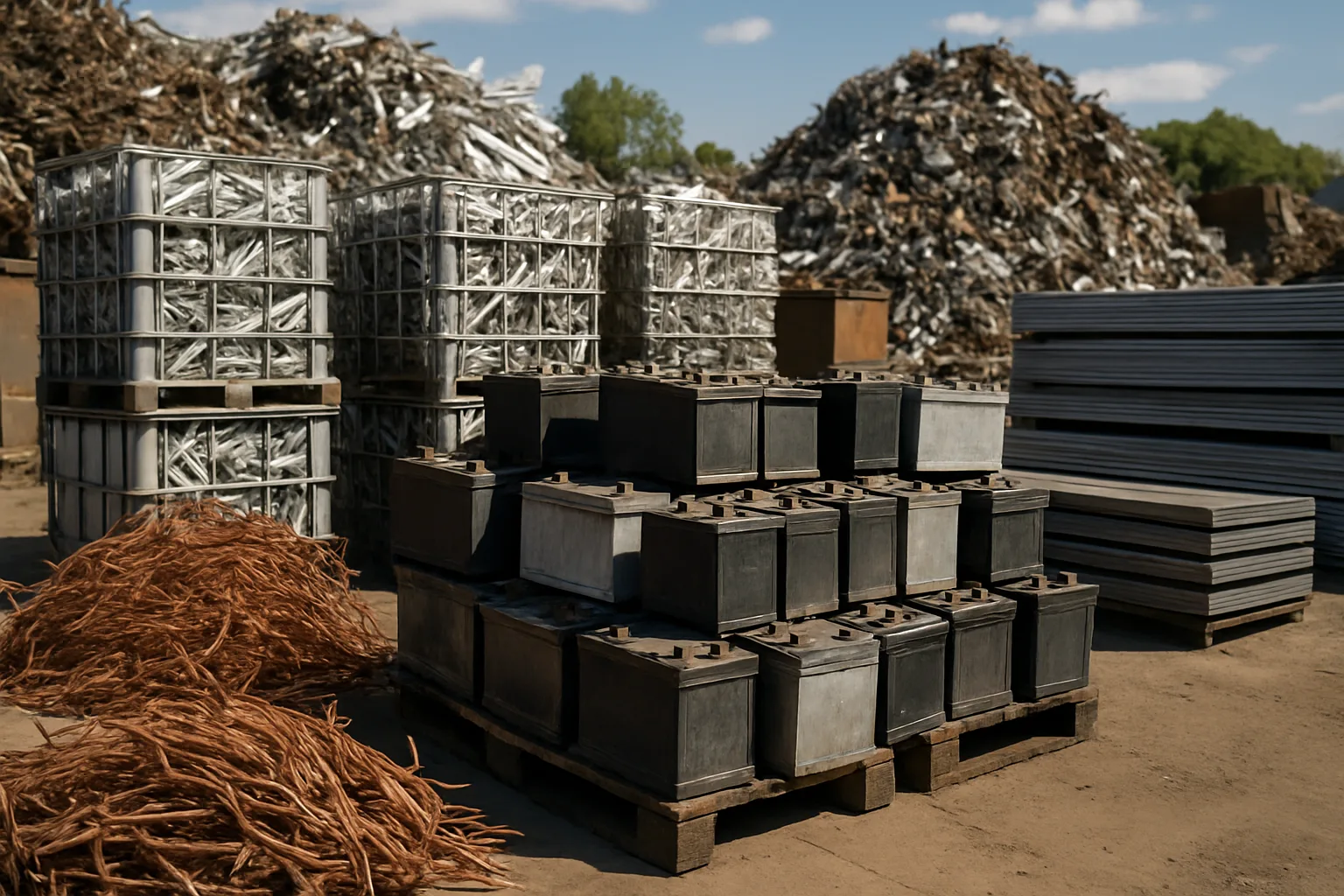
Lead-Acid Battery Scrap Is Worth More Than You Think — Here's What the Market Looks Like This Week
Most sellers walk past stacks of dead lead-acid batteries without a second thought. That's a mistake. Lead scrap is one of the more stable commodities in the recycling market, and right now, with global battery demand climbing alongside EV infrastructure buildout and industrial backup power systems, the value sitting in those old cores deserves a serious look. If you're focused only on chasing the aluminum scrap price today, you might be leaving real money on the floor — or more accurately, on the pallet.
This week's recap covers what's moving in the lead-acid battery recycling market, what drives the price of lead scrap in Canada, and how sellers in markets like Barrie and across Ontario can make smarter decisions before they book their next load.
What Drives Lead Scrap Prices in Canada Right Now
Lead scrap pricing in Canada is tied closely to the London Metal Exchange (LME) benchmark, but what you actually get at the yard depends on several additional factors: lead purity, battery condition, whether you're selling whole batteries or broken-down lead plates, and how many buyers are actually competing for your material.
In August 2026, a few key dynamics are pushing lead scrap into focus:
- Industrial UPS demand — Data centres and telecom infrastructure continue to rely on lead-acid backup systems. Replacement cycles generate steady scrap volume.
- Automotive turnover — Conventional ICE vehicles and hybrid fleets still run 12V lead-acid batteries. High vehicle replacement activity keeps supply moving into yards.
- Secondary smelter capacity — Canadian secondary lead smelters are running, and buyers want consistent feedstock. Documented, sorted loads attract better bids.
- Currency spread — CAD/USD fluctuations affect what Canadian sellers net against LME-pegged pricing. Worth watching week to week.
The short version: lead scrap isn't flashy, but it has real buyers and real demand. If your yard handles automotive cores or industrial equipment, you're sitting on it regularly.
Lead-Acid Battery Recycling — How the Pricing Actually Works
Whole lead-acid batteries are typically priced by the pound or kilogram. A standard car battery runs roughly 10–13 kg. Industrial and commercial batteries — think forklift batteries or large UPS units — can weigh several hundred kilograms each. The lead content in a typical automotive battery sits around 60–70% by weight, which is why buyers pay attention to battery condition and age.
Here's what affects your per-unit or per-tonne offer:
- Battery type — Automotive, AGM, gel cell, and flooded lead-acid all carry slightly different lead content ratios.
- Condition — Intact, uncracked batteries with electrolyte contained are easier to process. Damaged or leaking units introduce handling costs that buyers price in.
- Volume — Larger loads get better rates. A pallet of 20 car batteries is a different conversation than a full truckload.
- Documentation — BOLs, packing lists, battery counts, and photo documentation give buyers confidence. Confidence translates to stronger bids.
- Number of buyers — This one's the big lever. One buyer quoting your load sets the price. Five buyers competing for it discovers the price.
That last point is where most sellers leave money on the table. A single phone call to your usual yard doesn't tell you what the market will actually pay. It tells you what that yard will pay. There's a difference — sometimes a meaningful one.
Best Scrap Metal Prices in Barrie and Ontario This Week
If you're selling scrap in Barrie or anywhere across Ontario, the gap between what one buyer offers and what the market will actually bear can be significant. Barrie sits in a strong position — close enough to major processing infrastructure in the GTA corridor, with active recycling activity across Simcoe County. That means there are real buyers who want your material. The question is whether you're reaching all of them.
For sellers looking to find the best Canadian scrap metal prices today, the approach matters as much as the timing. Listing your load where multiple vetted buyers can see it — and bid on it — is how you stop guessing and start getting paid what the market will bear.
Lead scrap isn't the only material worth tracking this week. Here's a quick snapshot of what's moving across Ontario yards right now:
- Aluminum — Prices vary by grade. Cast, extruded, and sheet all trade differently. Watching the aluminum scrap price today matters because it shifts week to week with LME movements and domestic mill demand.
- Copper — Bare bright and #1 copper remain strong. Mixed or insulated copper prices reflect stripping costs.
- Steel and iron — Ferrous markets are steady. HMS and shredded steel move in volume; price per tonne is the lever.
- Catalytic converters — PGM prices (platinum, palladium, rhodium) remain volatile. Sellers who want to sell catalytic converters online need real-time buyer competition, not a single phone quote.
To check current Canadian scrap metal prices across these categories, you need a source that reflects what buyers are actually bidding — not static posted rates from weeks ago.
Why Documented Inventory Gets Better Bids on Lead Scrap
Here's something seasoned yard operators already know: buyers pay more when they know exactly what they're getting. Lead-acid batteries are a perfect example. A load that comes with a clear count, battery types identified, condition noted, and photos attached is a load a buyer can price with confidence. A mystery pallet gets priced conservatively — because the buyer prices in the uncertainty.
Platforms like SMASH are built around this reality. When you list a load through SMASH, you document it properly — photos, weight estimates, battery counts, packing list. That documentation goes out to vetted buyers across the network. More information means buyers bid more aggressively. Less uncertainty means better price discovery.
SMASH also handles serial tracking for cores, VIN lookup where it applies, and auto-invoicing once the load sells. GST/HST is handled correctly. You don't chase paperwork after the sale. You focus on the next load.
For Barrie-area sellers managing ongoing battery scrap volume, that's not a small thing. Administrative friction eats time. Time costs money. If you're regularly moving lead-acid scrap and want a more efficient path to competitive pricing, get competitive bids for your scrap in Canada through a platform that puts buyers in competition for your material.
The Old Way vs. the SMASH Way — Lead Scrap Edition
The old way: you call your regular buyer, get a quote, decide whether to take it or sit on the material hoping for a better week. You have no visibility into what other buyers would have paid. You might be leaving money on the table, or you might have gotten a fair price. You genuinely don't know.
The SMASH way: you document the load, list it on the platform, and let vetted buyers compete. The auction format means the price isn't set by one person's margin targets — it's set by competition. You see what buyers are willing to pay. That's price transparency. That's how markets are supposed to work.
No subscription fees. SMASH only wins when you win. That's the model.
For sellers who want to go deeper on how Canadian scrap pricing works across all metal categories, read Canadian scrap metal pricing guides that break down the variables behind each commodity — including why lead scrap pricing behaves differently than aluminum or copper.
If you're in Barrie and want to know what local buyers are currently paying for battery scrap or other metals, check out Barrie scrap metal services for location-specific pricing context.
Getting the Most Out of Your Lead Scrap — Practical Tips for Sellers
Whether you're a yard operator handling regular battery volume or a business with a one-time industrial surplus, these steps put you in a stronger position before any sale:
- Sort by type before listing — Automotive, industrial, AGM, and forklift batteries should be separated. Mixed loads price to the lowest common denominator.
- Document the count and condition — Know what you have. A rough count and a few photos go a long way toward buyer confidence.
- Don't ignore timing — LME lead prices move. Listing a large load during a price uptick versus a dip can meaningfully affect your return.
- Get multiple bids, always — One quote is a starting point, not a final answer. Competition reveals what your material is actually worth.
- Handle electrolyte properly — Leaking batteries create compliance risk. Intact, contained loads move faster and attract better buyers.
These aren't complicated steps. But they're the difference between an average outcome and a good one on a consistent basis.
Disclaimer: Scrap metal prices fluctuate daily based on LME movements, local market conditions, buyer demand, and material grade. Always verify current rates before committing to a sale. Prices referenced in this article reflect general market conditions as of August 2026 and are not guaranteed quotes.
If you want to stop guessing what your scrap is worth and start seeing what buyers will actually pay, the best move is straightforward — find the best Canadian scrap metal prices today and list where competition works in your favour.
Frequently Asked Questions
Q: What is the scrap value of a lead-acid car battery in Canada in 2026?
A standard automotive lead-acid battery weighs roughly 10–13 kg, with lead making up the majority of that weight. The exact scrap value depends on current LME lead prices, the buyer, and your location. Always get multiple bids rather than accepting the first quote — competition between buyers is the most reliable way to find the real market price.
Q: How do I find the best scrap metal prices in Barrie, Ontario?
Start by understanding what you have — metal type, grade, and weight. Then reach out to multiple buyers rather than relying on a single yard. Platforms like SMASH allow vetted buyers to compete for your material, which gives you real price discovery rather than a single-buyer quote. For location-specific context, check resources focused on best scrap metal prices Barrie to see what local buyers are paying.
Q: Does the aluminum scrap price today affect lead scrap pricing?
Not directly — lead and aluminum are separate commodities with different supply chains and buyer pools. However, both are benchmarked against LME spot prices, so broad commodity market movements can affect both simultaneously. Checking the aluminum scrap price today alongside lead gives you a fuller picture of where the overall scrap market sits.
Q: Can I sell catalytic converters and lead batteries through the same platform?
Yes. Platforms like SMASH handle multiple scrap categories including catalytic converter cores and lead-acid batteries. If you want to sell catalytic converters online alongside battery scrap, listing both through a single vetted-buyer platform streamlines the process and gives you competitive bids across all your materials at once.
Q: What documentation do I need to sell lead-acid batteries as scrap in Ontario?
At minimum, most buyers expect a basic packing list with battery count, type, and estimated weight. For larger commercial or industrial loads in Ontario, a bill of lading (BOL) and proper electrolyte containment documentation may be required. Proper documentation also tends to improve the bids you receive — buyers price in uncertainty, so the more clearly you describe your load, the more confidently they can bid.
---Stay current on scrap metal market movements, pricing trends, and recycling industry news by following SMASH on LinkedIn — regular updates for scrap metal sellers and buyers across North America.