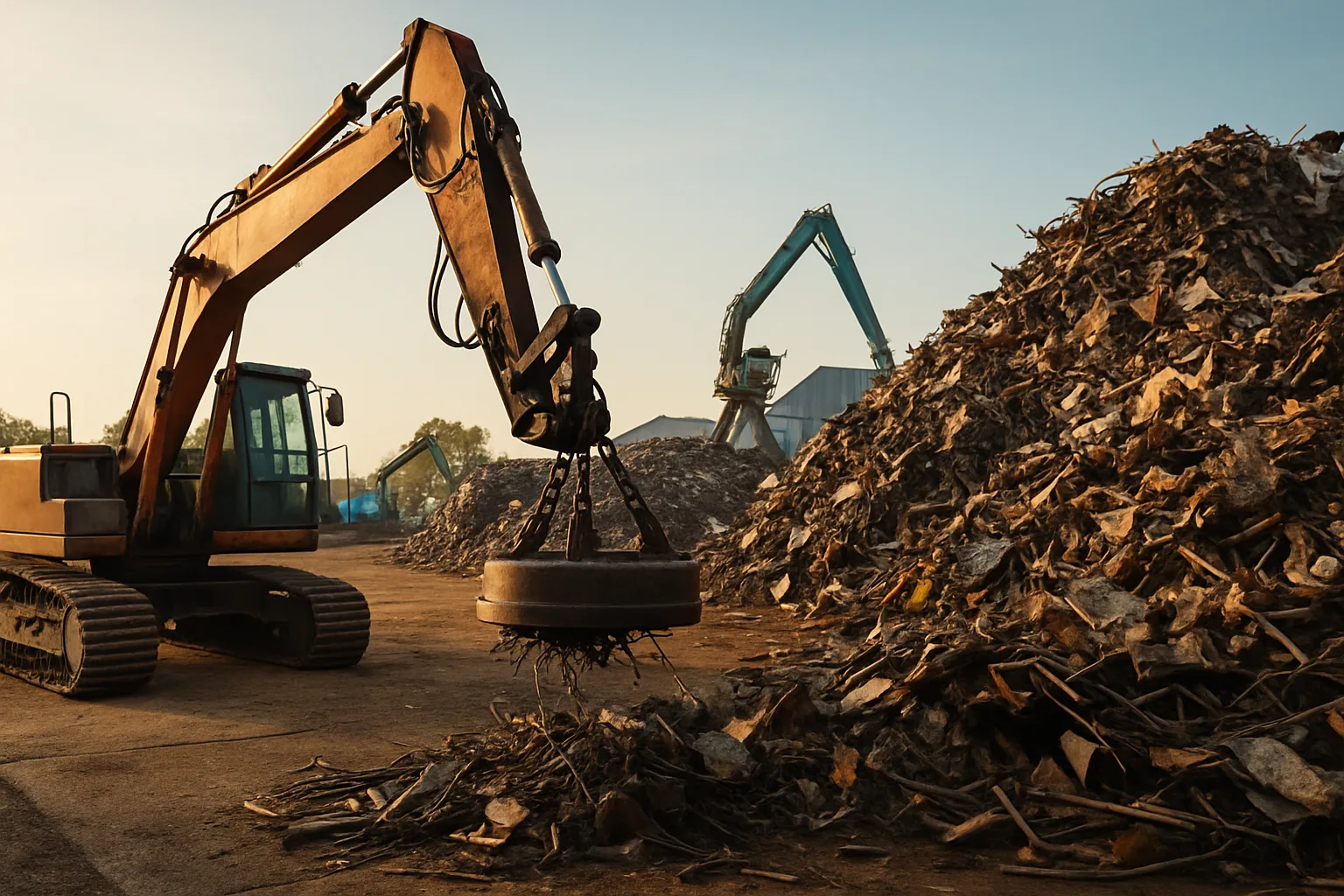
Why Knowing Your Metal Can Put More Money in Your Pocket
Most people leave serious money on the table at the scrap yard — not because they have bad material, but because they don't know what they're holding. Tossing copper in with steel, or mixing aluminum with zinc, drops your payout fast. If you're doing scrap metal recycling in Laval, learning to sort your material before you show up is one of the easiest ways to get paid more per load.
This guide gives you two tools you already have: your eyes and a magnet. Together, they'll help you identify the most common metals in a scrap pile. No lab equipment. No guessing. Just practical knowledge that makes your next trip to the yard — or your next listing on a platform like SMASH — worth more.
The Magnet Test: Your First Line of Metal Identification
Grab a rare earth magnet (a strong fridge magnet works in a pinch, but a neodymium magnet from a hardware store is better). This one test splits your scrap into two major categories immediately: ferrous and non-ferrous.
- Ferrous metals (stick to the magnet): Iron, steel, cast iron, galvanized steel. These are your lower-value bulk materials — but volume matters, and sorting them cleanly still helps.
- Non-ferrous metals (don't stick): Copper, aluminum, brass, stainless steel, zinc, lead, and nickel. These are where the real money is. Non-ferrous commands significantly higher prices per pound at any yard in Quebec.
One important note: stainless steel is tricky. It's non-ferrous in many grades, but some lower-grade stainless will have a weak magnetic pull. Don't assume stainless is worthless — it's not. Test it, set it aside, and confirm with your yard or buyer. When you want to find the best Canadian scrap metal prices today, knowing your grades matters as much as knowing your metal type.
Visual Identification: What Each Metal Actually Looks Like
Once you've split ferrous from non-ferrous, the magnet's job is done. Now you use your eyes. Color, weight, texture, and surface finish all tell you what you're dealing with.
Copper
Copper is one of the most valuable metals in a scrap pile. Fresh copper is a bright reddish-orange — unmistakable when clean. Aged or exposed copper turns dark brown, then green (called patina or verdigris). It's heavy for its size and bends easily. You'll find it in electrical wire, plumbing pipe, motors, and heat exchangers. In Laval, demolition sites and commercial renovation jobs are common sources.
Grades matter here. Bare bright copper wire pays the most. Insulated wire pays less until stripped. Dirty or corroded copper drops another tier. If you're tracking copper scrap prices in Laval, understanding these grades helps you know exactly what rate to quote or expect. You can check current Canadian scrap metal prices to benchmark before you negotiate.
Aluminum
Aluminum is lightweight — noticeably lighter than steel or copper of the same size. It's silver-grey, often with a dull or slightly matte finish. It won't rust, but it does oxidize to a chalky white surface over time. You'll find aluminum in window frames, siding, extrusions, engine blocks, rims, and cans. It does not stick to a magnet.
Not all aluminum is the same grade. Cast aluminum (like engine parts) is worth less per pound than extruded or sheet aluminum. Dirty aluminum with paint, rubber, or plastic attached drops further. Clean and sort your aluminum by type to maximize your return.
Brass
Brass is a yellow-gold color — warmer than steel, heavier than aluminum. It's a copper-zinc alloy, which is why it pays well. Common sources include plumbing fittings, valves, faucets, shell casings, and decorative hardware. It won't stick to a magnet. When clean, it has a distinctive warm tone that's hard to confuse once you've seen it a few times.
Brass is often found mixed in with other plumbing or HVAC material. Pulling it out and selling it separately is always worth the extra five minutes of sorting.
Stainless Steel
Stainless is silver, shiny, and harder to scratch than regular steel. It won't rust — that's your visual cue. Run a file or key across it; stainless resists scratching more than aluminum. It may have a weak or no magnetic response depending on the grade. Common in commercial kitchen equipment, food processing machinery, medical tools, and appliances.
Stainless pays more than regular steel but less than copper or brass. Don't let a yard fold it in with your mixed steel — sort it separately and declare it upfront.
Lead
Lead is extremely heavy, dull grey, and soft — you can scratch it with your fingernail. It's found in old plumbing, wheel weights, batteries, and roofing flashing. It does not stick to a magnet. Handle it carefully and check your local regulations in Quebec around lead disposal, as there are environmental rules governing how it's processed.
Zinc
Zinc is a bluish-grey metal, brittle, and often appears as a coating (galvanizing) on steel. Die-cast zinc parts — found in older toys, automotive trim, and hardware — are common in mixed scrap. It's heavier than aluminum but lighter than copper. It won't stick to a magnet on its own, though the steel underneath galvanized material will.
How to Sort Your Scrap Before You Sell — and Why It Pays Off
Most yards in the Laval and greater Quebec area will pay you based on what you bring in — sorted. If you walk in with a mixed pile, they'll grade it at the lowest value in the mix. That's not a scam; that's how pricing works when the buyer has to do the sorting labour themselves.
Here's a practical sorting system for before you haul:
- Magnet pass first. Pull out everything ferrous into one pile. Set aside the non-ferrous separately.
- Color sort your non-ferrous. Red/orange = copper. Yellow-gold = brass. Silver and light = aluminum. Silver and heavy = stainless, lead, or zinc.
- Grade your copper. Separate bare bright wire, insulated wire, pipe, and dirty copper into distinct groups.
- Pull your stainless. Don't let it end up in the steel pile.
- Document your load. Photograph each pile before you go. If you're selling online or using a platform like Canada's B2B scrap recycling marketplace, good documentation means better buyer confidence and better price discovery.
If you want to sell scrap metal online or get competitive bids on larger loads, platforms like SMASH are built for this. Vetted buyers, an auction format, and documented inventory replace the single-call guessing game entirely. More buyers means better price discovery — full stop.
Scrap Metal Prices in Quebec: What Drives Value in 2026
Metal prices in Quebec — and across Canada — move with global commodity markets. Copper tracks LME (London Metal Exchange) pricing. Aluminum follows its own index. Steel is tied to regional demand from mills and export activity.
In mid-2026, a few factors are influencing best scrap metal prices in Quebec and nationally:
- Copper demand remains elevated due to ongoing electrification — EV production, grid upgrades, and renewable energy infrastructure all consume significant copper.
- Aluminum prices are influenced by smelting energy costs and automotive sector demand for lightweight materials.
- Steel and iron pricing fluctuates with construction activity and mill capacity in the region.
- Non-ferrous metals generally outperform ferrous in per-pound value — which is exactly why sorting pays off.
Prices change daily. What a yard quoted you last week may not be what they'll pay today. Before you load your truck, read Canadian scrap metal pricing guides to understand current benchmarks and avoid showing up uninformed.
Disclaimer: Scrap metal prices fluctuate based on global commodity markets, local demand, and material grade. Always verify current rates directly with your buyer or platform before selling.
Making the Most of Your Scrap in Laval and Beyond
Laval is a dense urban market with significant renovation, demolition, and industrial activity feeding the local scrap supply. That means competition exists — between sellers and between buyers. Use that to your advantage.
Don't default to one buyer because it's convenient. If you've got a load of clean copper, brass, or sorted aluminum, you have leverage. Get multiple quotes. Ask for itemized pricing by grade, not a single blended number for your whole load. Know your weights before you arrive.
For larger or recurring loads, a platform like SMASH removes the legwork. You list your inventory with photos and specs, vetted buyers compete, and you get a real market price — not whatever a single buyer decides to offer that morning. That's the difference between guessing and knowing. If you're searching for scrap metal near me for cash and want to make sure you're not leaving money behind, starting with solid identification and sorting puts you ahead before negotiations even begin.
Whether you're clearing out a renovation in Laval, processing commercial material across Quebec, or comparing rates with what yards charge in other markets — you can always find the best Canadian scrap metal prices today and go in prepared.
Frequently Asked Questions
Q: How do I tell copper from brass when scrap metal recycling in Laval?
Copper is a reddish-orange color — closer to a penny. Brass is yellow-gold, more like a doorknob or plumbing fitting. Both are heavy and won't stick to a magnet. When in doubt, look at the color under good lighting. Copper is distinctly red-toned; brass leans warm yellow.
Q: Does sorting my scrap actually make a difference in what I get paid?
Yes — significantly. Yards pay based on the lowest-value material in a mixed load, because they absorb the sorting cost. A clean, sorted load of copper pipe pays far more per pound than the same copper thrown in with steel and aluminum. Sorting is the fastest way to improve your payout without changing what you have.
Q: Where can I check copper scrap prices in Laval before I sell?
Start with online pricing benchmarks at best-scrap-metal-prices.ca, then confirm with your local yard or buyer. Prices move daily with commodity markets, so checking fresh rates before you haul is always worth the two minutes it takes.
Q: Can I sell scrap metal online in Quebec instead of hauling it to a yard?
For larger or commercial loads, yes. Platforms like SMASH let you list documented inventory and receive competitive bids from vetted buyers across Canada. It's not practical for a single bag of cans, but for loads worth several hundred dollars or more, it can meaningfully improve what you earn through open competition.
Q: Is stainless steel worth separating from regular steel when scrapping?
Absolutely. Stainless steel pays more per pound than carbon or mild steel. If you fold stainless into your regular steel pile, you'll be paid steel prices for a material worth more. Sort it separately, declare it upfront, and ask for a separate line price on your receipt.
You've done the work to collect and sort your material — don't leave the pricing to chance. Get the best Canadian scrap metal prices by checking current rates at best-scrap-metal-prices.ca before your next haul. Knowing what your metal is worth, before you walk in the door, is how you stop guessing and start getting paid what your load is actually worth.
For ongoing scrap metal market updates and industry insights, follow SMASH on LinkedIn — practical intel for yards and sellers who want to stay ahead of the market.