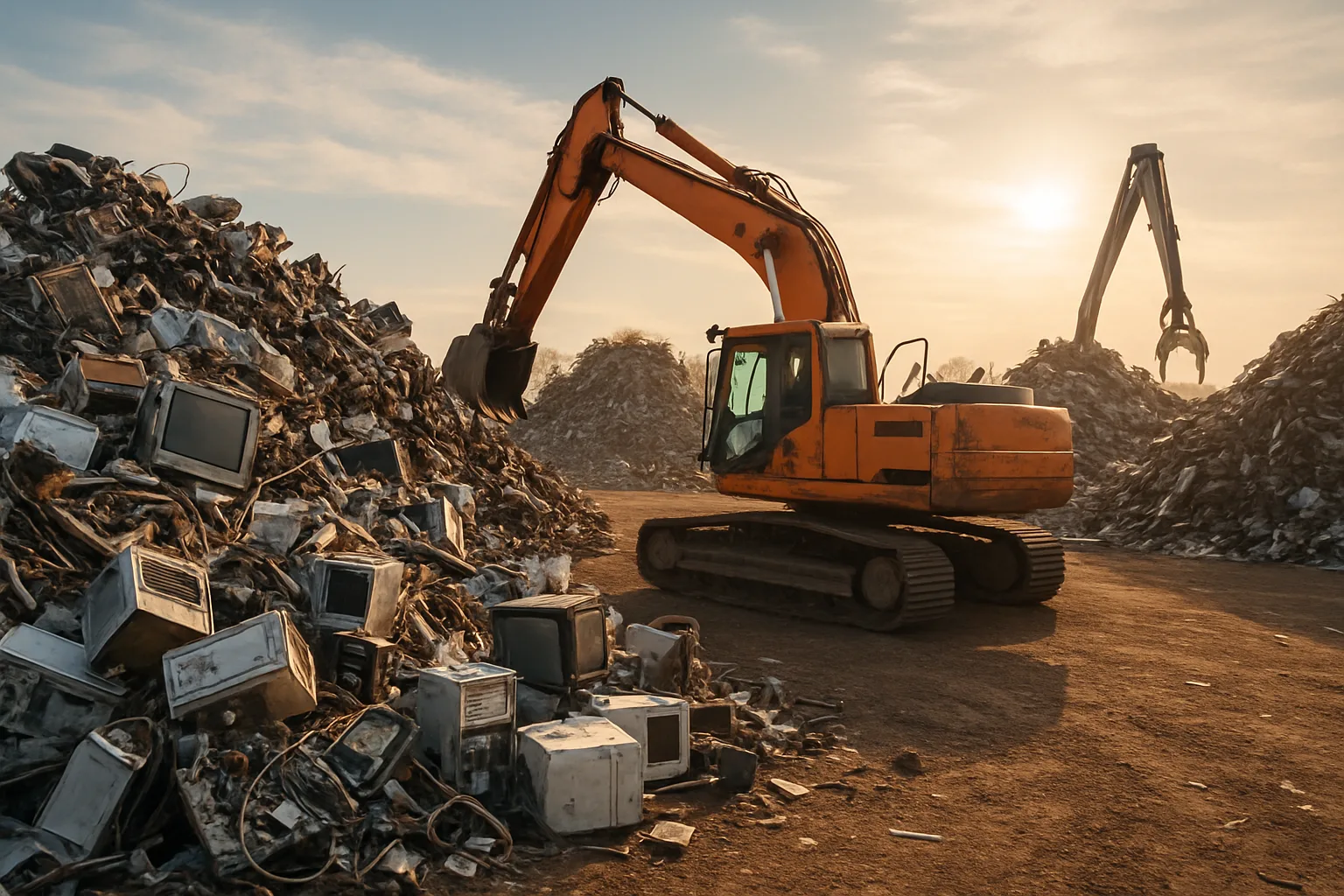
Your Old Laptop Is Worth More Than You Think — Here's How to Recover That Value
Most people in St. John's have a bin, a closet, or a corner of the garage filled with dead electronics. Old phones, broken laptops, stripped desktop towers, busted printers. It just sits there. What most sellers don't realize is that pile isn't garbage — it's a mixed-metal load with genuine recovery value, if you know what you're looking at and how to move it properly.
E-waste is one of the fastest-growing material streams in the scrap industry. It's also one of the most misunderstood. The metals inside old electronics — copper, aluminum, gold, silver, palladium — are worth real money. The challenge is knowing which materials matter, what they typically yield, and how to get competitive pricing instead of whatever a single buyer decides to offer you that day.
This guide breaks down e-waste recovery from a seller's perspective. No filler. Just what the metals are, what they're worth understanding, and how platforms like the SMASH Recycling auction platform help you stop guessing and start getting market-driven prices.
What Precious and Base Metals Are Inside Old Electronics?
Electronics are dense with recoverable metals. The concentrations are small per unit, but if you're moving volume — buying out estates, clearing commercial properties, or aggregating from multiple sources — the numbers add up fast. Here's what you're actually dealing with inside common e-waste categories:
- Copper: Found in wiring, circuit boards, motors, and power supplies. Copper is typically the highest-volume recoverable metal in e-waste by weight. A stripped computer power supply is largely copper and aluminum.
- Aluminum: Heat sinks, chassis frames, and laptop housings are often aluminum alloy. Lighter than steel and worth separating cleanly.
- Gold: Present in trace amounts on circuit board contacts, CPU pins, and connectors. Gold is used because it doesn't corrode and conducts reliably. The concentrations are small but the metal value is high.
- Silver: Found in solder points, switches, and some older capacitors. Silver content varies by era — older equipment often runs higher.
- Palladium: Present in multilayer ceramic capacitors (MLCCs), particularly in older boards from the 1990s and early 2000s. Palladium prices have been volatile but remain significant.
- Steel and iron: Cases, brackets, and drive housings. Lower per-pound value but often the bulk of a mixed electronics load by weight.
Understanding this breakdown changes how you think about sorting. A mixed electronics bin moved as a single load will almost always get priced at the bottom of the value range. Breaking materials into clean streams — separated copper wire, stripped boards, aluminum chassis — creates a better-documented, more competitive load. Documentation matters, especially when buyers are bidding remotely. If you want to find the best Canadian scrap metal prices today, sorting is the first step that puts money in your pocket before you even post a load.
How to Sort and Prepare E-Waste for Maximum Scrap Metal Value
Sorting e-waste doesn't require a full processing facility. It requires a basic process and some consistency. The goal is to separate clean metals from contaminated or mixed materials, because buyers price accordingly. Here's a practical approach for sellers in Newfoundland and Labrador and across Canada:
- Separate by material type, not by device type. Don't make a pile of "laptops" and a pile of "desktops." Make a pile of copper wire, a pile of clean aluminum, and a pile of whole boards.
- Strip power supplies. The copper transformer inside a power supply is more valuable than the whole unit unsorted. If volume justifies it, a simple cut and pull separates the copper from the steel housing.
- Pull hard drives separately. Hard drives contain aluminum platters, rare earth magnets, and mixed steel casings. Some buyers spec them separately. Know what you have.
- Grade your boards. Circuit boards are priced by grade — motherboards, server boards, telecom boards, and memory modules all price differently. Mixed low-grade boards sell at a lower yield than separated higher-grade material.
- Document everything with photos. Weight, material type, condition, and photos create a credible listing. Buyers bidding without seeing material in person need this confidence to bid competitively.
- Keep CRTs separate. Cathode ray tube monitors contain lead and require specific handling. They're not standard scrap — know your local disposal requirements in Newfoundland and Labrador before moving these.
This process takes time upfront. But it directly affects what buyers offer. Documented, sorted loads sell better. That's not a theory — it's how buyers price risk. Less uncertainty equals stronger bids. Platforms like SMASH are built around this logic: detailed inventory, photo documentation, and serial tracking all exist to give buyers the confidence to compete on price rather than discount for unknowns.
Understanding Scrap Metal Prices for E-Waste Materials in Canada
Pricing e-waste materials is more complex than pricing a clean copper pipe load or a bundle of aluminum extrusion. Precious metal content is recovered through smelting and refining, which adds a processing step between the seller and final value. This means the price you receive for boards or whole units reflects a discount from spot value — and that discount varies by buyer, refinery relationship, and market conditions.
For base metals like copper and aluminum, pricing tracks commodity markets closely. Copper price in Canada moves with LME (London Metal Exchange) spot rates, adjusted for local market conditions and material grade. Aluminum prices follow similar logic. Both have seen meaningful price movement through 2025 and into mid-2026 as global demand patterns shift. If you want to check current Canadian scrap metal prices before you post a load, that data exists — and using it puts you in a stronger negotiating position.
For precious metals in e-waste, pricing is typically:
- Based on assay or standard yield tables — buyers apply a percentage recovery factor to estimated precious metal content
- Quoted per pound of material (e.g., per pound of motherboards) rather than per troy ounce of gold recovered
- Higher for higher-grade material — server boards and telecom equipment typically carry better yields than consumer-grade desktop boards
The biggest pricing mistake sellers make is accepting the first offer from a single buyer with no comparison point. This is exactly the problem a scrap metal auction format solves. When multiple vetted buyers compete for your load, the market sets the price — not one person's margin target. That's a fundamental shift in how you sell.
Disclaimer: Scrap metal prices fluctuate daily based on commodity markets, material grade, and local demand. Always verify current rates before selling.
Why Single-Buyer Deals Leave Money on the Table for E-Waste Sellers
Here's the old way: you call one yard, they quote you a price per pound on mixed electronics, you take it or you don't. If you're in St. John's, your options may feel limited by geography. One or two local contacts, maybe a broker, and that's your market. The problem isn't that local buyers are dishonest — it's that without competition, there's no pressure to price fairly. A buyer quoting without competition is pricing for their upside, not yours.
The SMASH model flips that. When you list a load on the SMASH Recycling auction platform, vetted buyers across North America bid on your material. Geography stops limiting your price. A smelter in Ontario or a refiner in Quebec might value your telecom boards differently than a single local yard. That difference in buyer appetite is where price discovery actually happens. More buyers means better price discovery — that's not a tagline, it's market mechanics.
This matters especially in markets like Newfoundland and Labrador, where the local buyer pool is smaller and sellers often have fewer comparison points. Connecting your load to a broader buyer network through a platform like SMASH changes your negotiating position entirely. No subscription fees. No win unless the seller wins.
Getting Started: How to Sell E-Waste Scrap Metal in St. John's and Beyond
If you're sitting on e-waste inventory in St. John's or anywhere in Newfoundland and Labrador, here's a practical path forward:
- Audit your inventory. Weigh and categorize what you have. Whole units, separated boards, stripped copper, aluminum chassis — break it down.
- Research current scrap metal prices today for the specific materials in your load. Copper, aluminum, and board grades all price differently.
- Photograph everything. Multiple angles, visible condition, weight tags on categories. This documentation is your pitch to buyers.
- Use a competitive format. Don't cold-call one yard and accept a number. Post your load where buyers compete.
- Track your yields over time. If you're regularly moving e-waste, knowing your average price per pound by material type helps you spot low offers and time your sales better.
The sellers who consistently get strong prices aren't necessarily the ones with the best material. They're the ones with the best process — documented loads, competitive listings, and a clear understanding of what they're selling. Want to build that foundation? Read Canadian scrap metal pricing guides to sharpen your knowledge before your next sale.
Your old electronics aren't just clutter. They're a documented materials opportunity waiting for the right buyer to compete for them. The best scrap metal prices in Canada don't go to whoever asks first — they go to whoever creates competition. Get the best Canadian scrap metal prices for your e-waste loads — check current rates and market data at best-scrap-metal-prices.ca before your next sale.
Frequently Asked Questions
Q: Can I sell old electronics as scrap metal in St. John's?
Yes. Old electronics contain recoverable metals including copper, aluminum, and precious metals like gold and silver. Yards and processors in St. John's accept e-waste, though how you sort and present your material directly affects the price you receive. Clean, separated loads get better pricing than mixed bins.
Q: How do scrap metal prices today apply to e-waste materials?
Base metals like copper and aluminum in e-waste track commodity market prices closely. Precious metal content in circuit boards is priced using yield estimates applied to spot metal values. Prices fluctuate daily — always check current rates before committing to a sale, and never accept a single offer without a comparison point.
Q: What is a scrap metal auction and how does it help e-waste sellers?
A scrap metal auction connects sellers with multiple vetted buyers who bid competitively on listed loads. Instead of accepting one buyer's price, competition drives the final offer closer to actual market value. Platforms like SMASH run this format with no subscription fees — sellers only pay when a deal closes.
Q: Is it worth separating circuit boards from mixed e-waste before selling?
Almost always yes. Sorted, graded boards — server boards, telecom boards, memory modules — typically price better per pound than mixed consumer electronics. The extra sorting time usually returns more than the effort cost, especially on larger volumes. Document what you have and let buyers see the quality.
Q: Do sellers in Newfoundland and Labrador have access to competitive scrap metal buyers?
Geography used to limit your options. Online auction platforms like SMASH connect sellers in Newfoundland and Labrador to vetted buyers across North America, so your location no longer caps your price. Competition still happens — it just happens digitally, with more buyers than your local market alone could offer.
Stay current on scrap metal market trends and pricing news — follow SMASH on LinkedIn for industry updates and insights that help you sell smarter.