Not All Scrap Pays the Same — Here's What's Actually Worth Your Time in 2026
Most scrap sellers leave money on the table. Not because they're doing anything wrong — but because they don't know which metals move the needle and which ones barely cover fuel costs. If you're looking to sell scrap metal near me Saskatoon, knowing the hierarchy of scrap value is the difference between a decent payday and a wasted trip.
This isn't a generic metals overview. This is a practical breakdown of the most profitable scrap categories in the Canadian market right now, what affects their value, and how to make sure you're not underselling a load worth real money. Saskatchewan yards process everything from farm equipment to electrical cable — and the pricing spread between metals is wider than most sellers realize.
Before we get into specifics: prices fluctuate based on global commodity markets, currency exchange, and local yard conditions. Always check current Canadian scrap metal prices before you haul a load anywhere.
Copper and Copper Alloys: The Highest-Value Metal in Your Pile
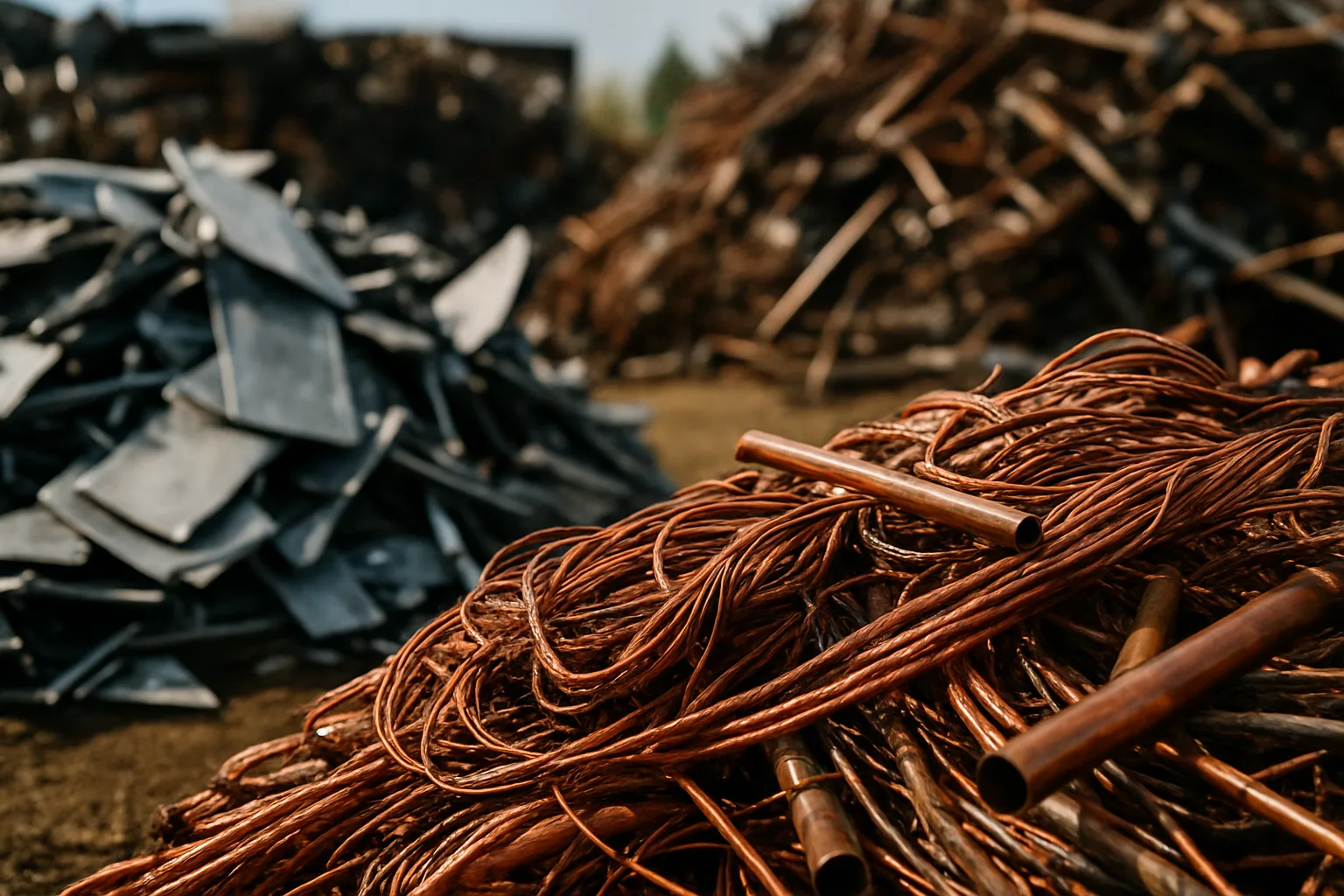
Copper is the undisputed king of scrap metal pricing. Bare bright copper wire, #1 copper tubing, and copper bus bars consistently sit at the top of the price-per-pound chart across Canada. Even lower grades — #2 copper, insulated wire, and copper mixed with solder — pay significantly more than most non-ferrous metals by weight.
What makes copper so valuable? It's a critical input for electrical infrastructure, EV manufacturing, and grid upgrades happening across North America right now. Supply tightness and sustained industrial demand have kept copper prices elevated through 2026. Even modest quantities — a few hundred pounds of pipe from a renovation or a bundle of electrical cable — can translate to a meaningful return.
Common copper sources worth targeting:
- Plumbing pipe from residential or commercial demolition
- Electrical wire and cable — stripping insulation improves grade and price
- Copper coils from HVAC units and refrigerators
- Bus bars and copper sheet from industrial equipment
- Brass fittings — technically a copper alloy, still high value
Brass deserves its own mention. Yellow brass, red brass, and bronze all carry strong pricing and are often mixed into loads without sellers realizing what they have. Separate your brass from your aluminum and steel before you weigh in. That separation alone can noticeably improve your payout. To find the best Canadian scrap metal prices today, knowing the exact grade of what you're selling matters more than volume alone.
Aluminum: High Volume, Consistent Returns on Scrap Metal Prices Today
Aluminum won't match copper per pound, but it makes up for it in volume. It's one of the most common non-ferrous metals in the scrap stream — showing up in everything from farm irrigation systems to automotive wheels to window frames. In Saskatchewan, agricultural aluminum is especially prevalent: irrigation pipe, grain auger components, and equipment housing all contribute to the regional aluminum supply.
The pricing split within aluminum is significant. Clean, separated grades — cast aluminum, extruded aluminum, aluminum wheels — pay noticeably more than mixed or painted aluminum. Dirty aluminum with steel inserts, bolts, or heavy contamination gets downgraded fast. Taking fifteen minutes to clean a load before you bring it in can meaningfully change what you receive per pound.
Key aluminum grades to know:
- Cast aluminum — engine blocks, transmission cases, heavy castings
- Extruded aluminum — window frames, structural profiles, ladder stock
- Sheet aluminum — siding, roofing, automotive panels
- Aluminum wheels — one of the cleaner, better-paying grades
- Irony aluminum — aluminum with significant steel content, lower value
Aluminum pricing tracks the London Metal Exchange (LME) with a Canadian premium or discount depending on exchange rates and domestic demand. Platforms like SMASH give buyers across North America visibility into available aluminum loads — which means more competition and better price discovery for sellers moving bulk quantities. That's a material difference compared to calling one buyer and taking whatever they offer.
Steel and Iron: The Volume Play with a Sell Scrap Metal Price That Adds Up
Steel and iron are the workhorses of the scrap market. The price per pound is low compared to non-ferrous metals — but when you're talking about a decommissioned tractor, a structural steel beam, or a load of heavy equipment, the weight adds up fast. In Saskatchewan, where agricultural and industrial equipment is everywhere, steel scrap is one of the most accessible metals to collect at scale.
There's a meaningful difference between HMS (heavy melting steel), structural steel, and light iron. Cleaner, heavier steel without excessive rust or contamination grades higher and pays more. Shredder feedstock — mixed light gauge steel — pays less but is still worth hauling when volume is there.
Stainless steel is the hidden gem in the steel category. 304 and 316 stainless from commercial kitchen equipment, dairy processing lines, or food-grade piping pays several times the rate of regular carbon steel. If you're working near food processing operations or commercial restaurant teardowns in Saskatoon or anywhere in Saskatchewan, stainless steel is worth identifying and separating immediately.
Cast iron — from old engine blocks, machine bases, and municipal infrastructure — also prices higher than light steel. Weigh it separately. Never mix it in with a general steel load if you can avoid it.
Catalytic Converters and Automotive Cores: The High-Reward, High-Complexity Category
Few scrap categories generate as much pricing variation as catalytic converters. The platinum group metals (PGMs) inside — platinum, palladium, and rhodium — are among the most valuable commodities in the recycling chain. Pricing depends on the specific vehicle make, model, year, and converter type. There's no single "cat price." A converter from a late-model pickup can pay several times more than one from an economy sedan.
This is exactly where documentation and verification tools make a real difference. SMASH offers VIN lookup and serial tracking for automotive cores — which means buyers can bid with confidence and sellers can demonstrate exactly what they have. Vague lots don't attract top bids. Documented, verified inventory does. That's not just a best practice — it's a pricing strategy.
For sellers moving volume through the scrap metal auction format, catalytic converters and other automotive cores benefit enormously from competitive bidding. One local buyer quoting a flat rate on a mixed cat load is not price discovery. Multiple vetted buyers competing on a documented lot — that's how you find out what the market will actually pay.
If you're selling cats through a SMASH scrap metal auction, photo documentation of each unit matters. Whole, undamaged converters with identifiable serial numbers or barcodes attract higher bids and reduce buyer pushback on grade disputes after the sale. Read Canadian scrap metal pricing guides to understand how documentation affects final pricing across categories.
How to Maximize Your Payout — Regardless of What You're Selling
The metal matters. But how you sell it matters just as much. These principles apply whether you're hauling copper pipe, aluminum wheels, or a mixed load of steel and stainless from a decommissioned plant.
- Sort before you sell. Mixed loads get priced at the lowest grade in the mix. Separation takes time but consistently returns more money.
- Document what you have. Photos, weights, grades, and serial numbers give buyers confidence. Confidence translates to higher bids.
- Get competitive offers. A single quote from one buyer is a ceiling. Multiple buyers competing for your load can reveal the actual market price.
- Check current market rates. Scrap metal prices today move with global commodity indexes. Selling copper on a down day without knowing the market means leaving money on the table.
- Use the right platform. Platforms like smashrecycling.ca connect sellers to vetted buyers across North America — not just whoever picks up the phone locally.
If you're regularly moving loads in Saskatoon and want access to a broader buyer pool, exploring Saskatoon scrap metal services through a platform that prioritizes competition and transparency is worth understanding before your next sale. Saskatchewan sellers are no longer limited to local buyers — the market is bigger than your zip code.
Scrap metal prices in Canada are shaped by forces well beyond any single yard's offer sheet. LME pricing, the CAD/USD exchange rate, domestic steel demand, and North American recycling capacity all feed into what a buyer is willing to pay on any given day. Staying informed on scrap metal prices Canada-wide — not just local quotes — is how experienced sellers consistently outperform casual haulers.
If you've been relying on one buyer, one phone call, and a guessed price, it's worth considering what a competitive auction process might reveal. The best price isn't always the first price you're offered.
Whether you're a yard operator moving volume or an individual collector with a trailer load, the fundamentals don't change: know your metals, sort them properly, document what you have, and sell into competition. That's how you capture the best scrap metal prices Canada's market can offer — consistently, not just when you get lucky.
Get the best Canadian scrap metal prices — check rates at best-scrap-metal-prices.ca before your next load hits the scale.
Frequently Asked Questions
Q: What scrap metal pays the most per pound in Saskatoon?
Copper consistently commands the highest price per pound across Canada, including in Saskatoon. Bare bright copper wire and #1 copper tubing sit at the top of most yard price sheets. Platinum group metals from catalytic converters can exceed copper pricing per unit, but those are priced per piece rather than per pound.
Q: How do I find out current scrap metal prices before I sell near me in Saskatoon?
Start by checking a current pricing resource like best-scrap-metal-prices.ca to understand market rates across metal categories. Prices shift with global commodity markets, so checking on the day you plan to sell gives you the most accurate picture. Don't rely on quotes you received weeks ago — scrap metal prices today can differ significantly from last month's rates.
Q: Is it worth separating my scrap before bringing it to a yard in Saskatchewan?
Yes — almost always. Mixed loads get priced at the lowest grade in the pile. Separating copper from aluminum, and both from steel, takes time but consistently improves your payout. Even separating stainless steel from regular carbon steel can make a material difference given the price gap between those two grades.
Q: How does a scrap metal auction work compared to selling directly to a yard?
In a direct yard sale, you receive one offer from one buyer — take it or leave it. A scrap metal auction puts your documented load in front of multiple vetted buyers who compete for it. That competition is how you discover what the market will actually pay, rather than accepting the first number offered. Platforms like SMASH run this process with vetted buyers and transparent pricing.
Q: Can I sell scrap metal online if I'm located in Saskatoon or rural Saskatchewan?
Yes. Platforms like SMASH connect sellers across North America — including Saskatchewan — to a network of vetted buyers without requiring you to be in a major urban centre. You document your load, list it through the platform, and buyers bid competitively regardless of your location. This opens up pricing that local-only selling rarely matches.
Follow SMASH on LinkedIn for ongoing industry updates, scrap metal market insights, and auction news: linkedin.com/company/scrap-metal-auction-sales-hub.