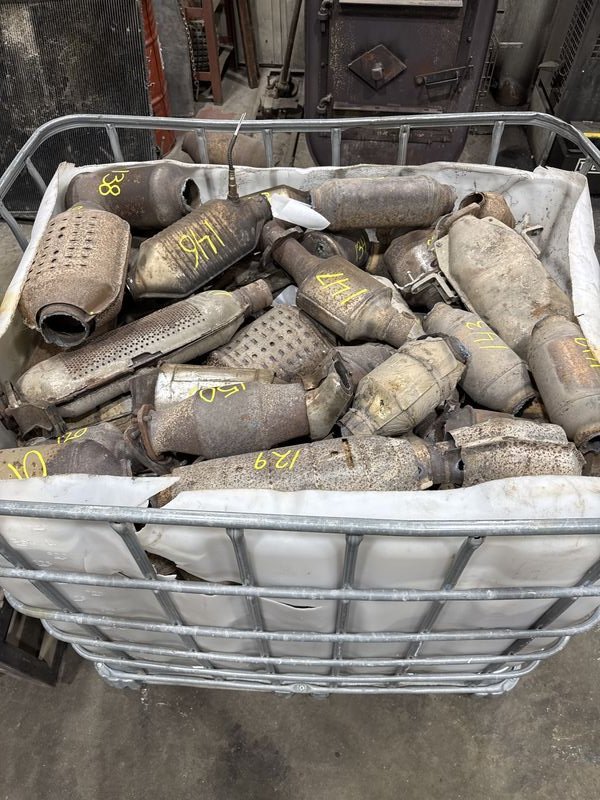
Your catalytic converter is worth more than you think — and most scrap sellers have no idea why the price swings so wildly from week to week.
If you've ever tried to recycle a catalytic converter in Montreal and walked away confused about what you were paid, you're not alone. Prices can jump hundreds of dollars between loads with no clear explanation. Understanding how catalytic converter recycling actually works — and what drives those price swings — puts you in a much stronger position when it's time to sell.
This isn't just about cats, either. The same market forces that affect your converter prices show up in the steel scrap price today, copper rates, and aluminum recycle value. It all connects. Let's break it down.
What Actually Happens When You Recycle a Catalytic Converter
Most people think recycling a cat is like recycling aluminum — hand it over, get paid by the pound. It doesn't work that way. The steel shell of a converter has some value, but the real money is inside the ceramic or metallic substrate coated with platinum group metals (PGMs): platinum, palladium, and rhodium.
Here's the basic process after your converter leaves the yard:
- Collection and sorting — Yards sort converters by type (OEM, aftermarket, foil cats, diesel, etc.). Each type carries a different PGM loading.
- Decanning — The steel shell is cut away and sold as scrap steel. That steel value is separate from the catalyst value.
- Sampling and assay — The substrate gets crushed, blended, and sampled. A lab assay determines the exact PGM content in parts per million (PPM).
- Smelting and refining — The material goes to a precious metals refinery that separates and recovers the platinum, palladium, and rhodium.
- Settlement — The refinery pays based on the assay result and current PGM spot prices, minus processing fees.
That settlement process takes time — sometimes weeks. So when a buyer quotes you a price today, they're working off current PGM spot prices, historical assay data for that converter type, and their own risk margin. That margin is why two buyers in the same city can quote you very different numbers for the same load.
Why Steel Scrap Price Today Affects Your Converter Payout
Here's the part that surprises most sellers: the steel scrap price today directly affects your catalytic converter payout — even though the big money is in PGMs.
The steel shell of a converter adds up. A full truckload of cats carries significant steel weight. When the steel scrap price today is strong, that shell value bumps your overall payout. When steel markets are soft, that component of the price drops. It's a smaller factor than PGM values, but on large loads it's not nothing.
More importantly, the broader scrap metal prices today environment tells you about market health. Rising steel and copper prices usually signal industrial demand is up — which correlates with automotive production, which affects PGM demand. It's not a perfect relationship, but experienced sellers watch the full metals market, not just PGM spot prices in isolation. To stay current, check current Canadian scrap metal prices regularly before you move a load.
The Real Reason Catalytic Converter Prices Vary So Much
Price variation on cats is bigger than almost any other scrap commodity. A converter from one vehicle can be worth $40. The same-sized converter from a different vehicle can be worth $400. Here's what drives that gap:
- PGM loading — Different vehicles use different amounts of platinum, palladium, and rhodium. High-emission-standard vehicles (trucks, SUVs, some European makes) tend to carry heavier PGM loads.
- Rhodium spot price volatility — Rhodium has been one of the most volatile metals in the world. It can swing thousands of dollars per troy ounce in a short period. Even a small rhodium content in a converter can dramatically shift its value.
- Aftermarket vs. OEM — Aftermarket cats are built to the minimum emissions standard. They use far less PGM than OEM (original equipment manufacturer) converters. Buyers pay significantly less for aftermarket units.
- Converter condition — Melted substrates, cracked cores, or foil cats that have lost material all pay less. The assay doesn't lie.
- Buyer margin and risk — Every buyer quotes a price that includes their risk margin. Buyers who can move large volumes to established refineries carry less risk and can pay more. Single-lot sellers dealing with middlemen take a bigger haircut.
- Market timing — PGM prices move daily. A load quoted on Monday might be worth more or less by Friday.
This is exactly why competitive bidding matters. If you're calling one buyer, you're getting one interpretation of all those variables — weighted toward their margin, not yours. A B2B scrap metal marketplace like SMASH changes that dynamic by putting your load in front of multiple vetted buyers at once.
How Montreal and Quebec Sellers Can Get Better Prices on Cats
Quebec has a strong automotive recycling and dismantling sector. Montreal, in particular, has no shortage of buyers — but not all of them operate with the same transparency or pay the same rates. That's both a challenge and an opportunity.
The challenge: if you're relying on relationships with one or two local buyers, you may be leaving money on the table without knowing it. The opportunity: because there are multiple active buyers in the region, real competition exists. You just have to access it.
Sellers using Montreal scrap metal services through platforms like SMASH can put their catalytic converter lots in front of buyers across North America — not just whoever picks up the phone locally. That geographic reach matters on cats especially, because PGM buyers operate at a national scale. A refinery partner in another province or state may quote more aggressively than a local middleman.
Documenting your load matters here too. Buyers bid with more confidence — and pay more — when they know what they're bidding on. Photos, serial numbers, VIN lookups where applicable, and accurate counts by converter type all reduce buyer risk. Lower buyer risk means tighter margins, which translates to better payouts for you. SMASH's inventory tools are built for exactly this kind of documentation before a load goes to auction.
If you want to understand the full value picture before you sell, find the best Canadian scrap metal prices today — knowing where steel, copper, and aluminum sit helps you benchmark the overall market before you negotiate on cats.
What to Know About the Steel Shell and Secondary Metal Value
Don't overlook the decanned steel. Once the substrate is removed, the steel shell from catalytic converters goes into the regular ferrous scrap stream. If you're processing cats in volume, that steel adds up — and it's worth tracking separately from your PGM settlement.
The same applies to other metals that come off a converter lot. Oxygen sensors, brackets, and exhaust components that come in with a cat load often contain stainless steel, copper, or aluminum. These aren't high-value items individually, but at volume they matter. Knowing the aluminum recycle value and current copper price helps you make sure nothing gets underpriced in the mix.
For sellers processing vehicles as a whole — dealerships, dismantlers, insurance salvage operations — the math gets more complex. You're managing ferrous weight, non-ferrous components, fluid recycling, and PGM recovery all in one transaction. A platform designed for volume B2B transactions handles that complexity better than a series of individual phone calls. You can read Canadian scrap metal pricing guides to get a deeper understanding of how to value mixed loads before you go to market.
Using Competitive Auctions to Stop Guessing on Cat Prices
The old way: call your guy, take his price, hope it's fair. The problem isn't necessarily that buyers are dishonest — it's that a single quote gives you no benchmark. You have no way of knowing if you're at market or 20% below it.
The SMASH scrap metal auction model applies competitive bidding to catalytic converter lots the same way it does to any other scrap load. Your lot gets documented, listed, and bid on by vetted buyers. You see what the market actually values your material at — not what one buyer decides to offer on a Tuesday morning.
That's price discovery. It's how commodity markets are supposed to work. And it's especially valuable on cats, where price variation between buyers can be significant on the same material. More buyers means better price discovery. That's not a slogan — it's basic economics applied to scrap metal.
For high-volume sellers in Montreal, Quebec, or anywhere else in Canada, platforms like find the best price for your scrap in Canada exist specifically to solve the single-buyer problem. No subscription fees. SMASH only wins when you do.
If you're moving catalytic converters regularly and still relying on one buyer and one phone call, it's worth testing the market. The data may surprise you. When you're ready, get the best Canadian scrap metal prices — check rates and resources at best-scrap-metal-prices.ca to stay sharp on what your material is worth before your next load moves.
Disclaimer: Scrap metal prices — including PGM values and steel scrap prices — fluctuate daily based on global commodity markets. Always verify current rates before selling.
Frequently Asked Questions
Q: Why is the steel scrap price today relevant to catalytic converter recycling?
The steel shell of a catalytic converter is decanned and sold as ferrous scrap separately from the PGM-bearing substrate. When the steel scrap price today is higher, that shell component adds more value to your overall payout — especially on large loads. Tracking steel prices alongside PGM spot prices gives you a fuller picture of what your lot is worth.
Q: How do I know if I'm getting a fair price for my catalytic converters in Montreal?
The best way to benchmark your price is to get multiple bids. A single quote from one local buyer gives you no market reference. Platforms like SMASH bring multiple vetted buyers to your load through a competitive auction format, which helps reveal what the market actually values your material at. Montreal has active buyers, but accessing real competition usually requires going beyond your immediate network.
Q: What makes one catalytic converter worth more than another?
PGM content is the primary driver. Vehicles with higher emissions standards — larger trucks, certain SUVs, European makes — often carry heavier platinum, palladium, and rhodium loads than economy cars. OEM converters consistently outpay aftermarket units. Converter condition also matters: melted or cracked substrates yield lower assay results and lower payouts.
Q: How long does it take to get paid for catalytic converter scrap?
It depends on the buyer and the settlement method. Some buyers quote a spot price and pay immediately based on historical assay data for that converter type. Others send material to a refinery and pay out after assay settlement, which can take several weeks. Understand the payment terms before you commit to a buyer — faster settlement often comes with a lower price, while assay-based settlement takes longer but may return more.
Q: Where can I find current scrap metal prices in Quebec before I sell?
Start with best-scrap-metal-prices.ca for current Canadian benchmarks across steel, copper, aluminum, and other metals. For PGM-specific pricing, track platinum, palladium, and rhodium spot prices through commodity data sources — these update daily and directly impact your catalytic converter payout. Never sell a load without checking where the market sits that day.
---Stay ahead of scrap metal market shifts — follow SMASH on LinkedIn for industry updates, pricing insights, and B2B recycling news across North America.