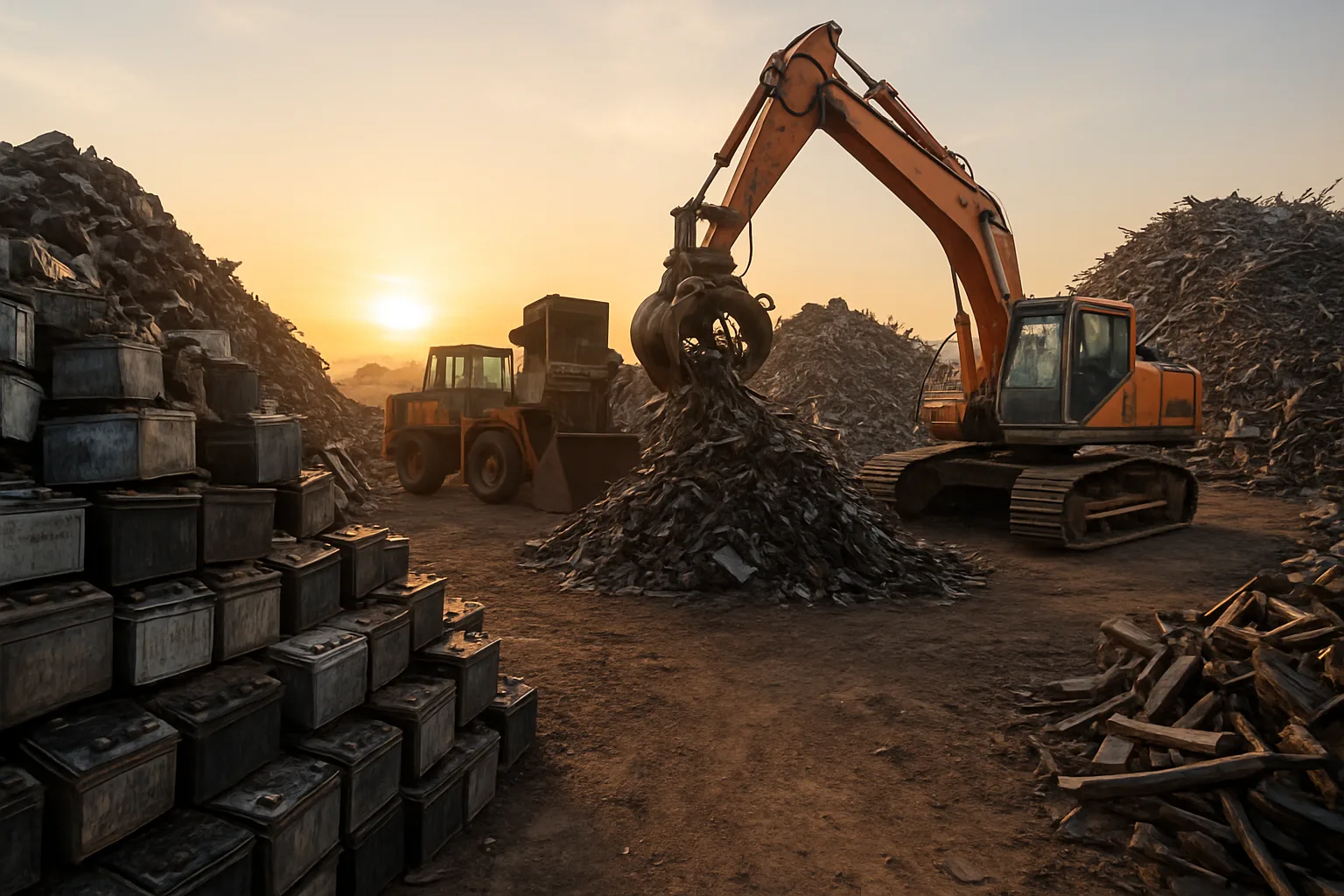
Most people toss a dead car battery in the trunk and forget about it. That's leaving money on the table. Lead-acid batteries are one of the most consistently recyclable materials in the scrap metal market — nearly 100% of their components get reused — and the lead inside them carries real value. If you're hauling scrap in St. John's or anywhere across Newfoundland and Labrador, understanding what's in that battery and how to price it can make a meaningful difference in your return.
This isn't a category where you guess and hope. Lead scrap has a trackable market price, and battery recycling in Canada is a well-established stream. The problem is most sellers don't know what drives that price, when to sell, or how to make sure they're not leaving value behind by calling a single buyer. Let's fix that.
---What's Actually Inside a Lead-Acid Battery — and Why It Matters for Scrap Value
A standard automotive lead-acid battery weighs between 15 and 25 kilograms. The majority of that weight is lead — in the form of lead plates, lead oxide paste, and lead connectors. The plastic casing, electrolyte solution, and separator material make up the rest. When scrap yards talk about battery value, they're almost entirely pricing the lead content.
Lead is a non-ferrous metal with a global commodity price. That price moves based on LME (London Metal Exchange) settlement figures, North American supply and demand, and downstream smelter activity. In mid-2026, lead markets have remained moderately active, supported by continued demand from energy storage and automotive replacement sectors. The exact rate your local yard pays will depend on regional processing costs, current spot pricing, and how much volume they're moving.
Here's what a lead-acid battery typically contains by material:
- Lead (plates, paste, connectors): Approximately 60–70% of total battery weight
- Polypropylene plastic casing: Around 7–8% — recoverable and recycled separately
- Sulfuric acid electrolyte: Neutralized and processed, not typically part of the scrap value
- Separators and other materials: Minimal residual value
When a recycler quotes you a price per kilogram for whole batteries, they're factoring in their processing cost to extract the lead. If you can deliver clean lead plates or broken battery material separately, some yards will pay a premium — though handling sulfuric acid without proper equipment is not recommended for casual sellers.
---Scrap Metal Prices St. John's: How Lead Compares to Other Metals Right Now
St. John's sellers working across multiple material types often ask where lead stacks up. Honestly, lead isn't the star of the non-ferrous world — copper holds that title. But lead is steady, it's heavy, and it's everywhere. Fleet operators, automotive shops, and industrial facilities accumulate dead batteries constantly. If you're moving volume, lead adds up fast.
As of late June 2026, here's a general comparison of where common non-ferrous metals tend to fall in terms of market value per kilogram in the Canadian market. These are directional ranges, not guaranteed rates — always check current Canadian scrap metal prices before you load a truck:
- Copper (bare bright, #1): Highest per-kg value in the non-ferrous category
- Aluminum (extruded, clean): Mid-range, heavily influenced by auto and construction sectors
- Lead (whole batteries, clean): Lower per-kg than copper or aluminum, but dense weight offsets this
- Steel/HMS: Ferrous, priced per tonne — much lower per-kg but high volume
For sellers in St. John's, the local market dynamics also matter. Island logistics — shipping cores, loads, and non-ferrous materials to mainland processors — add cost that some buyers factor into their offers. That's exactly why getting competitive bids matters more here, not less. A single phone call to one buyer in a geographically constrained market can seriously undercut your return. Platforms like the SMASH Recycling auction platform create competition among vetted buyers, which helps surface the real market price rather than one buyer's preferred margin.
Disclaimer: All metal prices fluctuate daily based on commodity markets. The ranges above are illustrative only. Always verify current rates before selling.
---How to Maximize Your Return on Lead-Acid Battery Scrap
Selling batteries is straightforward — but selling them well takes a bit of strategy. Here's what separates sellers who consistently get strong returns from those who chronically underperform.
1. Know Your Volume Before You Call
Buyers price better when you come with a clear count and total estimated weight. "I have 40 automotive batteries, approximately 800 kilograms" is a much stronger opening than "I've got a bunch of old car batteries." Scrap metal inventory management starts here — even a basic count on a clipboard changes the conversation.
2. Separate Your Grades
Not all lead-acid batteries are equal. Industrial batteries (forklifts, UPS systems, telecom backup) are often larger and denser than automotive units. If you're mixing sizes and types, you may get blended pricing that doesn't reflect the heavier material's true value. Sort where you can.
3. Don't Let Batteries Sit Too Long
Lead prices move. Holding inventory waiting for a price spike that never comes is a common mistake. Track the market weekly, set a price threshold that works for your operation, and sell when you hit it. Trying to time commodity markets is a losing game for most yard operators.
4. Get More Than One Bid
This is the single biggest lever most sellers aren't pulling. Calling one buyer and accepting their number is the old way. Competition is how price discovery actually works. SMASH puts your load in front of multiple vetted buyers simultaneously — that's a fundamentally different dynamic than a one-on-one negotiation where the buyer has all the information and you have none.
5. Document Your Load
Photo documentation, accurate counts, and proper BOLs aren't just paperwork — they build buyer confidence. A well-documented battery load sells faster and attracts more serious bids. This is especially true if you're working with remote buyers who can't physically inspect before bidding.
---Scrap Metal Inventory Management for Battery Recyclers in Newfoundland and Labrador
If you're running a recycling operation in Newfoundland and Labrador — whether that's a full yard in St. John's or a smaller depot operation serving smaller communities — battery accumulation presents a specific logistical challenge. Lead-acid batteries require proper storage (upright, contained, away from heat), and provincial regulations govern how long you can stockpile hazardous material before moving it.
Good scrap metal inventory management isn't optional at this scale. You need to know what you have, where it is, when it came in, and what you paid or committed to pay the person who brought it. That data directly informs your sell decision. Selling too early eats into margin. Selling too late creates compliance risk and storage cost.
SMASH's inventory tools let sellers track materials by weight, grade, and acquisition date — so when it's time to move a load of battery scrap, you're not scrambling to reconstruct records. You already have everything a buyer needs to place a confident bid. For yards managing multiple material streams alongside batteries — copper, aluminum, catalytic converters, cores — that kind of structured record-keeping pays off every single time. You can also read Canadian scrap metal pricing guides to better understand how to track and compare material values over time.
---Finding the Best Price for Lead Scrap: Why One Buyer Isn't Enough
Here's a reality most experienced scrap sellers know but rarely say out loud: the first price you're quoted is almost never the best price available. That's not an accusation — it's just how markets work. Buyers have overhead, margins, and their own price risk to manage. They're going to protect themselves, especially when they know you're not shopping the load.
The scrap market in Canada has historically been fragmented — regional buyers with local relationships, limited transparency, and sellers who often don't know what a comparable load sold for last week. That information gap costs sellers real money over time.
Competitive bidding changes that dynamic. When multiple buyers see the same load at the same time, they have to price honestly to win. That's not theory — that's how auctions have always worked. For lead-acid battery scrap in particular, where the commodity price is publicly available and processing economics are well understood, there's no reason sellers should be accepting blind, single-source offers.
SMASH operates exactly on this principle. No subscriptions. No setup cost. The platform only wins when the seller wins — which means the incentive structure is aligned with getting you the strongest possible result on every load. If you're in St. John's moving battery scrap regularly, that's a structural advantage worth using. To get a clearer picture of where the market sits today, find the best Canadian scrap metal prices today and use that as your baseline before you list.
---Frequently Asked Questions
Q: What do scrap yards pay for lead-acid batteries in St. John's?
Prices vary based on current lead commodity rates, battery condition, and local processing costs. Island logistics in Newfoundland and Labrador can affect what buyers are willing to pay compared to mainland markets. Always get multiple quotes and verify current rates — prices change weekly.
Q: Are copper scrap prices in St. John's different from the rest of Canada?
Copper pricing tracks global LME rates, but local yard prices in St. John's may vary due to transportation costs and buyer competition in the region. Getting competitive bids through a platform like SMASH helps ensure you're not absorbing someone else's logistics cost in your offer.
Q: How many batteries do I need before it's worth selling?
Most buyers will take small quantities, but you'll typically get better per-unit pricing at higher volumes. A minimum of 10–20 batteries is a reasonable threshold for approaching a dedicated buyer. For larger accumulations — 50+ units — competitive bidding becomes significantly more worthwhile.
Q: Do I need to drain the acid before bringing batteries to a scrap yard?
Generally, no — and in many cases you shouldn't attempt to drain them yourself without proper equipment and containment. Most licensed recyclers accept whole batteries and handle acid neutralization as part of their processing. Check with your local yard about their intake requirements before loading up.
Q: Can I track scrap metal inventory and battery counts digitally before selling?
Yes, and you should. Platforms like SMASH include inventory management tools that let you log materials, weights, and grades before you go to market. Documented loads attract better buyer interest and faster bids — especially from remote buyers who rely on accurate specs to price confidently.
---Lead-acid batteries aren't glamorous scrap — but they're consistent, recyclable, and worth tracking carefully. If you're accumulating them in St. John's or anywhere across Newfoundland and Labrador, treat them like the commodity they are: document the load, get multiple bids, and don't settle for the first number someone throws at you. The market rewards sellers who do their homework. Get the best Canadian scrap metal prices for your next load — check rates at best-scrap-metal-prices.ca and know your baseline before you pick up the phone.
Stay ahead of scrap metal market trends and pricing updates by following SMASH on LinkedIn — industry insights, pricing context, and market moves worth knowing.