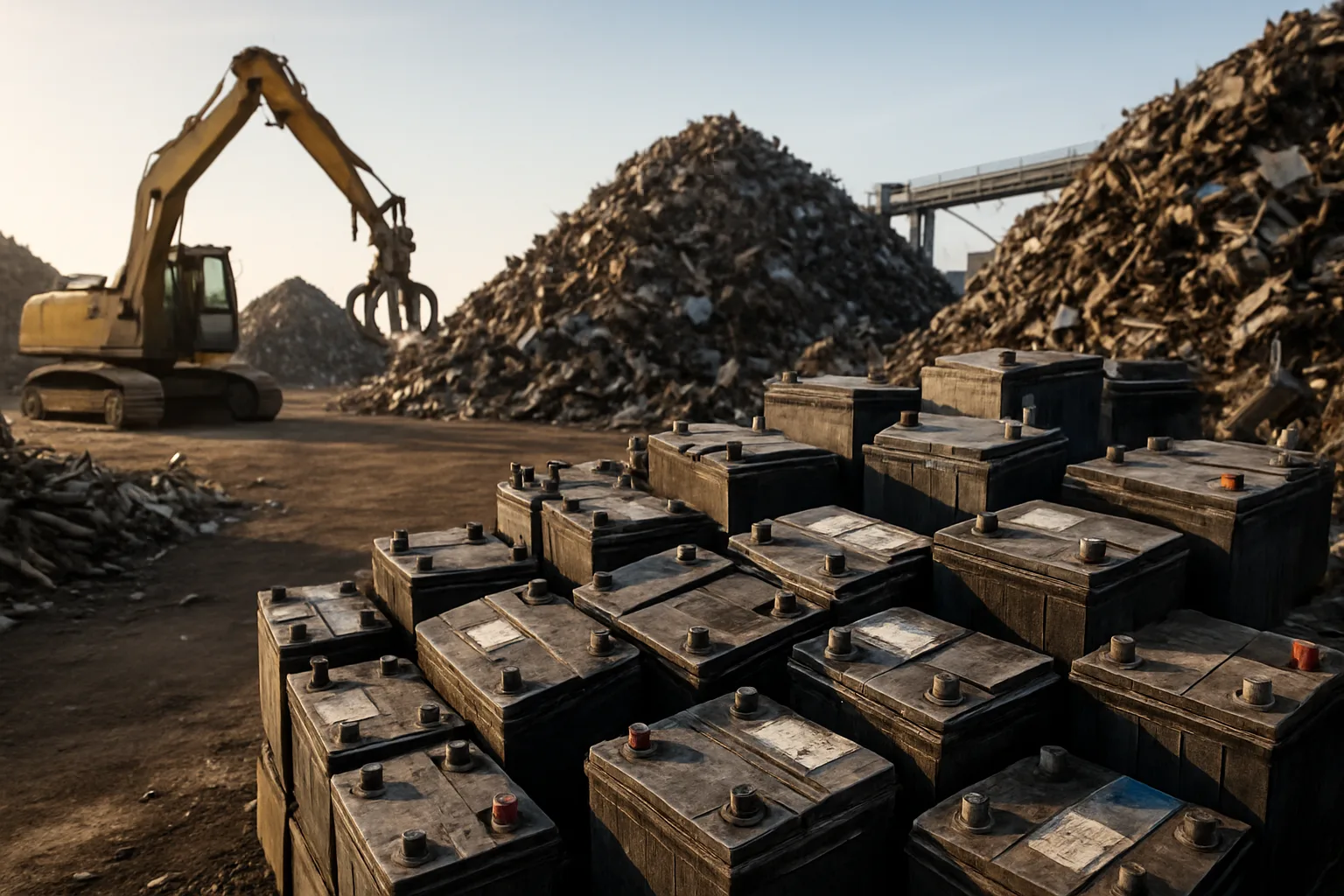
Lead-Acid Batteries Are Worth More Than You Think — Here's What Montreal Sellers Need to Know
Most people treat old lead-acid batteries like garbage. They stack them in a corner, throw them in a bin, or forget about them entirely. That's leaving real money on the table. Lead scrap is one of the more consistently valued materials in scrap metal recycling Canada, and lead-acid batteries are one of the most accessible sources of it — especially if you run a yard, a garage, or a fleet operation in Quebec.
If you're looking to sell scrap metal Montreal, understanding what's inside a lead-acid battery and how pricing works puts you in a much stronger position than just calling one buyer and accepting whatever number they give you.
What's Actually Inside a Lead-Acid Battery — and Why It Has Value
A standard 12-volt automotive lead-acid battery weighs roughly 10 to 15 kilograms. The bulk of that weight is lead — in the form of lead plates, lead paste, and lead connectors. The plastic casing is polypropylene, which also has recycling value. The sulfuric acid electrolyte gets neutralized and reclaimed during processing.
When you strip away the chemistry, this is a dense, heavy, lead-rich material. Lead is a commodity traded on global metals markets — the London Metal Exchange (LME) posts lead prices daily, and those prices ripple through to what Canadian recyclers pay at the gate. As of mid-2026, lead markets have remained relatively stable compared to the volatility seen in some other non-ferrous metals, which makes batteries a reliable scrap category to move.
- Lead plates and paste: The highest-value component — this is refined back into secondary lead for new batteries
- Polypropylene casing: Typically reclaimed separately by processors — adds a small premium
- Lead terminals and connectors: Solid lead, high purity
- Sulfuric acid: Neutralized and treated — not sold back, but reduces processing liability for recyclers
Battery lead is almost entirely recycled in a closed loop. New lead-acid batteries are made from old ones. The recycling rate for lead-acid batteries in North America sits above 95% — making this one of the most efficiently recycled products on the planet. That demand keeps lead scrap pricing relatively liquid, even when other scrap categories soften.
How Lead Scrap Pricing Works in Canada — and What Moves the Number
Lead scrap pricing in Canada tracks LME lead prices but doesn't move in lockstep. Recyclers build in their processing costs, logistics, refining spreads, and margin. What you receive at the gate — or what a buyer bids on your load — is a processed-down version of that global spot price. That spread varies by buyer, volume, battery condition, and geography.
A few factors that affect what you get paid for lead-acid battery scrap:
- Battery condition: Cracked or leaking batteries carry handling and liability costs. Intact batteries typically command a better price.
- Volume: A pallet of batteries moves differently than a truckload. Buyers price volume more aggressively — in your favour.
- LME lead price at time of sale: Lead is a commodity. Weekly swings of a few cents per pound can add up across a large load.
- Location and freight: If you're in Montreal or elsewhere in Quebec, proximity to major processors matters. Freight costs eat into net return.
- Who you're selling to: A single buyer with no competition sets the price. Multiple buyers competing for your load shifts the dynamic.
That last point is where most sellers leave money behind. Calling one yard, getting one number, and accepting it is the old way. It's still how most of the industry operates — but it doesn't have to be how you operate. Platforms like SMASH are built specifically to solve that problem. Compare scrap metal bids from Canadian buyers and see what competition actually does to the price you receive.
The Montreal Market: What Local Sellers Should Know About Battery Scrap
Montreal is a strong market for scrap metal recycling. The city has a dense concentration of auto dismantlers, fleet operators, garages, and industrial facilities — all of which generate lead-acid battery scrap on a regular basis. Quebec's industrial base, combined with the port infrastructure, means processors here have access to export channels that keep demand relatively healthy.
If you're sourcing or selling batteries through Montreal scrap metal services, you're operating in a competitive enough market that pricing shouldn't be a mystery. The problem is that many sellers still rely on relationships built years ago — one trusted buyer, one standing price, no visibility into what the broader market is paying.
That's not loyalty. That's just habit. And habit costs you money when lead prices shift and your buyer doesn't update their offer to reflect it.
Quebec regulations around battery handling and hazardous materials are worth noting. Lead-acid batteries are classified as hazardous waste under provincial rules, which means documentation matters — manifests, transport records, and proper receiver certification. Working with vetted, compliant buyers isn't optional. It's a legal requirement. SMASH's buyer network is vetted, which matters here more than in almost any other scrap category.
Weekly Market Recap: Lead and Non-Ferrous Scrap — Week of June 21, 2026
This week, lead continues to trade within a range that supports steady recycler activity. No dramatic moves in either direction — which, in the current environment, is its own kind of signal. Stability in lead pricing tends to encourage battery scrap to move, since sellers aren't waiting for a spike and buyers aren't backing off due to a drop.
Across the broader non-ferrous market in Canada, aluminum remains a category worth watching closely. The aluminum scrap price today has been influenced by ongoing energy cost pressures on primary aluminum smelters, which historically supports secondary (scrap) aluminum demand. If you're holding mixed loads — batteries plus aluminum extrusion, castings, or sheet — this week is a reasonable window to price both categories simultaneously.
Copper continues to trade at elevated levels by historical standards, and steel pricing remains soft in the structural categories while auto-shred feedstock stays in demand. For a full current picture of where Canadian metals sit, check current Canadian scrap metal prices before you commit to a number with any single buyer.
One pattern worth flagging this week: yards in eastern Canada — including both Montreal and scrap metal Toronto networks — are reporting steady inbound battery volumes as summer vehicle turnovers pick up. More supply in the market can soften local pricing if buyers sense they don't need to compete. That's exactly the scenario where running a competitive process instead of a single call pays off.
How to Get the Best Price When You Sell Battery Scrap in Canada
You've got lead-acid batteries. You want the best number. Here's how to approach it without guessing.
Step 1: Know your volume and condition before you call anyone. Weigh your batteries. Note whether any are cracked or leaking. Buyers price known quantities more accurately — and more competitively — than vague estimates.
Step 2: Document with photos. Especially for larger loads, photo documentation of battery type, condition, and count gives buyers the confidence to bid aggressively rather than padding their number for unknown risk.
Step 3: Don't accept the first number as the market. One quote is not the market. It's one buyer's position on that day. Get multiple bids. The spread between a single quote and a competitive process can be meaningful across a few hundred kilograms of lead.
Step 4: Use a platform that creates competition. SMASH connects sellers with vetted buyers across Canada and runs a competitive auction process so you can see what the actual market will pay — not just what one relationship is willing to offer. More buyers means better price discovery. That's not a slogan. It's how markets work.
Step 5: Check the broader market before you sell. Lead prices move. Aluminum prices move. If you're moving a mixed load, timing matters. Read Canadian scrap metal pricing guides to stay current on what's moving and why.
For sellers in Montreal and across Quebec, the infrastructure is there. The buyers are there. What's often missing is the process to make them compete for your material. That's the gap worth closing.
Why Scrap Metal Recycling Near Me Matters — and How to Make It Work Harder
Searching for scrap metal recycling near me gets you a map. It doesn't get you a price. Two yards three kilometres apart can be paying meaningfully different rates on the same battery load on the same day — based on their current inventory levels, buyer commitments, and how much they think you're shopping around.
Proximity matters for logistics. But proximity alone doesn't determine your return. The combination of location efficiency and competitive pricing is what actually maximizes what you walk away with.
That's why connecting with a platform that aggregates buyer interest — rather than relying on whoever is closest — changes the math. Find the best Canadian scrap metal prices today and stop leaving the difference on the table.
Disclaimer: All scrap metal prices mentioned in this article are general market references only. Actual prices fluctuate based on global commodity markets, local supply and demand, material condition, and individual buyer pricing. Always verify current rates before selling.
Frequently Asked Questions
Q: How much are lead-acid batteries worth as scrap in Montreal?
Battery scrap pricing in Montreal varies based on LME lead prices, battery condition, and volume. Prices are typically quoted per kilogram or per unit. Because lead is a commodity, rates shift week to week — always get multiple quotes before selling, and check current market data to benchmark what you're being offered.
Q: Where can I sell scrap metal in Montreal?
Montreal has multiple licensed scrap yards and metal recyclers that accept lead-acid batteries and other non-ferrous material. Beyond local yards, platforms like SMASH connect Montreal sellers with vetted buyers across Canada, so you're not limited to whoever is geographically closest.
Q: Do I need paperwork to sell lead-acid battery scrap in Quebec?
Yes. Lead-acid batteries are classified as hazardous materials under Quebec provincial regulations. Proper transport documentation, receiver certification, and disposal manifests are required. Always work with a licensed, compliant buyer — both for legal protection and to ensure your liability is properly transferred.
Q: How is lead scrap pricing different from copper or aluminum scrap?
Lead trades at a lower per-kilogram value than copper, but lead-acid batteries are dense and heavy — so total load value adds up quickly on larger volumes. Copper and aluminum prices tend to be more volatile in the short term. Lead pricing is comparatively stable, which makes batteries a reliable category to move on a regular schedule rather than trying to time the market.
Q: What's the best way to get a competitive price when I sell scrap metal in Montreal?
Get multiple bids. Document your material with photos and accurate weights. Use a competitive platform like SMASH instead of relying on a single buyer relationship. Competition reveals the real market price — a single call only reveals what one buyer is willing to offer that day.
Ready to stop guessing at what your scrap is worth? Get the best Canadian scrap metal prices — check current rates and market data at best-scrap-metal-prices.ca.
Stay ahead of the market — follow SMASH on LinkedIn for weekly scrap metal market insights, pricing trends, and industry updates across Canada.