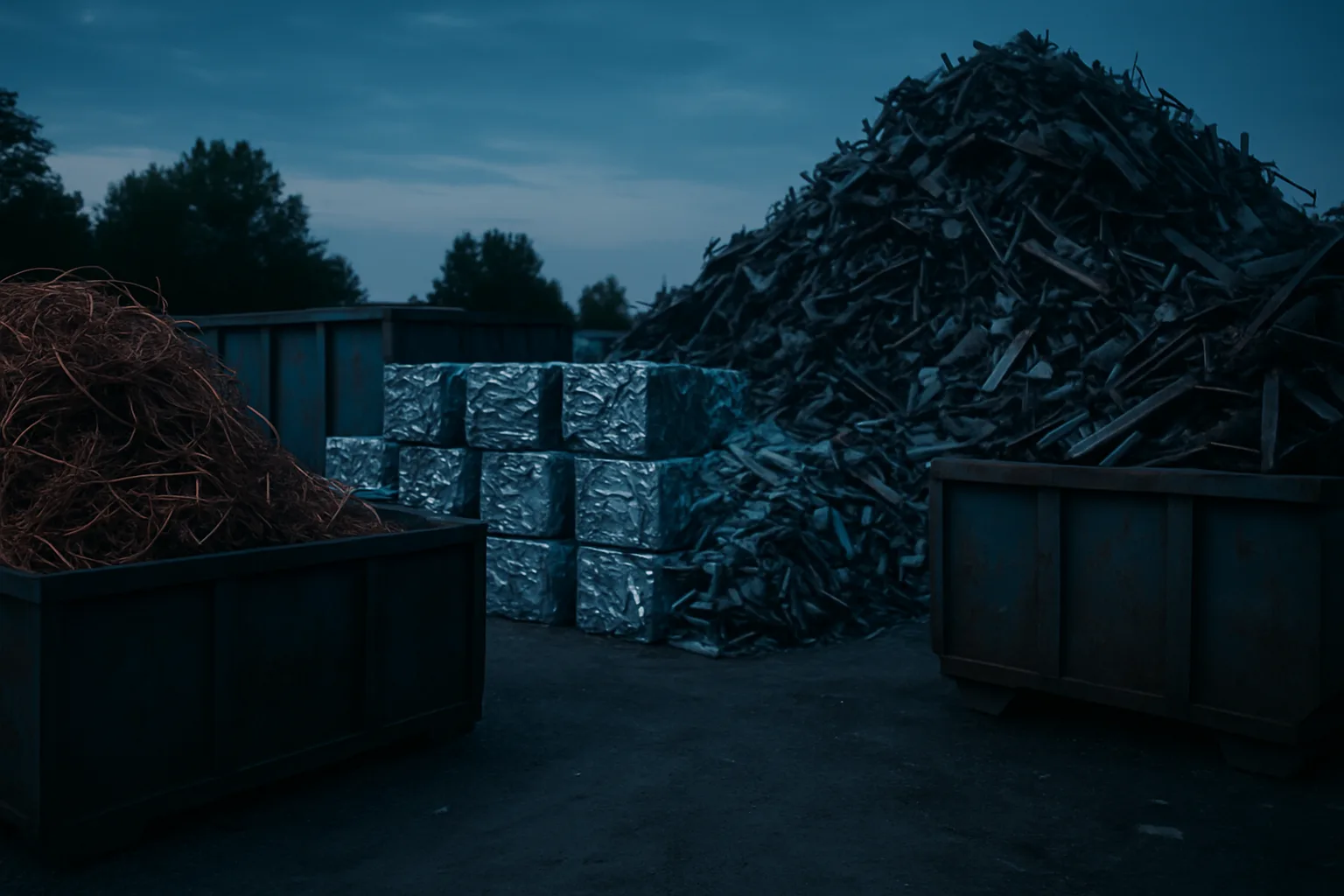
Steel vs. Iron Scrap: Why the Price Gap Matters More Than You Think
Most sellers show up at the yard thinking iron and steel are basically the same thing. They're not — and that assumption can cost you real money. The price difference between scrap iron and steel can swing significantly depending on grade, contamination, and what the market is doing on any given week. If you're selling loads in Corner Brook or anywhere else in Newfoundland and Labrador, knowing exactly what you have before you sell changes the conversation entirely.
This breakdown covers what separates steel from iron scrap, why their prices diverge, and how to position your material to get the best return. Whether you're clearing a job site, running a recycling yard, or moving regular loads, this is the kind of detail that pays off. To find the best Canadian scrap metal prices today, you need to start with knowing what you're actually selling.
Steel Scrap vs. Iron Scrap: What's the Actual Difference?
Iron and steel both come from the same family, but they're not interchangeable at the scale. Cast iron is brittle, carbon-heavy, and typically comes from engine blocks, old pipes, radiators, and woodstoves. Steel is more refined — lower in carbon, more flexible, and far more common in structural, automotive, and industrial applications. Knowing which one you're holding matters because mills buy them for different purposes and pay accordingly.
Here's a quick breakdown of the most common types you'll encounter:
- Cast Iron: Engine blocks, brake rotors, old stoves, pipes. Dense and heavy. Generally fetches a lower price per pound than clean steel.
- Wrought Iron: Older fencing, railings, decorative ironwork. Increasingly rare. Buyers may value it differently based on condition.
- Structural Steel (HMS 1 & 2): I-beams, angle iron, plate. One of the most traded categories globally. Price is closely tied to mill demand.
- Shredded Steel: Post-consumer auto bodies, appliances, mixed ferrous processed through a shredder. Volume-driven commodity.
- Stainless Steel: A significant step up in value due to nickel and chromium content. Often priced more like a non-ferrous than a standard ferrous grade.
The practical takeaway: cast iron almost always sells at a discount to clean steel. If you're mixing them in the same load, you're likely getting graded down on everything. Separate your material whenever you can.
Why Steel Scrap Prices and Iron Prices Move Differently
Steel scrap price today is driven by electric arc furnace (EAF) demand, which fluctuates with construction cycles, automotive production, and global steel output. Iron scrap — particularly cast iron — has a narrower buyer pool. Foundries use it, but they're more selective. That limited demand base means iron scrap pricing is less competitive and generally lower than equivalent-weight steel.
Several factors push these prices in different directions at any given time:
- Mill and foundry demand: When EAF mills run hot, steel scrap prices climb. Cast iron doesn't benefit from this demand the same way.
- Global export markets: Steel scrap moves internationally in large volumes. Domestic iron scrap has less export appeal, keeping prices more regionally contained.
- Contamination and prep: Steel buyers are strict about what's in the load. Mixed ferrous with cast iron attached often gets reclassified — and priced — downward.
- Weight and density: Cast iron is heavier per cubic foot. You might haul what feels like a massive load and end up with fewer processable tons than expected.
- Seasonality: Construction demand picks up in spring and summer, which tends to support HMS and structural steel prices. Winter can soften the market.
The bottom line is that steel scrap typically commands a better price per pound than cast iron in most market conditions. But "typically" doesn't mean always. That's why comparing multiple buyers — not just calling one yard — gives you actual price discovery instead of guessing.
How to Get Better Prices for Both Steel and Iron in Newfoundland and Labrador
If you're moving material out of Corner Brook, you already know the logistics aren't simple. Distance from major processing hubs means local yard pricing can vary more than it does in central markets. That gap makes competitive bidding even more valuable here than it is in urban centres. When you rely on a single buyer's quote, you have no way of knowing whether you're leaving money on the table.
Platforms like the SMASH Recycling auction platform put your load in front of multiple vetted buyers at once. Instead of one phone call to one yard, your material gets priced by buyers who are actually competing for it. That's how price discovery is supposed to work. More buyers means better price discovery — especially for sellers in regions where the local market is thin.
A few practical moves that help regardless of where you sell:
- Sort before you sell. Cast iron and steel separated into different loads almost always outperforms mixed loads on price per pound.
- Document your material. Photos, weights, and a basic description give buyers confidence. Confident buyers bid higher.
- Know your grade. HMS 1 versus HMS 2 is a real price difference. Clean plate and structural versus mixed shred is another one. Don't let the yard decide your grade without a conversation.
- Watch the timing. Selling into a market where mill demand is strong is not the same as selling when mills are reducing input. Read Canadian scrap metal pricing guides to stay current on what's moving the market.
What Contamination Does to Your Steel Scrap Price — and How to Avoid the Penalty
Contamination is the quiet margin killer in ferrous scrap. A load of clean HMS 1 gets reclassified to HMS 2 — or worse, mixed ferrous — the moment a buyer sees significant cast iron, non-metallics, or excessive rust and scale. That reclassification isn't just a few cents per pound. Over a full truckload, it adds up fast.
Common contamination issues that hurt pricing:
- Cast iron mixed into structural steel loads
- Attached non-ferrous hardware (brass fittings, copper wire, aluminum components)
- Concrete, wood, rubber, or plastic attached to scrap
- Excessive dirt or moisture adding to weight without adding to value
Here's the flip side: attached non-ferrous isn't always a penalty. If you have copper wire still on motors, or brass fittings on iron pipe, a sophisticated buyer might pay you accordingly — as long as it's documented and declared upfront. Trying to hide it or being vague about it backfires. Transparency in what you're selling creates better bids, not worse ones.
SMASH's inventory and photo documentation tools are built specifically for this. When your load is documented properly — photos, material description, known contaminants declared — buyers bid with confidence instead of building in a buffer for unknowns. That buffer comes out of your pocket when you leave buyers guessing.
Selling Scrap Iron and Steel Through Auction: The SMASH Advantage
The old way of selling ferrous scrap was straightforward: call the yard, get a price, take it or leave it. If you didn't like it, your next option was driving to another yard and hoping their number was better. That model still works — it just doesn't maximize what you get for your material.
SMASH changes that dynamic. Sellers list their loads, vetted buyers bid, and competition does what it's supposed to do: push prices toward actual market value. There are no subscription fees. SMASH only wins when you win. For Corner Brook sellers dealing with limited local buyer options, that access to a broader buyer pool isn't a small thing — it's the difference between a local price and a competitive market price.
You can check current Canadian scrap metal prices to get a baseline before you list. Knowing the market context before you sell means you can evaluate whether a bid is fair — not just whether it's the highest one you've seen today.
Whether you're moving cast iron engine blocks, clean structural steel, or a mixed load of HMS from a demo job, the process is the same. Document it properly. List it competitively. Let buyers compete. That's how scrap selling is supposed to work in 2026.
If you're ready to stop guessing and start getting real market feedback on your material, it's worth exploring what competitive bidding looks like for your next load. Get the best Canadian scrap metal prices — check rates at best-scrap-metal-prices.ca and see what the market is actually paying for your steel and iron today.
Frequently Asked Questions
Q: What is the price difference between scrap iron and scrap steel in Canada?
The price gap varies by grade, region, and current market conditions. Generally, clean structural steel (HMS 1) commands a higher price per pound than cast iron. Cast iron typically trades at a discount due to its narrower buyer base and foundry-specific demand. Always get current quotes rather than relying on older benchmarks — prices fluctuate.
Q: How do I know if I have cast iron or steel scrap?
Cast iron is typically found in engine blocks, brake rotors, old stoves, and water pipes. It's brittle — it fractures rather than bends. Steel is more flexible and appears in structural applications, auto bodies, and appliances. If you're unsure, most yards can help you identify the material, or you can describe it when listing through a platform like SMASH.
Q: Is there a scrap metal auction available to sellers in Corner Brook, Newfoundland and Labrador?
Yes. SMASH operates across North America, including sellers in Corner Brook and throughout Newfoundland and Labrador. You don't need to be near a major processing hub to access competitive bidding. Listing your load through the SMASH auction platform connects you with vetted buyers regardless of your location.
Q: Does contamination in my scrap load really affect the price I get?
It does — often significantly. A load reclassified from HMS 1 to HMS 2 or mixed ferrous can lose real dollars per ton. The fix is simple: sort your material before selling, declare known contaminants upfront, and document your load with photos. Buyers bid more confidently on well-documented material.
Q: How do I find the best scrap metal prices in Newfoundland and Labrador?
Start by checking current market rates at best-scrap-metal-prices.ca to understand what your material should be worth. Then use a competitive platform like SMASH to get actual bids from multiple buyers rather than accepting the first quote you hear. More competition means better price discovery — that's true whether you're in Corner Brook or anywhere else in the province.
Disclaimer: Scrap metal prices fluctuate based on market conditions, grade, and buyer demand. Always verify current rates before selling.
Stay current on market shifts and pricing trends — follow SMASH on LinkedIn for regular scrap metal market insights and industry updates.