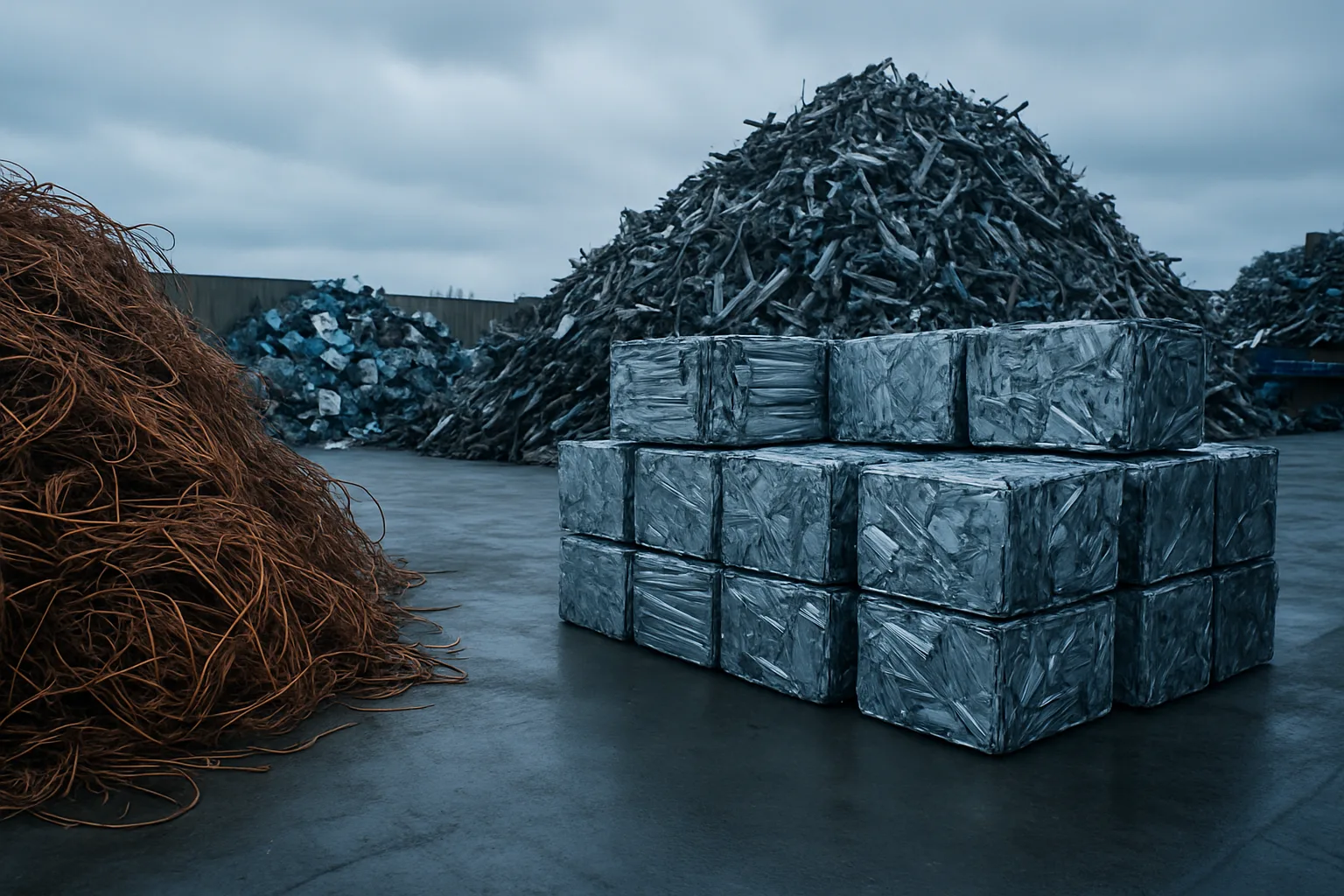
Stop Leaving Money on the Table: A Small-Scale Collector's Guide to Scrap Metal Auctions
Most small-scale scrap collectors sell the same way: haul the load to the nearest yard, take whatever price they're offered, and drive home. No comparison. No leverage. No idea if they got a fair deal. If that sounds familiar, you're almost certainly leaving money behind — and in 2026's volatile metals market, that gap matters more than ever.
Whether you're pulling non-ferrous from job sites in Coquitlam, sorting aluminum from demolition runs across British Columbia, or building a steady stream of copper and steel loads, the way you sell is just as important as what you collect. The right tools — including a scrap metal auction platform — can fundamentally change your bottom line without changing what you do on the road.
Here's how small-scale collectors maximize earnings in 2026. Not theory. Practical, yard-tested tips you can act on today.
Know Your Metal Before You Pull Into the Yard
Walking into a yard without knowing your grades is like negotiating a car deal without knowing the book value. Buyers know exactly what they're looking at. You should too. The difference between #1 copper and #2 copper, or between clean aluminum extrusion and mixed aluminum, can swing your payout significantly per pound.
Take time to sort your loads before you sell. Separate your metals clearly:
- Copper — bare bright, #1, #2, insulated wire (stripped vs. unstripped pays very differently)
- Aluminum — extrusion, cast, sheet, breakage, cans
- Steel — HMS (heavy melting steel), shredded, light iron, prepared plate
- Stainless steel — 304, 316 — grade matters for pricing
- Brass — yellow brass, red brass, mixed
A mixed, unsorted load gives a buyer every reason to price it at the lowest common denominator. A sorted, documented load gives them confidence — and confidence translates to stronger bids. To find the best Canadian scrap metal prices today, you first need to know exactly what you're selling.
Document Everything: Photos, Weights, and Serial Tracking
This step separates serious collectors from casual ones. Documenting your loads — photos, estimated weights, metal grades — isn't just good housekeeping. It's a sales tool. When buyers can see what they're bidding on, they bid with more confidence. More confidence means more competitive offers.
Platforms like SMASH Recycling — where verified buyers bid on your metal are built around this principle. SMASH's inventory tool lets you log your loads with photo documentation, serial tracking for cores and catalytic converters, and clear grade descriptions. That documentation goes to vetted buyers before they bid — which drives better price discovery than a cold walk-in ever will.
Even if you're not ready to use an online platform yet, start the habit now:
- Photograph each load before transport
- Weigh loads at a certified scale when possible
- Note the grade and source of each metal type
- Track your VINs on automotive cores and catalytic converters
This data gives you negotiating power. It also protects you from disputes after the sale.
Use a Scrap Metal Auction to Create Real Competition
Here's the core problem with the traditional single-yard approach: you have one buyer. One buyer doesn't need to compete. They can offer you a take-it-or-leave-it price, and you have no immediate way to know if it's fair. That's not a market. That's a guessing game.
A scrap metal auction changes the dynamic entirely. When multiple vetted buyers see your load and bid against each other, the price isn't set by one person's margin — it's set by the market. More buyers means better price discovery. That's not a sales pitch. That's basic economics.
SMASH operates exactly this way. You list your load. Verified buyers across North America review the documentation and bid. You see the offers. You decide. No subscription fees. SMASH only earns when you sell — which means the platform is incentivized to get you the best result, not just a fast one.
For collectors in Coquitlam and across British Columbia, this is especially relevant. Local yard prices vary based on regional demand, freight costs, and what that specific facility needs that week. A single local quote is a snapshot — not the full picture. A competitive auction reveals the actual market value of your load on that day.
To understand where current prices sit before you list, check current Canadian scrap metal prices — it gives you a baseline so you know whether an offer is in the right range.
Timing Your Sales Around the Steel Scrap Price Today
Metal prices move. Sometimes daily. The steel scrap price today is not the steel scrap price next Thursday. Copper swings on global demand signals. Aluminum tracks with auto and construction activity. Knowing when to hold and when to sell is a legitimate earnings strategy — even for small-scale collectors.
You don't need to become a commodity trader. But you should be watching a few signals:
- Ferrous metal indices — HMS and shredded steel prices follow global steel mill demand. When mills are buying heavy, prices firm up. When they slow down, prices soften.
- LME copper price — The London Metal Exchange copper benchmark influences what Canadian yards pay. Watch for directional moves — up or down.
- Regional demand — In British Columbia, port activity and construction cycles affect local yard pricing. A strong quarter for infrastructure projects tightens non-ferrous supply.
- Seasonal patterns — Summer generally sees higher demolition and construction activity, which increases scrap supply. More supply can soften prices if demand doesn't keep pace.
You're not trying to perfectly time the market. You're trying to avoid selling into a clear dip when you have the option to wait. For ongoing pricing context, read Canadian scrap metal pricing guides that break down what's moving and why.
Disclaimer: Metal prices fluctuate constantly based on global and regional market conditions. Always verify current rates before selling.
Build a Process That Scales — Even at Small Volume
Small-scale doesn't mean disorganized. The collectors who grow their earnings year over year treat their operation like a business — even when it's part-time. Here's what that looks like practically:
Batch your loads strategically. Instead of making multiple small trips to the yard, accumulate enough volume to make documentation and transport worth the effort. A 500 lb load of sorted copper is worth substantially more in time-per-dollar than four 125 lb mixed trips.
Build relationships with multiple buyers. Whether you're selling locally in Coquitlam or listing online through a platform like SMASH, having more than one buyer relationship protects you from being captive to a single price. Variety is leverage.
Track your cost per pound hauled. Fuel, time, and disposal costs eat into margins fast. Know your break-even. Some metals aren't worth hauling in small quantities unless you can combine them with a larger load. Light iron at low volumes is a classic example — the logistics cost can outweigh the payout.
Learn the BOL and packing list basics. If you're ever selling loads that move across provincial or international boundaries, understanding Bills of Lading and packing list requirements avoids delays and disputes. SMASH's platform includes auto-invoicing that handles much of this documentation automatically — a significant time saver for small operations without dedicated admin staff.
Sell Scrap Metal Online — What Collectors in Coquitlam Need to Know
The shift to sell scrap metal online isn't just for large industrial yards. Small collectors with consistent loads of non-ferrous metal — copper, aluminum, brass, stainless — can access online platforms that connect them directly to vetted commercial buyers. This was a major market shift that accelerated through the mid-2020s, and in 2026 it's a standard part of how competitive collectors operate.
For collectors based in Coquitlam, the practical advantage is reach. A single local yard represents one set of margins, one day's demand, and one buyer's mood. An online auction with multiple verified buyers represents the actual market. That difference compounds over dozens of loads per year.
The barrier to entry is lower than most collectors expect. You need a smartphone with a camera, a scale or access to a certified weigh station, and the discipline to sort and document your loads. SMASH handles the buyer network, the bidding process, and the invoicing. You focus on collection and preparation — the part you already know.
If you're new to online platforms, start with your highest-value loads. A load of clean copper or stripped wire is the easiest place to see the difference competitive bidding makes. Once you're comfortable with the process, you can expand to other grades and materials.
Frequently Asked Questions
Q: What is a scrap metal auction and how does it work for small collectors?
A scrap metal auction is a competitive selling process where multiple vetted buyers review your load details and submit bids. Instead of accepting a single yard's offer, you see competing prices and choose the best one. Platforms like SMASH make this accessible to collectors at any volume — you list your load with photos and grade info, buyers bid, and you decide whether to accept.
Q: Is it worth selling scrap metal online if I'm only collecting small loads?
It depends on the metal type and grade. High-value non-ferrous metals — copper, brass, aluminum extrusion — are worth listing online even in smaller quantities because the price difference per pound can be meaningful. Light iron and mixed ferrous in small loads may not justify the process until you've accumulated more volume. Start with your best-grade loads and build from there.
Q: How do I find the best scrap metal prices in Coquitlam or British Columbia?
Start by monitoring regional pricing benchmarks online, then compare against local yard quotes. Using a competitive auction platform gives you real-time market feedback — the bids you receive tell you what the market actually values your load at on that day. For ongoing price tracking, check resources like best-scrap-metal-prices.ca for Canadian market data.
Q: Does SMASH charge a subscription fee for small collectors?
No. SMASH operates without subscription fees for sellers. The platform earns only when a sale completes — which means it's in SMASH's interest to get you the strongest result, not just a fast one. This makes it accessible for small-scale collectors who don't want fixed overhead costs.
Q: How important is sorting and documentation when selling scrap metal?
Extremely important. Sorted, documented loads give buyers the confidence to bid higher because the risk of grade uncertainty is removed. A mixed, undocumented load gets priced at the lowest grade in the pile. Sorting and photographing your loads before sale is one of the highest-ROI habits a scrap collector can build — it takes time upfront but pays off in stronger offers.
The gap between what an average collector earns and what a smart one earns isn't about working harder — it's about selling smarter. Sort your loads, document everything, watch the market, and use competition to your advantage. If you're collecting regularly in Coquitlam or anywhere across British Columbia, there's no reason to settle for a single take-it-or-leave-it quote. Get the best Canadian scrap metal prices — check rates at best-scrap-metal-prices.ca and make sure every load earns what it's worth.
Stay current with pricing trends and industry news by following SMASH on LinkedIn — practical market insights for collectors and yards across North America, posted regularly.