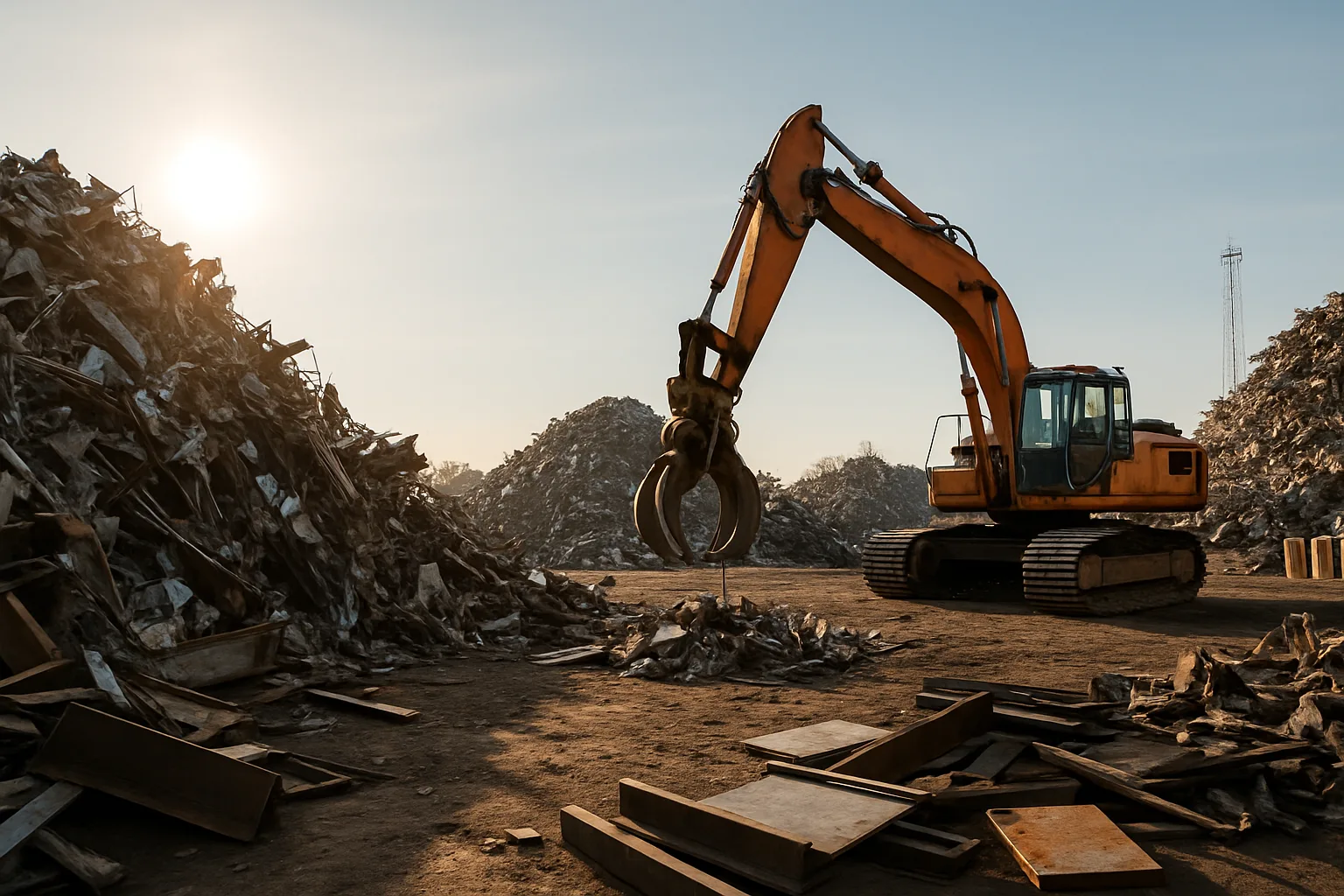
What Construction and Demolition Sites Leave Behind — And Why It's Worth More Than You Think
Most people walk past a demolition site and see rubble. Experienced scrap sellers see something different: structural steel, copper wire, aluminum framing, cast iron fixtures, and enough recoverable metal to make a serious haul. Construction and demolition (C&D) sites are among the most consistent sources of scrap metal in North America — and most of the people generating that material have no idea what steel scrap price today looks like, or how to get a competitive number for their loads.
If you're a contractor, site manager, or recycling yard operator in Cambridge or anywhere across Ontario, this guide breaks down exactly what comes off these sites, how to sort and document it, and how to stop leaving money on the table when it's time to sell.
The Most Valuable Scrap Metals Generated on C&D Sites
Not everything that comes off a demolition site has the same value per kilogram. Knowing your metals — and separating them properly — is the difference between getting a mixed-load rate and getting paid for what you actually have.
Here's what typically comes off construction and demolition sites in significant volumes:
- Structural steel — Beams, columns, rebar, and plate steel. High volume, lower per-kg value than non-ferrous, but it adds up fast. Watching the steel scrap price today matters here because even small swings per tonne mean real dollars at scale.
- Copper wire and pipe — Electrical wiring, plumbing lines, and conduit. Copper holds strong value and is one of the most actively traded metals in the recycling market. Keep it clean and separated from insulation where possible.
- Aluminum framing and cladding — Window frames, curtain wall systems, soffits, and HVAC ducting. Aluminium scrap value per kg fluctuates with global demand, but clean aluminum consistently commands a solid price.
- Cast iron and ductile iron — Old drainage pipe, radiators, and mechanical components from commercial demolitions. Heavy and slow to move, but worth sorting out.
- Stainless steel — Less common in residential jobs, but commercial and industrial demolitions often yield stainless fixtures, tanks, and kitchen equipment. Premium pricing applies.
- Brass fittings and valves — Found in older plumbing systems. Small by volume, high by value. Don't let these disappear into a mixed bin.
The rule is simple: the cleaner and better-sorted your load, the stronger the price you can negotiate. Mixed loads get mixed-load pricing. That's always the worst rate on the board.
How Construction Sites Generate Scrap — From Framing to Finish
Scrap metal doesn't just appear at the end of a project. It accumulates throughout the entire construction cycle. Understanding when and where it shows up helps you plan collection and maximize what you recover.
During new construction, off-cuts from structural steel fabrication, excess rebar, leftover electrical conduit, and HVAC trim all pile up before a building is even occupied. These are clean, well-identified metals — often easier to sort than demolition material. Site supervisors who set up designated scrap bins by metal type from day one move faster at cleanout time and get better prices.
During renovation and retrofit work, you're pulling out older material — sometimes copper plumbing being replaced with PEX, aluminum wiring being upgraded, or steel lintels getting cut out. This material can be mixed with debris, so effort goes into sorting, but the payoff is real. A Cambridge-area contractor working a commercial retrofit might pull hundreds of kilograms of copper over the course of a single building gut.
During full demolition, the volume spikes. Structural members, mechanical systems, roofing components, and facade materials all come down at once. This is where having a plan matters most. Sites that pre-sort metal during the tear-down phase — rather than waiting until everything is in a pile — come out ahead on both time and revenue. To build that kind of organized approach, read Canadian scrap metal pricing guides to understand how sorting affects your final payout.
Scrap Metal Inventory Management on Active Job Sites
This is where most C&D operations leave money behind. Loads go to the yard without documentation. Tickets come back with grades nobody on-site can verify. Disputes happen. And because nobody tracked what came off the building, there's no way to push back.
Good scrap metal inventory management doesn't require expensive software. It requires discipline and a consistent process:
- Designate bins by metal type from day one. Steel in one bin. Copper in another. Aluminum separate. Mixed goes last — and only if something genuinely can't be sorted.
- Weigh before it leaves the site. A simple floor scale gives you your own numbers. You're not going in blind.
- Document with photos. Photo documentation of loads before they ship gives you a reference point if a grading dispute comes up at the yard.
- Track by load, not by month. Know what each truck carried. If you're running multiple hauls from a large demolition, you want to compare pricing load by load.
- Record serial numbers and identifiers on specialty items. Transformers, large motors, and certain industrial components carry additional value or regulatory tracking requirements. Know what you have before it goes out the gate.
Platforms like SMASH are built around exactly this kind of documentation. The inventory tool, photo documentation features, and serial tracking aren't just administrative — they're the reason buyers on the platform bid with more confidence. Better documentation means better price discovery. That's not a sales pitch. That's how markets work.
Understanding Steel Scrap Price Today — And Why It Moves
If you're managing scrap from a C&D site, steel is almost always your highest-volume metal. Rebar, structural sections, plate steel, pipe — it accumulates fast on any commercial or industrial project. So why does steel scrap price today vary so much from one week to the next?
Steel scrap pricing is driven by a combination of global factors and local supply dynamics. Electric arc furnace (EAF) mills — which use scrap steel as their primary feedstock — set domestic demand. When mill utilization rates are high and order books are full, scrap prices go up. When mills idle or slow production, prices drop. Trade flows, tariff conditions, and energy costs all layer on top of that.
For sellers in Ontario, the proximity to major steel manufacturing capacity in the Great Lakes region creates its own pricing environment. Local demand from regional mills influences what yards in Cambridge and surrounding areas are willing to pay on any given week. That's why checking scrap metal prices today before you schedule a haul — not after — is a basic step that too many sellers skip. You can find the best Canadian scrap metal prices today before you load the truck.
The old approach — calling one buyer, taking their number, moving on — works fine if you don't care whether you're getting market value. Most C&D operators generating significant tonnage care a lot. Competition between buyers reveals the market. That's the core of how a SMASH scrap metal auction works: your documented load goes in front of vetted buyers, and the price gets discovered through competition, not through a single phone call.
How to Get Competitive Pricing for C&D Scrap in Cambridge and Ontario
Getting better prices isn't complicated. It's mostly about doing three things consistently: know what you have, document it properly, and expose it to more than one buyer.
For yards and contractors in Cambridge and across Ontario, the practical steps look like this:
- Sort aggressively. Every grade jump adds dollars per kilogram. Clean copper versus insulated copper is not a small difference — it's often significant per kg.
- Time your loads where you can. You're not always going to have the luxury, but if you can hold a load for a week when prices are firming up, that's a real decision worth making.
- Use platforms that bring buyers to you. SMASH connects sellers with vetted buyers across North America. No subscription fees. No guessing. You can get competitive bids for your scrap in Canada without the runaround of cold calls and single-buyer negotiations.
- Know your secondary metals. Copper and aluminum move the needle on revenue per load. Keep aluminium scrap value per kg in mind when you're pricing out a job — it's often a bigger contributor to total scrap revenue than the steel tonnage suggests.
- Check local pricing regularly. Rates shift. What your yard was paying three weeks ago is not what they're paying today. Treat price-checking like a line item on your site management checklist. You can always check current Canadian scrap metal prices before you commit to a buyer.
For anyone asking scrap metal near me open now — the right yard is the one offering competitive pricing today, not the one that's simply closest to the site. That distinction adds up over a full project cycle.
What Good Scrap Recovery Looks Like — The Full Picture
Construction and demolition sites generate real recoverable value. The contractors and site managers who capture that value aren't doing anything extraordinary — they're just organized about it. They sort early. They document loads. They read Canadian scrap metal pricing guides to stay current. And they use tools that put their inventory in front of multiple buyers instead of one.
The scrap market in Canada — and specifically across Ontario — is active and well-connected. There's no reason to settle for a single offer on a well-sorted, well-documented load of structural steel, copper pipe, and aluminum framing. That load has a real market value. Getting close to it just takes the right process and the right platform.
If you want to start recovering more from every C&D job, the first step is knowing what the market is paying. Get the best Canadian scrap metal prices and make smarter decisions on every load — check rates at best-scrap-metal-prices.ca.
Disclaimer: Scrap metal prices fluctuate based on market conditions, grade, and regional demand. Always verify current rates before selling.
Frequently Asked Questions
Q: What is the steel scrap price today in Cambridge, Ontario?
Steel scrap prices change weekly — sometimes daily — based on mill demand, regional supply, and global market conditions. Rather than relying on a single yard's posted rate, compare offers across multiple buyers. Platforms like SMASH and resources at best-scrap-metal-prices.ca help you benchmark what the market is actually paying near Cambridge and across Ontario.
Q: What types of scrap metal come off a typical demolition site?
Structural steel (rebar, beams, plate), copper wire and pipe, aluminum framing and cladding, cast iron drainage pipe, brass fittings, and stainless steel fixtures are the most common. Commercial and industrial demolitions tend to yield a wider variety and higher volumes of non-ferrous metals than residential jobs.
Q: Does sorting scrap metal on-site actually make a difference in price?
Yes — significantly. Clean, sorted loads are graded higher than mixed loads. The difference between clean copper and mixed copper, or between clean aluminum and contaminated aluminum, can be substantial on a per-kilogram basis. Sorting at the source is one of the highest-return activities on any C&D scrap program.
Q: How does the SMASH scrap metal auction work for construction scrap?
SMASH lets sellers document and list their scrap inventory — using photo documentation, serial tracking, and inventory tools — and put it in front of vetted buyers through a competitive auction format. No subscription fees apply. More buyers competing for a well-documented load means better price discovery than a single-buyer phone call. Reach out at jeff@smashscrap.com to get started.
Q: When is the best time to sell steel scrap from a construction site?
Timing your scrap sales around market conditions can improve your return, but it's not always practical mid-project. The key is to check scrap metal prices today before scheduling hauls rather than after, and to avoid selling into a known price dip if you have the flexibility to hold. Staying current on pricing through resources like Canadian scrap metal pricing guides helps you make that call with real data.
Stay current on scrap metal market trends and industry updates — follow SMASH on LinkedIn for pricing insights, market moves, and practical advice for scrap sellers across Canada.