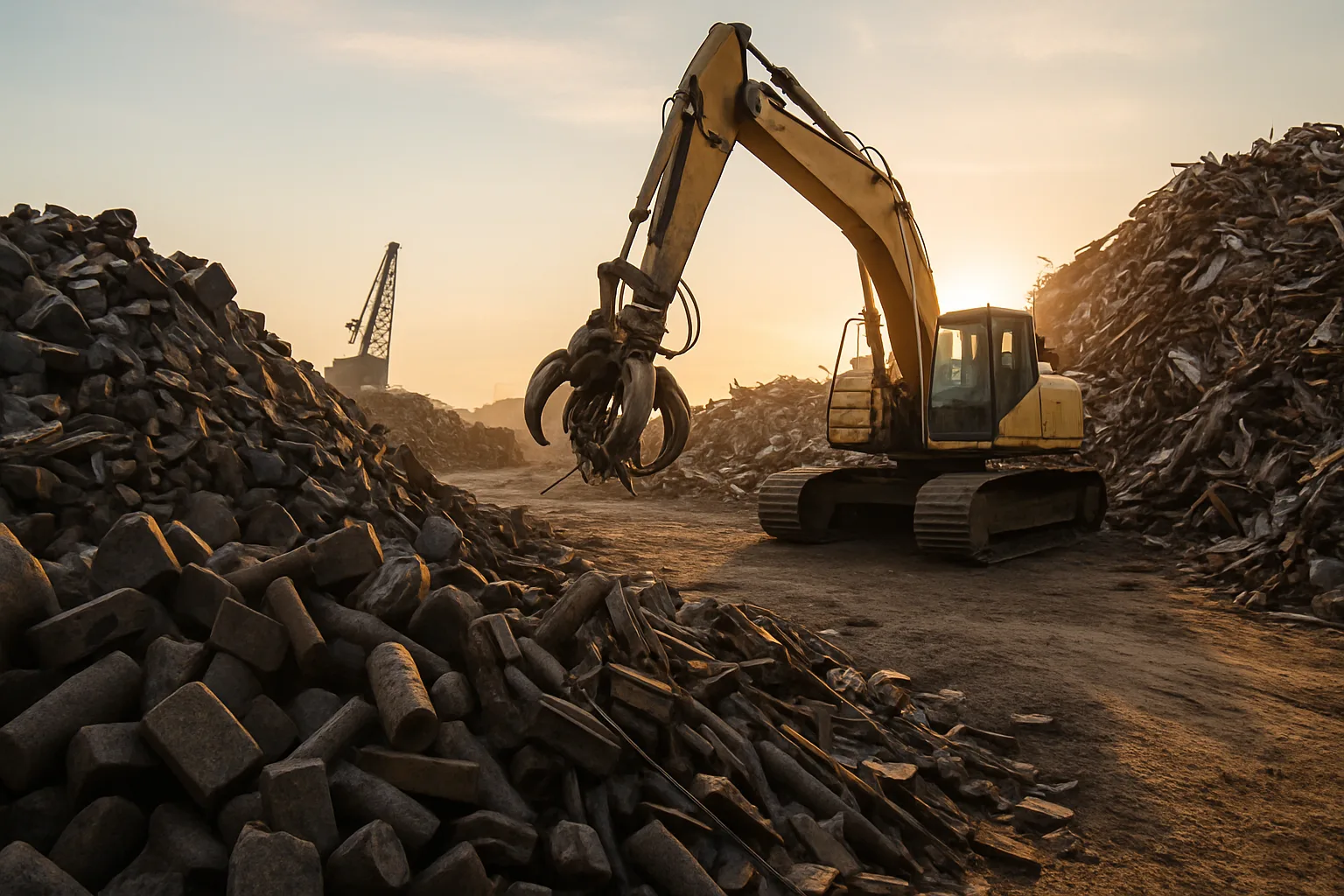
Steel vs. Iron Scrap: Why the Price Difference Matters More Than You Think
Most sellers assume steel and iron are basically the same thing when it comes to scrap value. They're not. Confusing the two at the yard can leave serious money on the table — and if you're hauling loads in Edmonton or anywhere across Alberta, that gap adds up fast. Understanding the difference between steel scrap and cast iron isn't just academic. It directly affects what you get paid.
This guide breaks down the price difference, what drives it, and how a scrap metal auction platform like SMASH helps you stop guessing and start getting paid what your material is actually worth.
Steel vs. Iron: What You're Actually Selling
Steel and iron are both iron-based metals, but they behave very differently in the recycling stream — and mills price them accordingly. Cast iron has a higher carbon content (typically above 2%) and is brittle. Think engine blocks, old radiators, brake rotors, and wood stove inserts. It's dense, heavy, and melts differently than steel. Mills that process cast iron have specific requirements for it.
Steel, on the other hand, is an alloy with lower carbon content. It's more workable, more versatile, and more widely demanded by electric arc furnace (EAF) mills across North America. Because the demand base for steel scrap is broader, it typically commands a stronger market. That said, both materials move with global commodity pricing — and neither one has a fixed number you can count on week to week.
Here's a quick breakdown of common items in each category:
- Steel scrap: structural beams, sheet metal, car bodies, appliances, rebar, pipe, cans
- Cast iron scrap: engine blocks, brake drums, rotors, old cookware, radiators, manhole covers
- Stainless steel (separate category): kitchen equipment, exhaust components, food-grade piping — priced significantly higher than carbon steel
Sorting matters. If your cast iron is mixed into a steel load, you're likely getting steel pricing on material that may or may not be accepted at all. Clean, sorted loads get better offers — and that's a fact whether you're selling through a single buyer or running a competitive scrap metal auction.
What Drives the Steel Scrap Price Today
The steel scrap price today is shaped by forces most sellers don't track closely enough. Global steel production demand, scrap export volumes, energy costs at mills, and the relative health of the construction and automotive sectors all feed into the number you see at the yard gate. In 2026, North American mill demand has remained a primary driver — domestic EAF production continues to expand, which keeps scrap consumption high.
Cast iron pricing tends to lag behind steel pricing, partially because the buyer pool is smaller. Foundries that process cast iron are more regionally concentrated, meaning if there's no foundry nearby, the economics of hauling cast iron don't always pencil out for local buyers. This is why yards in Edmonton may offer noticeably different rates on iron than yards in regions with active foundry activity.
A few key factors that move the needle on both metals:
- Mill inventory levels: When mills are running lean on scrap inventory, they bid more aggressively
- Seasonal demolition and construction cycles: Spring and summer typically bring more structural steel into the market
- Export demand: When overseas buyers are active, domestic mills compete harder for supply
- Energy prices: EAF mills are electricity-intensive — energy cost swings affect their margins and what they'll pay for feedstock
- CAD/USD exchange rate: For Canadian sellers, this matters when loads are priced in USD-equivalent terms
If you want to check current Canadian scrap metal prices before you sell, tracking these inputs gives you a real edge in negotiating or choosing when to move your material.
Why Edmonton Sellers Need More Than One Buyer
Edmonton sits in a strong position for scrap — heavy industrial activity, ongoing infrastructure projects, and proximity to Alberta's oil and gas sector all generate consistent volumes of both steel and iron scrap. But having material is only half the equation. Who's buying it, and what are they actually willing to pay today, is the other half.
The traditional approach — calling your regular buyer, getting a number, taking it — works until it doesn't. That single buyer has no reason to sharpen their pencil if you're not shopping the load around. A competitive scrap metal auction changes the dynamic entirely. When multiple vetted buyers see your load and bid against each other, you get actual price discovery instead of a take-it-or-leave-it quote.
For Edmonton scrap metal services, the difference between one buyer and three competing buyers can be meaningful on a full truckload of HMS (heavy melt steel) or a skid of clean cast iron. The material didn't change. The market exposure did.
This is exactly where platforms like sell your scrap metal on SMASH Recycling come in. SMASH connects yards and industrial sellers with vetted buyers across North America — no subscription fees, no guesswork, and no depending on one relationship to set your price.
Documenting Your Load Gets You Better Offers
Whether you're selling steel, cast iron, or a mixed load with non-ferrous mixed in, documentation directly affects buyer confidence — and buyer confidence affects bids. A load with clear photos, accurate weights, a proper packing list, and clean sorting will out-perform a vague listing every time. This isn't theory. Buyers make faster decisions and bid more competitively when they know exactly what they're getting.
SMASH's inventory tools are built around this principle. Photo documentation, serial tracking for high-value items, VIN lookup for auto-derived scrap, and organized load details all give buyers the information they need to commit without hesitation. That's how you turn a decent load into a well-bid load.
If you're selling catalytic converters alongside your ferrous loads, the documentation game matters even more. Cats carry widely varying PGM (platinum group metal) content — a fact that makes vague listings essentially unsellable to serious buyers. Platforms that handle SMASH scrap listings with proper documentation close deals that a phone call never would. You can even explore options to sell catalytic converters online through SMASH's vetted buyer network, with full lot documentation so buyers bid with confidence rather than hedging on unknowns.
To find the best Canadian scrap metal prices today, you need both market data and market exposure. One without the other only gets you halfway there.
Ferrous Scrap Grades That Affect Your Payout
Not all steel is the same grade, and not all cast iron is the same quality. Buyers pay on grade — and knowing which grade your material falls into before you show up at the yard gives you negotiating power. Here are the grades that come up most often for sellers in Alberta:
- HMS 1 (Heavy Melt Steel #1): Clean, heavy steel plate and structural — no galvanized, no tin, no light gauge. Commands the best ferrous steel pricing.
- HMS 2 (Heavy Melt Steel #2): Mixed heavier steel with some lighter gauge material mixed in. Priced slightly below HMS 1.
- Shredder scrap: Auto bodies and mixed ferrous going to a shredder — pricing varies significantly by region and mill demand.
- Cast iron (clean): Sorted, uncontaminated cast iron. Better pricing than mixed iron loads.
- Busheling: Clean factory steel punchings and clippings — high-quality feedstock, priced well when mills need it.
Misgrading your load — either by accident or because a single buyer didn't bother to separate it out — is one of the most common ways sellers lose money they don't even know they're losing. A competitive auction environment, with buyers who specialize in specific grades, surfaces the real value of clean, properly categorized material.
For more context on how pricing works across different metals and grades, read Canadian scrap metal pricing guides that break down the market in plain terms.
The Old Way vs. the SMASH Way
The old way is familiar: call your buyer, get a number that may or may not reflect today's market, load the truck, take what's offered. It works — until you realize there's a better number sitting with a buyer who just never heard about your load.
The SMASH way is simple. List your load with proper documentation. Let vetted buyers compete. Auto-invoicing handles the paperwork. No subscription, no guesswork, no single-buyer dependency. Competition reveals the market — and when the market is revealed, sellers make informed decisions instead of hopeful ones.
If you're moving steel, cast iron, or mixed ferrous loads out of Edmonton or anywhere across Alberta, the gap between one buyer and several competing buyers is worth finding out about. The best scrap metal prices Alberta sellers get aren't found by luck — they're found by creating the right conditions for buyers to compete.
Ready to stop guessing what your scrap is worth? Get the best Canadian scrap metal prices — check rates at best-scrap-metal-prices.ca and see what your material is actually worth in today's market.
Frequently Asked Questions
Q: What is the difference between steel scrap and cast iron scrap pricing?
Steel scrap generally commands higher prices than cast iron because it has a broader base of buyers — primarily EAF mills — that consume it in large volumes. Cast iron requires foundry-specific processing, which limits the buyer pool. The actual price spread varies week to week based on market conditions, so checking current rates before you sell is always the right move.
Q: How does a scrap metal auction work for ferrous loads?
A scrap metal auction lets multiple vetted buyers compete on your load rather than relying on a single buyer's quote. You document your load — weights, photos, grade details — and buyers bid against each other. More competition means better price discovery. Platforms like SMASH handle the process end-to-end, including auto-invoicing, so you're not managing paperwork on top of logistics.
Q: What are the best scrap metal prices in Edmonton right now?
Scrap metal prices in Edmonton fluctuate based on mill demand, export activity, and commodity market movement. There's no fixed number that holds from week to week. Your best approach is to check live pricing through a platform like best-scrap-metal-prices.ca and get competitive bids from multiple buyers rather than relying on one yard's posted rate.
Q: Can I sell catalytic converters online through SMASH?
Yes. SMASH supports catalytic converter sales with proper lot documentation, including photo records and serial tracking. Because cat pricing varies widely based on PGM content by make and model, documented lots attract more confident bids from buyers who specialize in this material. Vague or undocumented loads typically get lower, hedged offers.
Q: Does the Alberta location affect what I can get for my steel scrap?
Location affects logistics costs, which buyers factor into their bids. That said, a competitive auction format reduces the impact of geography by bringing in buyers from a wider network rather than limiting you to whoever is physically nearby. Edmonton's industrial base also means consistent volume, which makes it an attractive region for buyers looking for reliable supply.
Stay current on scrap metal market trends and pricing insights — follow SMASH on LinkedIn for regular updates from inside the industry.
Disclaimer: Scrap metal prices fluctuate based on market conditions, grade, and buyer demand. All pricing references in this article are general and informational. Always verify current rates before selling.