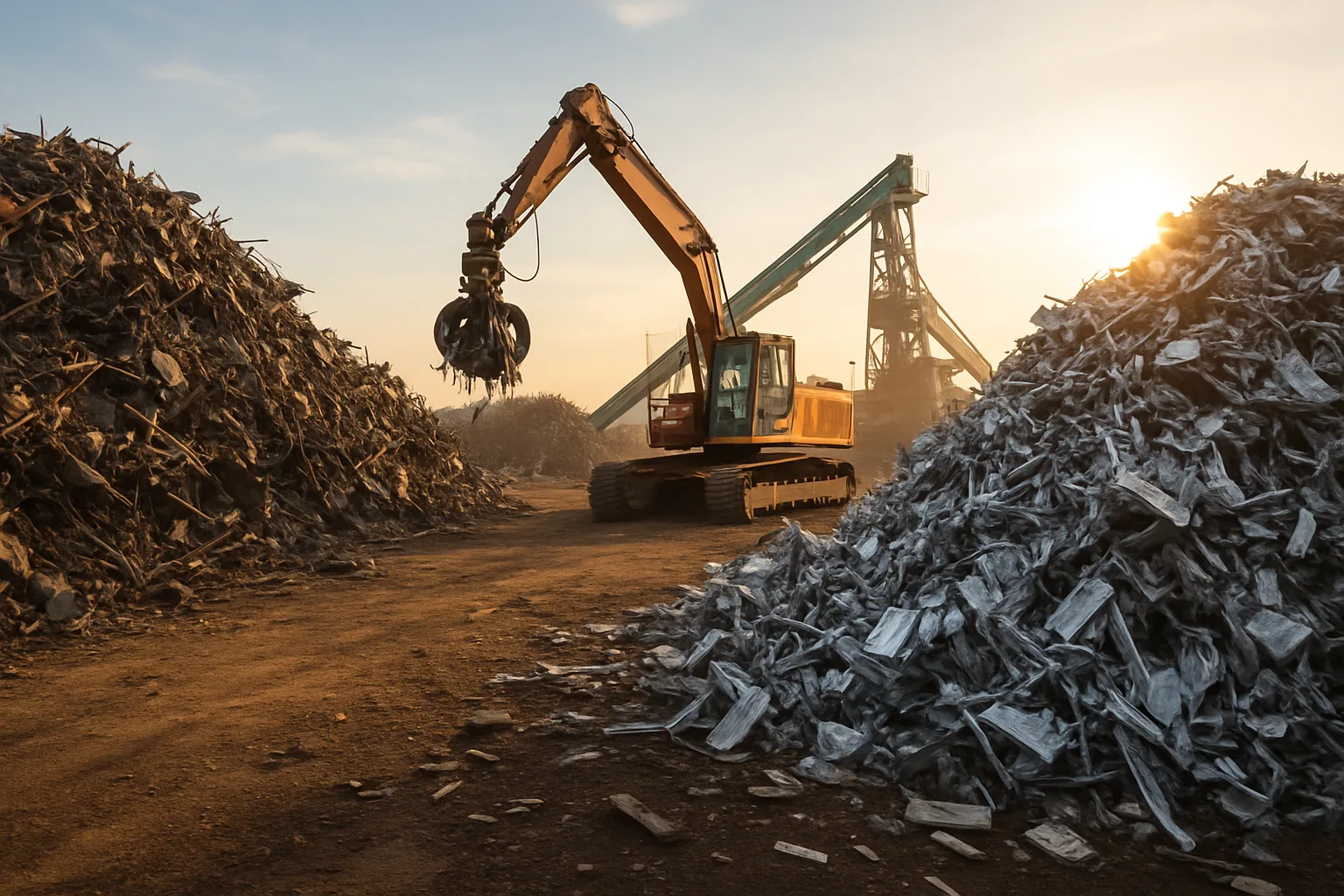
Ferrous vs. Non-Ferrous Scrap Metal: What Every Seller in Saint John Needs to Know
Most people toss their scrap into a pile and hope for the best. But if you don't know the difference between ferrous and non-ferrous metal, you're almost certainly leaving money on the table. That gap in knowledge directly affects the aluminum scrap price today you receive, the copper value you pocket, and whether you walk away from the yard satisfied or frustrated.
This guide breaks down what separates these two metal categories, why it matters for pricing, and how sellers in Saint John can use that knowledge to get more competitive offers. Whether you're clearing out a shop, scrapping a vehicle, or processing a full load, understanding your material is the first step to getting paid fairly.
What Makes a Metal Ferrous — and Why It Pays Less
Ferrous metals contain iron. That's the short answer. The longer answer is that ferrous metals — steel, cast iron, wrought iron, and stainless steel — make up the majority of scrap by weight in North America. They're everywhere: old appliances, structural beams, car frames, rebar, I-beams, sheet steel. Volume is high. Value per pound is low.
The magnet test is the fastest way to sort your material on the spot. If a magnet sticks, you're likely dealing with a ferrous metal. Yards in New Brunswick and across Canada pay ferrous metals by the ton, not by the pound. Expect pricing in the range of a few dollars per hundred pounds for clean steel — though exact figures shift constantly based on global demand and mill activity. Never assume last month's rate applies today.
- Common ferrous metals: carbon steel, cast iron, wrought iron, stainless steel (some grades), galvanized steel
- Typical applications: vehicle frames, appliances, construction scrap, industrial machinery
- Pricing unit: usually per gross ton or per hundredweight
- Key variable: grade matters — shredded steel, #1 heavy melt, and busheling all price differently
Stainless steel is the exception in the ferrous world. It contains nickel and chromium, which push its value noticeably higher than regular carbon steel. Always separate your stainless from your mixed steel pile before you head to the yard.
Non-Ferrous Metals: Where the Real Money Is
Non-ferrous metals contain no iron. They don't rust in the same way, they're lighter, and — critically — they command significantly higher prices per pound. Aluminum, copper, brass, lead, zinc, nickel, and titanium all fall into this category. If you're trying to maximize what you earn, non-ferrous material is where you focus your energy.
The aluminum scrap price today is one of the most-searched metrics among scrap sellers across Canada. Aluminum is everywhere — window frames, automotive parts, wire, extrusions, cast wheels, siding, and cans. It's lightweight, which means you need more of it to hit serious weight, but the per-pound rate makes it worth sorting carefully. Aluminum extrusion and cast aluminum are graded separately, so mixing them together costs you money.
- Copper: The highest-value common scrap metal. Bare bright copper wire fetches a premium. Insulated wire, copper pipe, and sheet copper all price at different grades.
- Aluminum: High volume, solid value. Grade separation is critical — extrusion, cast, sheet, and auto cast all price differently.
- Brass: Yellow brass, red brass, and mixed brass each carry their own rate. Often found in plumbing fixtures and fittings.
- Lead: Heavy, dense, and consistently valued. Found in roofing, batteries, and old pipe.
- Zinc: Die-cast parts, old hardware. Lower value than copper or aluminum but worth separating.
- Catalytic converters: A specialized non-ferrous category loaded with platinum group metals (PGMs). Worth far more than most sellers realize.
Copper prices in Canada track global commodity markets closely. If you're holding a significant amount of copper, it's worth checking current rates before you sell — not after. Platforms like sell your scrap metal on SMASH Recycling put multiple vetted buyers in competition for your load, which means you get a real sense of where the market is sitting, not just what one buyer decides to offer.
Aluminum Scrap Price Today: Why Grade Separation Drives Your Number
Let's focus specifically on aluminum, because it's the non-ferrous metal most sellers handle in large quantities. The aluminum scrap price today isn't a single number — it's a range that depends entirely on what you're bringing in and how well it's sorted.
Aluminum extrusion (the clean, profile-cut stuff from window and door frames) is consistently valued higher than mixed or contaminated aluminum. Cast aluminum from engine blocks and transmission cases prices differently from sheet aluminum. Auto wheels — clean, without inserts or valve stems — often have their own buyer category. If you mix these together, the yard grades your entire load to the lowest quality present. That's money you don't get back.
- Aluminum grades to know:
- Aluminum extrusion (6061, 6063) — clean, no attachments
- Cast aluminum — engine components, brackets
- Sheet aluminum — siding, roofing, flat stock
- Aluminum wire — usually lower grade unless it's stripped
- Auto cast — wheels, transmission parts
- MLC (mixed low-grade) aluminum — lower value, catch-all category
For sellers in Saint John looking to move aluminum loads consistently, the best approach is to sort before you load. Bring a clean, graded load and you give buyers confidence. Documented loads — photos, weights, grade descriptions — attract more serious offers. That's as true in New Brunswick as it is anywhere in North America.
You can find the best Canadian scrap metal prices today and benchmark current aluminum rates before your next sale. Don't guess.
Catalytic Converters: The High-Value Non-Ferrous Category Most Sellers Underestimate
Catalytic converters sit in their own league. They're technically part of the non-ferrous world, loaded with platinum, palladium, and rhodium — platinum group metals (PGMs) that trade on global commodities markets at serious prices. A single catalytic converter can range from a modest payout to a significant one depending on the vehicle it came from and current PGM spot prices.
The problem with cats is that most sellers don't know what they have. VIN-based lookup tools and serial number tracking exist specifically to match converters to their PGM content. Selling your converters blind — or to a single buyer who makes a lowball offer — is the fastest way to give money away. If you're looking to sell catalytic converters online, the auction model exists precisely because competitive bidding reveals real market value rather than accepting whatever one buyer decides to pay.
SMASH handles catalytic converter documentation and serial tracking as part of the process. Multiple vetted buyers bid against each other. That competition, not a single phone call, tells you what your cats are worth. If you're sitting on a pile of converters in Saint John and haven't tested the auction market, you're leaving real money on the floor. For more detail on how the process works, read Canadian scrap metal pricing guides to understand how cat pricing works before your next sale.
How to Get the Best Scrap Metal Prices in Saint John
Finding best scrap metal prices in Saint John isn't complicated, but it does require a bit of homework. The yards operating in and around the city will each have their own posted rates, and those rates fluctuate weekly — sometimes daily — based on commodity markets. Calling around gets you a snapshot, not a guarantee.
Here's what actually moves the needle on your payout:
- Sort your metal. Ferrous and non-ferrous separate. Non-ferrous by grade. Don't let the yard do it for you.
- Photograph your loads. Documentation builds buyer confidence and supports better offers, especially on high-value material like copper, aluminum extrusion, or catalytic converters.
- Know your weights. Whether you're bringing in 200 lbs of aluminum or 2,000 lbs of mixed steel, knowing your approximate weight puts you in a stronger position.
- Use competition. A single buyer gives you one number. Multiple buyers competing gives you a market. Platforms like SMASH exist for exactly this reason.
- Check rates before you sell. Commodity prices shift. What copper fetched last week may not be today's number. Check current Canadian scrap metal prices before you commit.
If you're searching for scrap metal recycling near me for cash or trying to locate scrap metal near me within 5 mi, start with knowing what you have. Local yards will give you a rate. SMASH gives you a market. Those are two different things.
For Saint John scrap metal services, understanding your material grade before you walk through the gate is the single most effective thing you can do to protect your payout.
Prices fluctuate constantly. Always verify current rates before selling. The figures mentioned in this article are general reference points only and do not reflect guaranteed pricing.
Whether you're scrapping an old industrial load, clearing non-ferrous from a shop, or processing catalytic converters, the best scrap metal prices New Brunswick sellers earn come from preparation, documentation, and competition — not luck. Get the best Canadian scrap metal prices and check rates at best-scrap-metal-prices.ca before your next load moves.
Frequently Asked Questions
Q: What is the aluminum scrap price today in Canada?
Aluminum scrap prices in Canada vary by grade and shift with global commodity markets. Clean aluminum extrusion consistently prices higher than mixed or cast aluminum. Check current rates at best-scrap-metal-prices.ca for up-to-date benchmarks — posted prices at individual yards may differ based on local supply and demand.
Q: How do I find the best scrap metal prices in Saint John, New Brunswick?
Start by sorting your material before you approach any buyer — ferrous and non-ferrous separate, non-ferrous by grade. Then compare offers rather than accepting the first number you hear. Platforms like SMASH put vetted buyers in competition for your load, which tends to reveal a more accurate market price than a single phone call to one yard.
Q: Is it worth separating aluminum from steel before scrapping?
Absolutely. Steel and aluminum price in completely different categories — steel by the ton at low per-pound rates, aluminum by the pound at a significantly higher rate. If you mix them, a yard will downgrade your aluminum to account for contamination. Sorting takes time but it directly increases your payout.
Q: Can I sell catalytic converters online from Saint John?
Yes. Platforms like SMASH allow you to document your converters with photos, serial numbers, and VIN data, then put them in front of multiple vetted buyers simultaneously. This competitive format often yields better results than selling locally to a single buyer who sets their own price without accountability.
Q: How often do scrap metal prices change in Canada?
Scrap metal prices can shift weekly or even daily, tied to global commodity markets for copper, aluminum, steel, and platinum group metals. Never assume last week's posted rate applies today. Always verify current pricing before committing to a sale, especially on high-value loads of copper, aluminum extrusion, or catalytic converters.
Follow SMASH on LinkedIn for scrap metal market updates, pricing trends, and industry insights: linkedin.com/company/scrap-metal-auction-sales-hub.