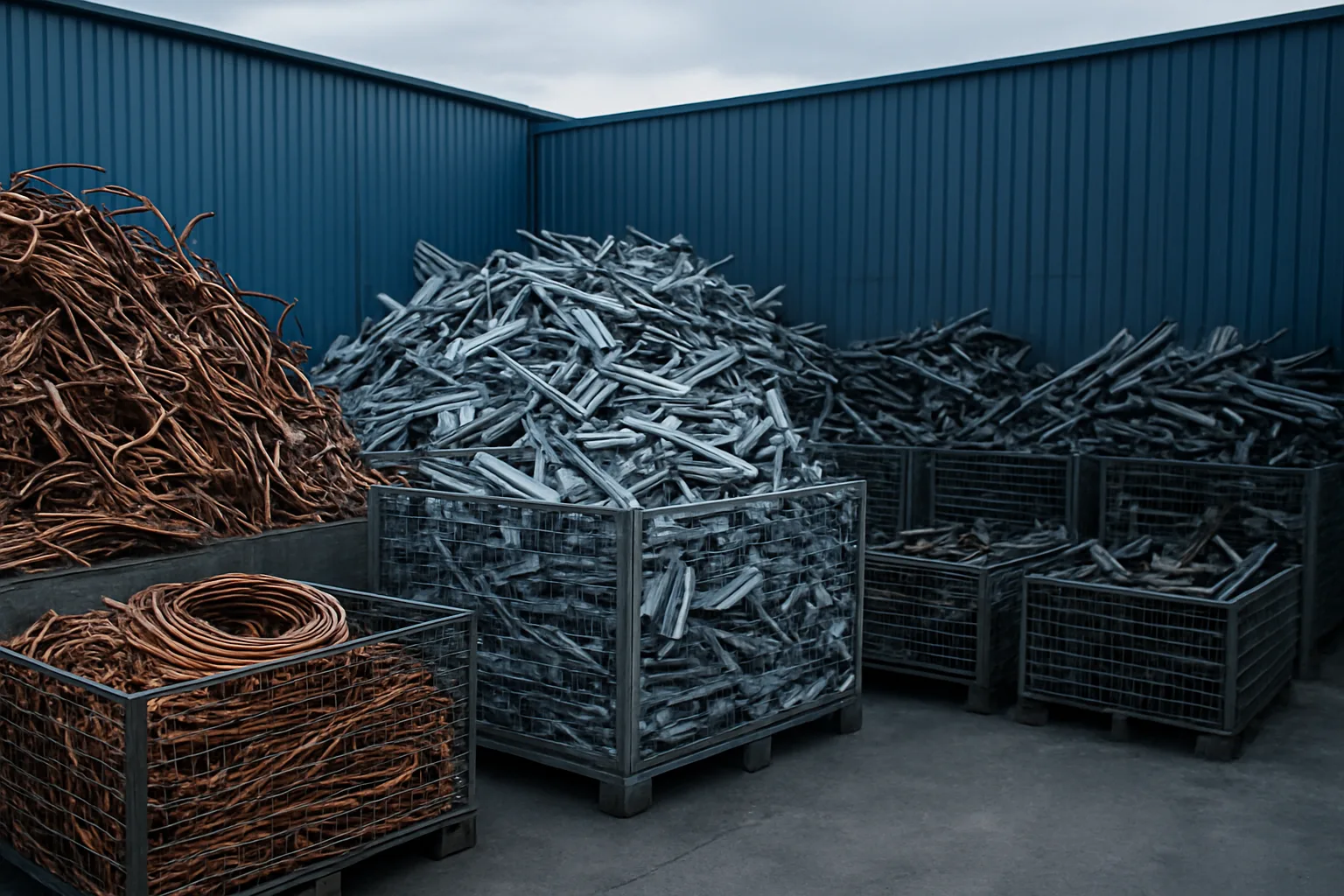
Copper Scrap Grading in 2026: What Your Pile Is Actually Worth
Most sellers leave money on the table before they ever make a call. Not because the market is bad — but because they don't know what grade of copper they're holding. In a scrap metal auction environment, grade determines price. And in 2026, with copper demand running hot across EV infrastructure, grid upgrades, and industrial manufacturing, knowing the difference between #1 and #2 bare bright copper could mean a significant difference per hundred pounds.
This guide breaks down copper grading, current market dynamics, and how sellers in Victoria and across British Columbia can use competitive auction platforms to stop guessing and start getting paid properly.
Why Copper Scrap Prices Are Moving in 2026
Copper isn't a quiet metal right now. Global demand continues to climb — driven by electrification, data center buildouts, and the ongoing push for renewable energy infrastructure. Canada is sitting inside that demand curve, not outside it. That matters for sellers trying to time loads or understand why their yard's offer shifted week to week.
In British Columbia specifically, industrial activity tied to LNG infrastructure, commercial construction, and utility upgrades is generating real copper volume. Electrical contractors, demolition crews, and HVAC shops are moving material regularly. The question isn't whether your copper has value — it does. The question is whether you're capturing the right price for the grade you actually have.
A few market realities shaping copper pricing in mid-2026:
- Tight supply of clean #1 copper keeps premiums elevated for well-documented, uncoated material
- Buyer demand for documentation has increased — mills and smelters want verifiable grade data, not just a seller's word
- Price discovery through competition is more accessible than it's ever been via platforms like SMASH
- Regional pricing varies — what a Victoria yard offers versus a buyer in Ontario or Manitoba can differ meaningfully
To find the best Canadian scrap metal prices today, you need more than one phone number. You need a system that puts your load in front of multiple qualified buyers at once.
The Copper Grading Scale: A Practical Breakdown
Grading copper correctly is the single highest-leverage thing a seller can do before listing or negotiating. Misgrade your load — even accidentally — and you either leave money behind or face a dock when the buyer inspects. Here's how the grades break down in plain terms.
Bare Bright Copper (the cleanest grade)
This is uncoated, unalloyed copper wire, free of insulation, solder, paint, or any attachments. Think freshly stripped electrical wire with nothing on it. This grade commands the highest price per pound because it requires the least processing. It should be shiny, clean, and at least 16 gauge. If it's oxidized or has any coating, it's not bare bright.
#1 Copper
Clean copper pipe, bus bars, clippings, and wire — no paint, no solder, no significant oxidation. Small amounts of solder are sometimes tolerated depending on the buyer, but don't count on it. This is the grade most residential and light commercial renovation material falls into when stripped and cleaned properly. Plumbing tear-out, clean bus bar, HVAC line sets — all potential #1 copper if prepped right.
#2 Copper
Copper with minor oxidation, light coatings, solder, or attachments. This includes copper pipe with fittings, light-gauge wire with some insulation still attached, or copper that's been painted or corroded. The spread between #1 and #2 can be meaningful — enough that taking time to clean your load before delivery can pay off.
Insulated Copper Wire (ICW) and Romex
Wire with insulation still on it. Priced based on the estimated copper content inside — this is called the "percentage recovery." A thick-jacketed industrial cable recovers more copper than thin thermostat wire. Buyers either pay by percentage (e.g., 65% recovery) or buy at a flat rate for common grades like Romex. If you have large volumes of ICW, a scrap metal auction format gets you in front of buyers who specialize in this material and can price it properly.
Copper Alloys: Brass and Bronze
Technically not pure copper grades, but worth mentioning because mixed loads often include yellow brass, red brass, and bronze. Each has its own price per pound, and sellers who sort these out separately almost always get a better blended return than selling it all as mixed. Don't let a buyer lump your red brass valve bodies in with yellow brass fittings — they're worth more.
How a Scrap Metal Auction Changes the Game for Copper Sellers
Here's the old way: you call your regular yard, they quote you a number, you accept it or you don't. You have no idea if that number is strong or weak for today's market. You have no leverage. One buyer, one offer, take it or leave it.
The SMASH way: you document your load — photos, weights, grade classification, serial tracking if applicable — and put it in front of vetted buyers who compete for it. Competition creates price discovery. Price discovery protects you from leaving money behind.
For copper sellers in Victoria running regular volumes — whether it's jobsite wire, stripped plumbing, or industrial tear-out — this format matters. Buyers across British Columbia and nationally can see your documented load and bid accordingly. You're not limited to whoever is closest to you geographically.
SMASH also handles auto-invoicing and load documentation automatically, so your BOLs and packing lists aren't a manual headache. More organized loads sell with more buyer confidence — and that confidence shows up in the bids. You can find the best price for your scrap in Canada when multiple qualified buyers are actually looking at your material.
No subscription fees. SMASH earns when you sell — full stop.
Regional Pricing Reality: Victoria and British Columbia in Context
Sellers in Victoria sometimes assume they're at a geographic disadvantage — island location, shipping considerations, smaller local buyer pool. That assumption costs money. A scrap metal auction platform removes the geographic ceiling on your buyer pool. Your documented copper load isn't limited to what the local yard is willing to pay today. Buyers from across British Columbia, Ontario, or Manitoba can be looking at the same load.
Scrap metal prices Ontario and best scrap metal prices Winnipeg buyers look at aren't always the same as Victoria rates — and sometimes national buyers will outbid local ones for quality, well-documented copper. That's the point. You can read Canadian scrap metal pricing guides to understand how regional variation works and what it means for your sale strategy.
For Victoria scrap metal services, the practical move is to document your loads properly, grade them accurately before listing, and let competition do the work. That applies whether you're moving fifty pounds of bare bright or a full truckload of #2 copper and mixed ICW.
If you're also moving non-ferrous alongside your copper — aluminum, zinc, nickel alloys — the same principle applies. And if you have catalytic converters in your yard, platforms that let you sell catalytic converters online using VIN lookup and serial tracking give you the same documentation advantage for your cats as for your copper loads.
What to Do Before You List Your Copper Load
A few minutes of prep before listing or calling a buyer can meaningfully change your outcome. Here's the practical checklist:
- Sort by grade. Don't mix bare bright with #2 copper or brass. Mixed loads get priced at the lowest-grade component.
- Strip what you can. If you have lightly insulated wire and a stripper on site, run it. The per-pound difference from ICW to bare copper pays for the labor almost every time on larger volumes.
- Remove attachments. Brass fittings, steel connectors, aluminum brackets — pull them off and separate them. Each material should hit the scale in its own grade category.
- Photograph your load. Buyers bid with more confidence when they can see what they're buying. Clean, well-lit photos of sorted material signal a serious seller.
- Weigh before you list. Approximate weights are fine for early-stage listings, but the tighter your numbers, the more confident buyers will be in their bids.
- Know your documentation. For commercial loads, having your BOL and packing list organized before the sale closes saves everyone time and keeps your relationship with buyers clean.
This isn't complicated. It's just discipline. Sellers who do this consistently get better outcomes — not because the market suddenly changed, but because they stopped giving buyers reasons to discount.
Copper demand isn't going soft. Grid expansion, electrification, and industrial construction across Canada are keeping copper at the front of the non-ferrous conversation heading into the second half of 2026. If you're generating copper volume in Victoria or anywhere across British Columbia, this is the time to get your process right — grading, documentation, and getting your load in front of more than one buyer.
Disclaimer: Copper scrap prices fluctuate daily based on global market conditions, regional buyer demand, and material grade. Always check current Canadian scrap metal prices before finalizing any sale.
Get the best Canadian scrap metal prices for your copper loads — whether you're sorting bare bright or moving mixed ICW, it pays to know your grade and know your options. Start at best-scrap-metal-prices.ca and let competition do what a single phone call never can.
Frequently Asked Questions
Q: What is the difference between #1 and #2 copper scrap?
#1 copper is clean, uncoated copper pipe, wire, or bus bar with no solder, paint, or significant oxidation. #2 copper has minor oxidation, solder joints, light coatings, or attached fittings. The price spread between grades varies but can be meaningful per pound — sorting and cleaning your material before selling is almost always worth the effort on larger loads.
Q: How does a scrap metal auction work for copper sellers in Victoria?
A scrap metal auction puts your documented copper load in front of multiple vetted buyers who place competitive bids. Instead of accepting one yard's offer, you get price discovery through competition. Platforms like SMASH handle the listing, documentation, auto-invoicing, and buyer vetting — you focus on the material, not the paperwork.
Q: Why do copper scrap prices vary between British Columbia and other provinces?
Regional pricing reflects local buyer demand, transportation costs, processing capacity, and the volume of material moving through each market. A buyer in Ontario or Manitoba may price your load differently than a Victoria yard — which is exactly why selling through a national auction platform can reveal better offers than a single local call.
Q: Should I strip insulated copper wire before selling?
If you have the equipment and volume to justify it, yes — stripped bare copper prices higher per pound than insulated copper wire rated at partial recovery percentages. On small volumes, the labor may not be worth it. On larger commercial loads, running wire through a stripper regularly pays off. Your buyer can also tell you what percentage recovery they're assigning to your ICW so you can do the math.
Q: Are there no subscription fees to sell through SMASH?
Correct. SMASH does not charge sellers a monthly subscription fee. The platform earns when you complete a sale — meaning their incentive is aligned with yours. More buyers bidding, better documentation, and cleaner loads all contribute to a stronger outcome for both sides.
Follow SMASH on LinkedIn for ongoing scrap metal market updates, pricing trends, and industry news: linkedin.com/company/scrap-metal-auction-sales-hub