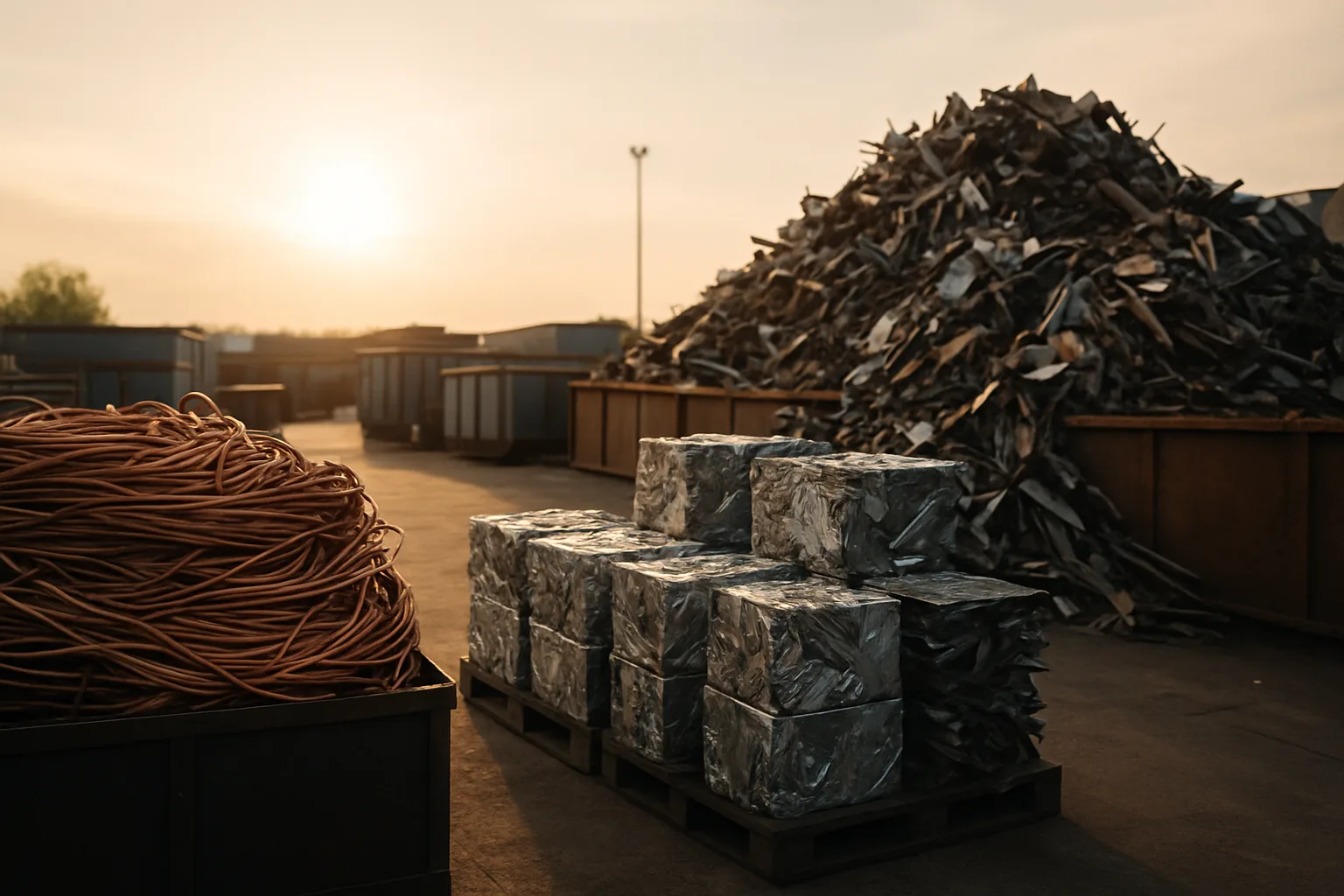
Why Scrap Metal Prices Move Every Single Day — And What That Means for Your Yard
You checked copper prices on Monday. By Friday, the number looks completely different. That's not a glitch — that's how scrap metal markets work. If you're trying to nail down the best scrap metal prices in St. John's right now, understanding why prices shift daily isn't just interesting. It's the difference between a good load and a missed opportunity.
This week's market recap breaks down what's driving price movement in July 2026, what it means for sellers in Newfoundland and Labrador, and how you can stop guessing and start selling smarter.
What's Moving Scrap Metal Prices This Week
The global commodities market doesn't sleep on weekends. By Sunday morning, traders in Asia have already moved prices that will ripple into North American yards by Monday's open. Here's what's been driving volatility this week:
- Copper: Demand from electrical infrastructure and EV manufacturing continues to keep copper prices elevated compared to early 2026 levels. Any news out of major producing regions moves the needle fast.
- Aluminum: Energy costs tied to smelting have been a pressure point. When energy prices rise, aluminum production costs rise — and secondary scrap aluminum becomes more attractive to buyers.
- Steel and iron: Construction activity and mill restocking cycles are the big driver. Mills buy when their inventory runs low. When they've restocked, buying slows and prices soften.
- Catalytic converters (cats): Platinum group metal (PGM) spot prices remain the anchor here. PGMs have been sensitive to auto industry output shifts and policy changes around emissions hardware.
None of these factors are static. That's the whole point. Selling on a Tuesday versus a Thursday can produce a genuinely different outcome — and that matters whether you run a large yard in the city or you're moving smaller loads through the St. John's market.
How Daily Fluctuations Actually Hit Sellers at the Local Level
Here's the reality most sellers already know but rarely say out loud: local scrap buyers adjust their posted prices based on what the market tells them — not based on what's fair to you. Their margin depends on buying low and selling high. That's their business model. Yours is getting the best return on material you've already collected, sorted, and hauled in.
In a market like St. John's, there aren't dozens of competing buyers on every corner. Geographic constraints are real. Fewer local buyers means less competitive pressure — and less competitive pressure usually means lower offers. Sellers in smaller markets often absorb that gap without even knowing it because they have no benchmark to compare against.
This is exactly where a B2B scrap metal marketplace changes the math. When buyers compete for your load — regardless of where they're physically located — you get actual price discovery instead of a take-it-or-leave-it number. Platforms like SMASH let you compare scrap metal bids from Canadian buyers across the country, which resets what "competitive" actually looks like for your yard.
To understand how pricing benchmarks work at a national level, it also helps to read Canadian scrap metal pricing guides that track what similar materials are fetching in other markets right now.
The Old Way of Selling Is Costing You Money You Can't See
One buyer. One phone call. One price. Accept it or haul the load back. Sound familiar?
That's how most of the industry still runs. And it works — for the buyer. They know you're unlikely to call five yards, negotiate terms with each one, chase payments across multiple invoices, and document everything properly just to move one load. The friction alone keeps most sellers locked into a single-buyer relationship, even when that relationship isn't delivering market-rate returns.
The problem compounds when prices are moving fast. If copper jumps mid-week and your regular buyer hasn't updated their posted price yet — or has deliberately not updated it — you're leaving real money on the table. You'd never know unless you had another offer to compare.
SMASH was built specifically to break this cycle. Vetted buyers bid against each other for your material. The auction format creates price pressure that a single cold call never will. No subscription fees. No monthly commitments. SMASH only makes money when you make money — which is the only business model that makes sense when you're the one with material to move.
Best Scrap Metal Prices in St. John's: What to Look for Right Now
If you're actively looking for the best scrap metal prices near you this week, here's a practical checklist for what actually determines whether a price is competitive:
- Is the price tied to today's market? Some buyers post weekly prices and don't update them when spot rates move. Ask when the price was last adjusted.
- What grade are they paying on? The difference between #1 copper and #2 copper can be significant. Make sure you're comparing the same material grade.
- Are there deductions? Moisture, contamination, and sorting fees can erode a seemingly strong headline price. Get the net-to-seller number.
- What's the payment timeline? A strong price with a 30-day payment wait isn't the same as a slightly lower price paid on pickup day.
- Is the buyer vetted? In a B2B scrap metal marketplace, buyer credibility matters. You want buyers who close and pay, not just ones who bid high and disappear.
St. John's sellers working with non-ferrous material — copper wire, aluminum extrusions, mixed radiators — should be especially attentive to point two and three. Grade disputes at delivery are a common way for buyers to walk back an initial price. Documented inventory with photos and weights eliminates most of that friction before the load even leaves your yard.
For those selling in markets outside Atlantic Canada — if you're also moving loads from Ontario or looking to sell scrap metal in Hamilton, the same principles apply. More buyer competition, better benchmarking, documented loads. The market doesn't care where you're located. What matters is whether you're getting accurate price discovery.
How to Use Market Volatility in Your Favor
Daily price swings aren't just risk — they're opportunity, if you know how to read them. Here are a few practical ways to use market movement strategically:
- Don't sell into a dip if you can hold. If copper had a strong run Monday through Wednesday and softened Thursday, holding a load for a few days isn't always wrong. Check whether the dip looks structural or temporary.
- Batch and document before you list. A well-documented load — weights, photos, VIN lookups on cores, serial tracking on electronics — closes faster and at better prices. Buyers bid more confidently on material they can verify.
- Watch mill announcements. When a large steel mill in the region announces planned downtime or a production ramp-up, ferrous prices follow. It's not insider trading. It's paying attention.
- Benchmark before you accept. Before you confirm a price with any single buyer, find the best Canadian scrap metal prices today so you know where the market actually sits.
Volatility rewards the prepared seller. If your inventory is documented, your loads are graded accurately, and you have more than one buyer in your pipeline, a price spike is something you can capture — not just something that happens to someone else's yard.
Sellers in Newfoundland and Labrador face additional logistical considerations around shipping and transport. Getting pricing right matters even more when you're also managing freight costs. Every dollar recovered through better price discovery offsets real operational costs that don't disappear just because the market softens.
This Week's Market Takeaway for Canadian Sellers
July 2026 has been an active month for commodity pricing. If you've been sitting on non-ferrous material waiting for the right moment, this week's conditions are worth paying attention to. Copper has held strong. Aluminum has had mixed signals depending on grade. Steel and ferrous have seen typical mid-summer softness in some regions as construction activity plateaus.
The single most important thing you can do this week isn't to predict what prices will do next. It's to make sure that when you sell, you're selling into a competitive market — not just walking up to one buyer, accepting one number, and hoping it was fair.
Use every tool available. Check current Canadian scrap metal prices before you commit to any deal. Put your loads in front of vetted buyers who will compete for the material. Document your inventory before it leaves the yard. That's not a complicated strategy. It's just the one that works.
Whether you're moving a mixed load out of St. John's or managing regular volume across multiple locations, the market rewards sellers who treat pricing like a process — not an afterthought. Get the best Canadian scrap metal prices this week by heading over to best-scrap-metal-prices.ca and see where your material stands right now.
Frequently Asked Questions
Q: Why do scrap metal prices change so frequently in Canada?
Scrap metal prices in Canada track global commodity markets that move every business day based on supply, demand, energy costs, and currency exchange rates. Even regional factors — like mill purchasing cycles or local buyer inventory levels — can shift what you're offered from one day to the next. That's why checking current benchmarks before selling always makes sense.
Q: How do I find the best scrap metal prices in St. John's right now?
Start by benchmarking what similar material grades are fetching nationally. Local buyers in St. John's set prices based on their own margins, so having a national comparison gives you negotiating context. A B2B scrap metal marketplace like SMASH puts your loads in front of multiple vetted buyers — including buyers outside your immediate region — which generates real competitive pricing instead of a single take-it-or-leave-it offer.
Q: Does it make sense for smaller sellers in Newfoundland and Labrador to use a scrap metal auction platform?
Yes — especially in markets like Newfoundland and Labrador where local buyer competition is limited. Auction platforms level the playing field by connecting sellers with buyers across Canada. Even smaller loads benefit from documented inventory and competitive bidding. The key is having your material properly sorted, weighed, and photographed before you list it.
Q: What scrap metals are most affected by daily price swings?
Non-ferrous metals — copper, aluminum, brass, and catalytic converter cores — tend to move most sharply with daily spot price changes. Ferrous (steel and iron) prices shift more on mill purchasing cycles and tend to move in broader weekly or monthly patterns. If you're holding significant copper or cat inventory, timing your sale to market conditions can make a meaningful difference.
Q: Is SMASH available to scrap sellers in St. John's and Atlantic Canada?
Yes. SMASH operates as a national B2B scrap metal marketplace serving sellers across Canada, including Atlantic Canada. Sellers list their loads, vetted buyers from across the country bid competitively, and the platform handles invoicing and documentation. There are no subscription fees — SMASH earns when you sell, which keeps their incentives aligned with yours.
Disclaimer: Scrap metal prices fluctuate daily based on commodity markets, regional demand, and buyer conditions. All pricing information in this article is general in nature. Always verify current rates directly with buyers or through a live pricing platform before making selling decisions.
Follow SMASH on LinkedIn for weekly scrap metal market updates, industry insights, and pricing trends across Canada.