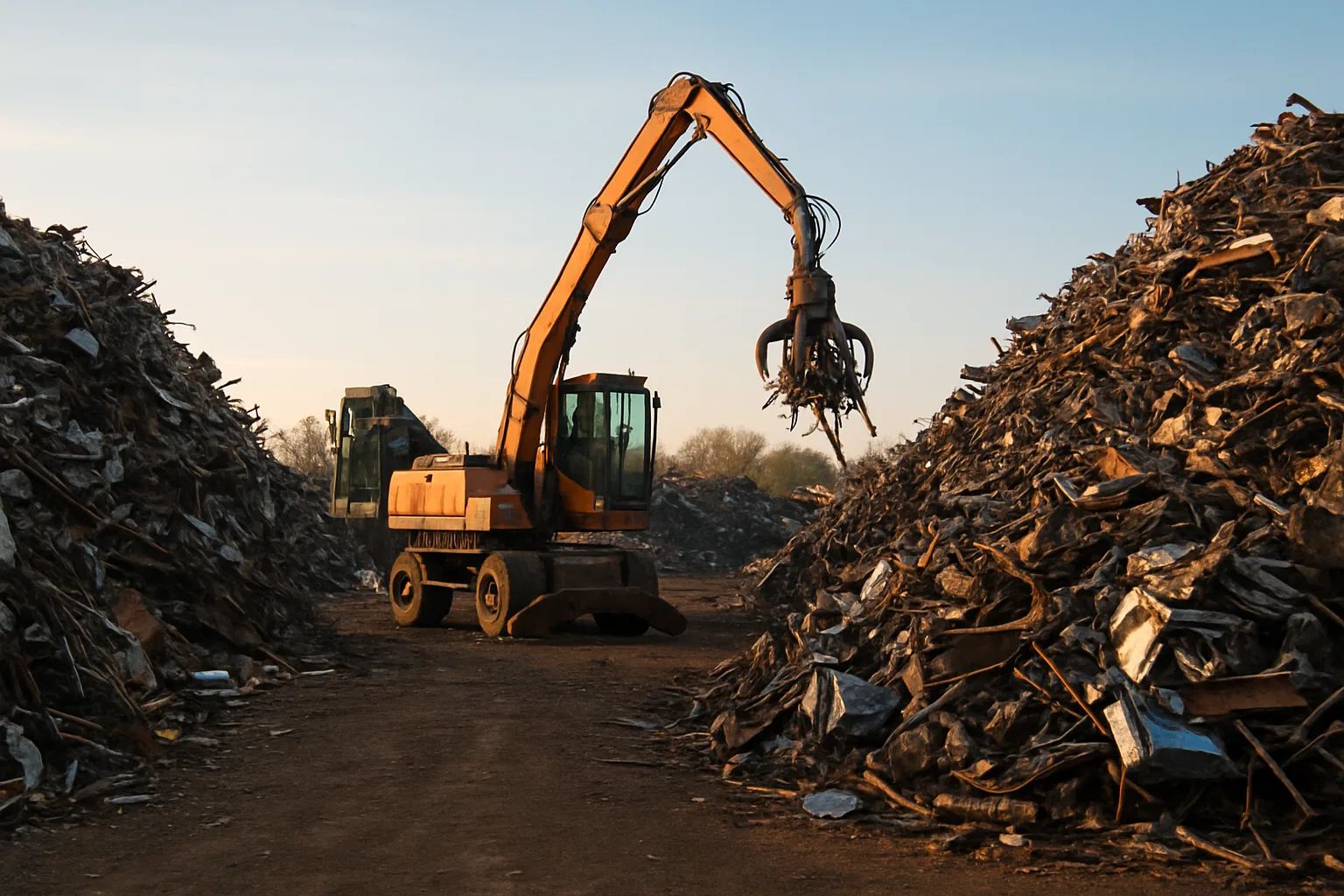
What Really Happens When You Drive Your Scrap to the Yard
Most sellers show up at the scale thinking the price on the board is the price they'll get. It rarely is. How a yard weighs and grades your load determines your actual payout — and if you don't understand that process, you're leaving money on the table every single time.
This is especially true if you're trying to sell scrap metal in Windsor, where competition between yards exists but isn't always obvious. Knowing how grading works gives you leverage. It tells you when a yard's grade call is fair — and when it isn't.
Here's a practical breakdown of exactly what happens to your metal between the scale and the pay window.
Step 1 — The Scale: Gross Weight, Tare Weight, and Net Weight
Before any grading happens, the yard weighs your load. This is a three-number process, and each number matters.
- Gross weight: Your vehicle plus your scrap. Measured when you pull onto the platform scale.
- Tare weight: Your empty vehicle. Measured after you've unloaded.
- Net weight: Gross minus tare. This is what you actually get paid on.
Certified truck scales are required to meet provincial standards in Ontario, so the weight itself is usually accurate. That said, it's worth watching whether your load has been unloaded completely before your tare is taken. Residual material — a wet tarp, leftover debris, a floor mat — adds to your tare and reduces your net. Small yards are particularly inconsistent here. Ask to confirm your tare reading if something looks off.
Weight is the easy part. Grading is where things get complicated — and where most sellers lose without realizing it.
Step 2 — Metal Grading: Why the Same Material Can Be Worth Different Amounts
Scrap metal isn't one thing. Copper wire pulled from commercial conduit grades differently than copper stripped from old appliances. Sheet aluminum from a boat hull grades differently than cast aluminum from an engine block. The grade assigned to your material sets the price per pound — and grades vary significantly.
Grading standards are loosely based on industry classifications (like those published by the Institute of Scrap Recycling Industries), but yards apply them with varying degrees of strictness. Here's how grading typically plays out for the most common metals:
Copper
- #1 Bare Bright Copper: Clean, uncoated, unalloyed copper wire, 16 gauge or heavier. No fittings, no insulation, no oxidation. Top price.
- #1 Copper: Clean copper pipe or wire. Minor oxidation acceptable. No solder, paint, or fittings.
- #2 Copper: Copper with light coating, minor contamination, or oxidation. Common grade for most household plumbing.
- Insulated Copper Wire: Value depends heavily on estimated copper content (recovery percentage). A yard will estimate based on wire gauge and insulation thickness.
Most sellers who bring in old plumbing or electrical scrap assume they're getting #1 rates. They're often getting #2 — or insulated wire rates — because contamination or coatings weren't removed first. Stripping wire before you sell is tedious, but the price difference often makes it worthwhile.
Aluminum
- Extrusions / Sheet Aluminum: Clean aluminum profiles, siding, gutters. Relatively high grade.
- Cast Aluminum: Engine blocks, wheels, castings. Lower value per pound than sheet because of higher alloy content.
- Painted or Coated Aluminum: May be downgraded depending on coating volume.
- Mixed or Contaminated Aluminum: If steel, plastic, or other metals are attached, the whole load may drop to a lower grade.
The aluminium scrap value you receive depends on grade classification, not just market price. That's why checking the aluminum scrap price today on a commodity board doesn't tell you your actual take-home. Your take-home depends on which aluminum grade your yard assigns to your load — and whether you agree with that call.
Steel and Ferrous Metals
- #1 Heavy Melt: Thick steel plate or structural steel, usually ¼ inch or heavier.
- #2 Heavy Melt: Thinner steel, including light structural material.
- Shredable / Light Iron: Sheet metal, car bodies, appliances. Lower grade, high volume.
- Busheling: Clean steel punchings and stampings from manufacturers. Cleaner and higher value.
Steel prices fluctuate with global demand, but grade decisions at the yard level are where sellers lose the most ground. A load of mixed steel that could be sorted into #1 and #2 categories might get blanket-graded as #2 if you haven't done the sorting yourself. In high-volume yards in Ontario, graders are moving fast. They rarely give sellers the benefit of the doubt.
Step 3 — Contamination Deductions and Downgrades
Even if your material is genuinely high-grade, contamination can wipe out the premium. Yards deduct for moisture, attached fasteners, mixed metals, dirt, oil residue, and non-metallic attachments like plastic housings or rubber grommets.
Here's what actually triggers deductions at most yards:
- Moisture: Wet copper or aluminum can carry significant hidden weight. Some yards will apply a moisture deduction — others just weigh it wet and move on. Ask the policy upfront.
- Mixed loads: If your load contains multiple metals — copper wire bundled with aluminum pieces, for example — you'll get the lower grade rate on the whole load unless you've separated it.
- Attached hardware: Steel fittings on copper pipe, iron brackets on aluminum extrusions, or bolts through steel plate all count as contamination.
- Painted or coated surfaces: Especially relevant for aluminum. Heavy paint or powder coating may bump your material into a lower grade tier.
The fix is simple but time-consuming: prep your scrap before you arrive. Separate metals by type. Strip what you can. Remove obvious attachments. Sellers who show up at Windsor scrap metal services with sorted, clean material consistently get better grade assignments — because the grader doesn't have to make a judgment call under uncertainty.
Why Knowing the Grade Process Helps You Get Better Prices
Here's the structural problem with the traditional single-yard model: when you bring a load to one buyer, that buyer sets the grade and the price. You can push back, but without competing offers, you don't have real leverage. That's the gap that platforms like SMASH exist to fill.
On get competitive bids for your scrap in Canada, your documented inventory — weights, grades, photos — goes out to vetted buyers simultaneously. Multiple buyers see the same load. That competition applies pressure that a single walk-in visit to a yard never creates. When buyers know others are looking at the same material, grade calls tighten up fast.
SMASH also requires proper inventory documentation, which means scrap metal recycling Canada-wide transparency that the traditional model avoids. Auto-invoicing, photo documentation, serial tracking where applicable — all of it reduces the gray area that yards often use to justify aggressive downgrades. You can read Canadian scrap metal pricing guides to understand how documentation affects price discovery, or go straight to the platform to see how it works in practice.
What Sellers in Windsor and Ontario Should Do Before Every Drop-Off
Whether you're running a small cleanup or moving commercial volumes, the prep steps are the same. Do these before you load the truck.
- Sort by metal type. Copper in one pile, aluminum in another, steel separate. Never mix if you can help it.
- Strip wire where practical. Bare bright copper pays significantly more than insulated. Calculate whether your time investment is worth it based on current rates.
- Remove attachments. Steel fittings off copper pipe. Bolts out of aluminum plate. Plastic housings off motors.
- Keep it dry. Wet scrap weighs more, but not all of that extra weight gets credited to you. Let it dry if you have the time.
- Document your load. Photos, weights if you have a scale, and grade estimates based on what you know. This gives you a baseline to compare against what the yard tells you.
- Know today's market rates. Before you walk in, find the best Canadian scrap metal prices today so you're not negotiating blind.
Windsor sits at the Canada–U.S. border, which means sellers here are often close to both Canadian and American market dynamics. Steel and aluminum prices in Ontario can shift quickly based on cross-border trade volumes. Timing matters as much as prep.
The yards in and around Windsor are competitive, but "competitive" doesn't mean they're all offering the same grades on the same material. Shop your load. Know your grades. And if you're moving any real volume, use a platform that puts buyers in competition with each other rather than leaving you dependent on one relationship and one price call.
If you want to make sure you're tracking current rates accurately, check current Canadian scrap metal prices before any transaction. The market moves — your benchmark should too.
Disclaimer: Scrap metal prices fluctuate based on global commodity markets, local supply and demand, and individual yard grading decisions. Prices referenced in any article reflect general market conditions at time of writing and should not be used as a substitute for current rate checks.
Frequently Asked Questions
Q: How do I know if a Windsor scrap yard graded my metal fairly?
The best way is to arrive informed. Know the grade definitions before you walk in — bare bright copper versus #1 versus #2 copper, for example. If the grade assigned doesn't match the condition of your material, ask the grader to explain the call. Having photos of your load before drop-off also gives you a reference point if there's a dispute.
Q: Does it matter how I sort my scrap before I sell it in Windsor?
Yes — significantly. Unsorted loads get assigned the lowest grade in the mix, or they get split at the yard's discretion. When you sort by metal type and remove contamination, you control the grade outcome rather than leaving it to a grader working under time pressure. Clean, sorted loads consistently receive better grades.
Q: Why is the aluminum scrap price I see online different from what the yard offers me?
Published aluminum prices reflect commodity benchmarks — LME spot prices or published dealer prices for specific alloys. Yards pay below those benchmarks because they're adding margin for processing, sorting, and logistics. Grade classification also matters: cast aluminum, sheet aluminum, and mixed aluminum all price differently. What you see online is a ceiling, not a floor.
Q: Can I sell scrap metal in Windsor without a truck scale receipt?
Most yards have their own certified scale and will weigh your load on arrival. You don't need to bring a weight ticket. However, if you have your own pre-weighed documentation, it can serve as a useful reference point if the yard's weight seems off. Ontario regulations require certified commercial scales, so weight accuracy is generally reliable.
Q: How does using a platform like SMASH change the selling process compared to walking into a Windsor yard?
Instead of one buyer setting your grade and price, SMASH puts your documented inventory in front of multiple vetted buyers who bid competitively. That competition applies market pressure on the grade and price simultaneously. You still need to document your material accurately, but the outcome is driven by the market rather than by a single buyer's margin targets.
---The best outcome when you sell scrap metal comes down to preparation and information. Know your grades, prep your load, and don't accept the first number without a benchmark. If you're serious about getting the most for your material, start by knowing where the market actually sits — best-scrap-metal-prices.ca keeps current Canadian rates in one place so you're never negotiating in the dark.
Follow SMASH on LinkedIn for ongoing scrap metal market updates, pricing insights, and industry news across Canada.
```