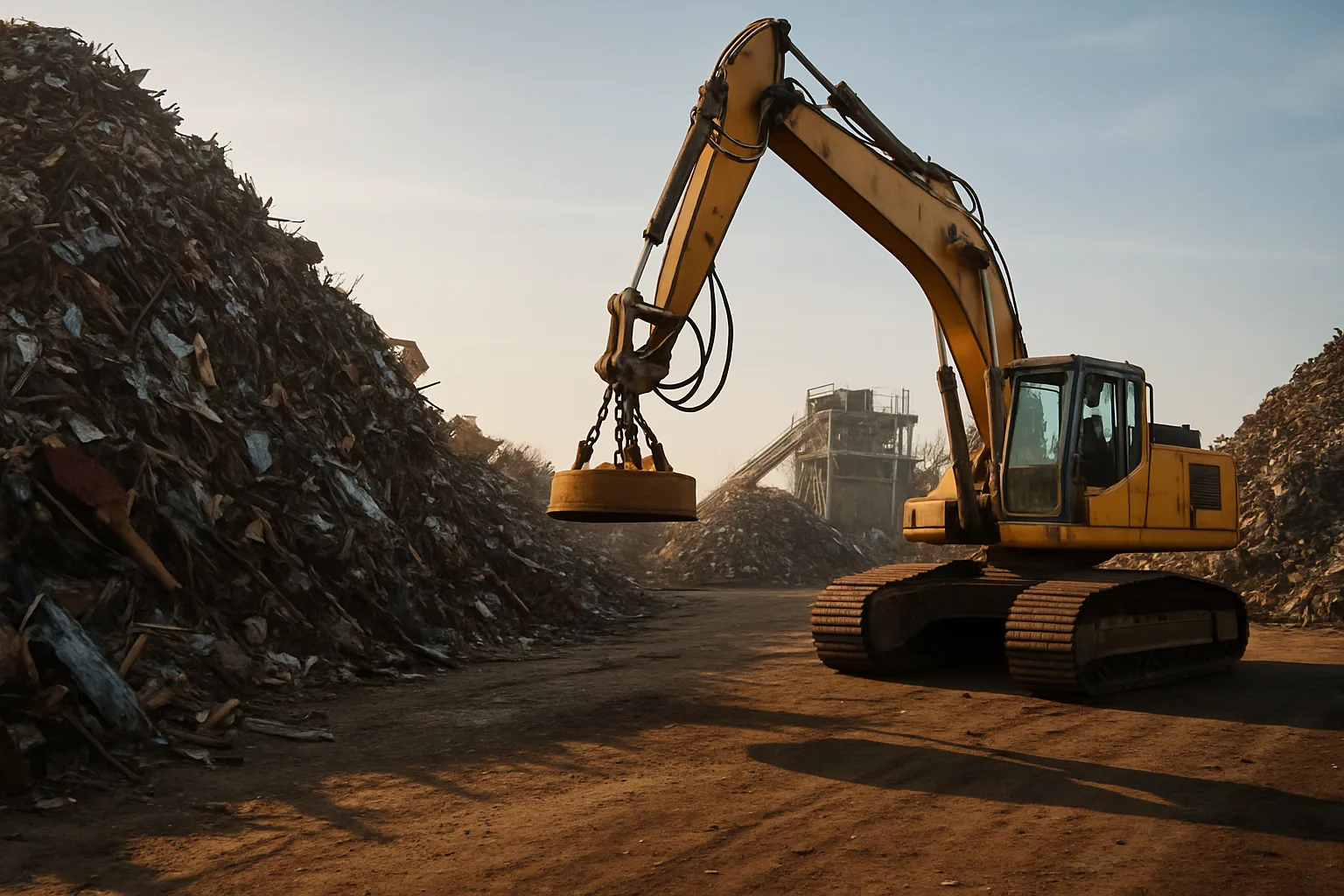
Copper, Aluminum, or Steel? Here's How to Tell What You've Got Before You Sell
Most scrap sellers leave money on the table — not because they have bad material, but because they don't know what they're holding. Misidentifying a load means mispricing it. And if you're hauling material to a yard without knowing what you've got, you're negotiating blind. Whether you're sorting a pile in your shop, cleaning out an old property, or running a recycling yard near Abbotsford, knowing how to identify metals quickly changes what you earn.
This guide walks you through a practical, hands-on system using visual cues and a simple magnet test. No lab equipment. No guesswork. Just the methods experienced sorters use every day to separate high-value non-ferrous material from lower-value ferrous scrap — and price it accordingly. Once you can identify your material confidently, you're ready to find the best Canadian scrap metal prices today and sell with leverage.
Start Here: The Magnet Test Explained
The magnet test is the fastest first cut. It costs you nothing and takes about two seconds per piece. Grab a strong rare-earth magnet — the kind used in speakers or off cheap tool belts — and run it across your material.
Here's what the result tells you:
- Strong magnetic pull: Ferrous metal. You're looking at steel or iron. These are the lowest-value metals by weight in most markets. Structural steel, cast iron, and sheet metal all fall here.
- Weak or partial pull: Could be stainless steel (some grades are slightly magnetic), or a coated/painted ferrous piece. Test in multiple spots where there's no coating.
- No magnetic pull at all: Non-ferrous. This is where your value is — copper, aluminum, brass, bronze, lead, and zinc all fail the magnet test. These metals almost always carry a higher price per pound.
The magnet test won't tell you which non-ferrous metal you have — just that you're in the right category. That's where visual identification takes over. Understanding this split matters whether you're quoting scrap metal prices Abbotsford loads locally or selling into a broader market.
Visual ID Guide: Metal by Metal
Once your material fails the magnet test, look at it closely. Color, weight, texture, and oxidation patterns all tell a story. Here's a breakdown of the metals you're most likely to encounter in residential, commercial, and industrial loads across British Columbia.
Copper
Copper is one of the most valuable metals you'll find in scrap. Fresh copper has a distinctive reddish-orange color — think of a new penny before it tarnishes. Aged copper goes brown, then green (patina or verdigris). You'll find it in electrical wire, plumbing pipe, coils, radiators, and motors. Bare bright copper wire (clean, uncoated, 16-gauge or larger) sits at the top of the copper pricing scale. Insulated wire, copper pipe, and burnt copper all grade differently — read Canadian scrap metal pricing guides to understand how each grade affects your payout.
Aluminum
Aluminum is lightweight and silver-grey. Pick it up — if it's surprisingly light for its size, it's almost certainly aluminum. You'll find it in window frames, rims, siding, ladders, and engine parts. It doesn't rust like steel; it oxidizes to a dull white powder. Aluminum grades vary significantly: cast aluminum (engine blocks, lawn furniture) pays less than clean extrusion (window frames, angle iron). Dirty or painted aluminum grades down further.
Brass
Brass is a copper-zinc alloy with a distinctive yellow-gold color — warmer and more orange than gold, cooler and more yellow than copper. It's heavier than aluminum and softer than steel. Common sources include fittings, valves, plumbing fixtures, shell casings, and door hardware. Brass pays well per pound, often close to copper depending on market conditions. Red brass (higher copper content) typically prices above yellow brass.
Stainless Steel
Here's where people get tripped up. Stainless steel looks silver and shiny, similar to aluminum, but it's significantly heavier. The magnet test is inconsistent here — some grades (like 304) are only weakly magnetic, while others (like 430) pull stronger. If you're unsure, check weight and feel. Stainless steel is used in kitchen equipment, food processing gear, hospital furniture, and exhaust systems. It prices above regular steel but well below non-ferrous metals like copper or brass.
Lead
Lead is heavy — very heavy for its size. It's a dull grey color and extremely soft. You can scratch it easily with a knife. It doesn't spring back when you bend it. Common sources include old pipe, wheel weights, roofing flashing, and battery plates. Lead prices fluctuate but it remains a consistently valued non-ferrous metal. Handle it carefully and follow local handling guidelines.
Zinc
Zinc is a bluish-grey metal, lighter than lead but heavier than aluminum. It's brittle and will crack if you try to bend it. Die-cast zinc shows up in old hardware, toy car frames, carburetors, and decorative castings. It can be confused with aluminum visually, but zinc is noticeably denser. Worth testing by weight before assuming it's aluminum — the price difference can be meaningful on larger quantities.
Sorting Strategies That Protect Your Payout
Knowing what you have is one thing. Sorting it properly before you sell is another. Mixed loads get priced at the lowest-grade material in the mix. That's how yards protect themselves from uncertainty — and it costs you every time. Clean, sorted material is documented material. It builds your case for a fair price.
Here's a sorting system that works for most yard operators and private sellers in the Abbotsford area and across British Columbia:
- Magnet pass first. Separate ferrous (iron, steel) from non-ferrous in one sweep.
- Visual sort your non-ferrous pile. Copper in one bin. Aluminum in another. Brass and bronze together until you can separate them. Unknowns in a side pile.
- Grade your copper. Bare bright, #1 copper, #2 copper, insulated wire, and burnt copper are all different price grades. Don't mix them.
- Document with photos. Photograph each sorted pile or load before you move it. If you're selling into a B2B scrap metal marketplace, documentation supports your asking price and reduces disputes.
- Weigh it if you can. Even a rough weight estimate before you sell gives you a reality check on what the load should be worth.
Platforms like SMASH are built around documented, properly described inventory — because when buyers can see exactly what they're bidding on, competition increases and price discovery improves. That's how sellers using find the best price for your scrap in Canada consistently get better outcomes than relying on a single buyer and a cold call.
How Copper Scrap Prices in Abbotsford Actually Get Set
If you're tracking copper scrap prices Abbotsford specifically, it helps to understand what drives local pricing. Yard prices follow LME (London Metal Exchange) copper benchmarks, then adjust for local supply, grade, and demand from regional smelters and processors. A yard's buy price for bare bright copper in Abbotsford isn't arbitrary — it's the global rate, minus processing margin, adjusted for what they can realistically move downstream.
That's why selling to a single local buyer without competitive pressure often means leaving money behind. The buyer knows the market. You might not. SMASH changes that dynamic by putting your documented load in front of multiple vetted buyers simultaneously — turning a single-quote transaction into a competitive event. No subscription fees. The platform only works when you do. For sellers who want to check current Canadian scrap metal prices and understand where your material fits in the market before you sell, that context matters.
Prices fluctuate daily based on global metal markets. Always verify current rates before committing to a sale — what copper was worth last week isn't necessarily what it's worth today.
When to Use a Scrap Yard vs. a Marketplace Platform
Local scrap yards — whether you're searching for a scrap yard near me parts or a scrap metal pickup near me — are the backbone of the industry. For small, mixed loads or quick turnaround, walking in and getting paid same-day makes sense. Yards also handle convenience: they take everything, they handle the sorting, and they deal with the paperwork.
But for larger, cleaner, or higher-value loads — particularly non-ferrous material like copper, brass, or aluminum — a marketplace approach can surface pricing you won't get from a single drive-in quote. That's especially true for recycling businesses, demolition contractors, and yard operators in competitive regions like the Fraser Valley, where material volumes make even small per-pound differences add up fast.
The right answer depends on your volume, your time, and your material. But knowing the difference — and knowing what you're selling — puts you in a much stronger position either way.
Frequently Asked Questions
Q: What is the best way to identify copper scrap before selling in Abbotsford?
Look for the reddish-orange color, verify it fails the magnet test, and check for the weight and softness characteristic of copper. Fresh copper is bright and warm-toned; aged copper turns brown or green. Grade it before you go — bare bright copper, #1 pipe, and insulated wire all price differently.
Q: How do current copper scrap prices in Abbotsford compare to other metals?
Copper consistently sits near the top of the per-pound pricing scale for non-ferrous scrap. It typically outprices aluminum, zinc, and most steel grades by a significant margin. Prices shift daily based on global LME benchmarks — always check current rates before selling. A disclaimer: prices fluctuate and no article can substitute for a real-time quote.
Q: Does a magnet test work for all metals?
It's a reliable first pass but not a complete identification system. The magnet test separates ferrous from non-ferrous accurately. However, some stainless steel grades give mixed results, and the test won't distinguish between copper, aluminum, brass, or lead — you need visual and weight checks for that.
Q: Is there a B2B scrap metal marketplace that serves Abbotsford and British Columbia?
Yes. SMASH is a B2B scrap metal marketplace that connects sellers with vetted buyers across North America, including British Columbia. It's built for recycling yards and larger sellers who want competitive auctions instead of single-buyer quotes. No subscription fees — the platform earns when you sell.
Q: What metals are most commonly misidentified in scrap loads?
Zinc and aluminum are commonly confused due to similar color — but zinc is noticeably heavier. Stainless steel gets misidentified as regular steel or aluminum. Brass is sometimes mistaken for bronze or dirty copper. Sorting carefully before you weigh and sell protects you from being paid at a lower grade than your material deserves.
Knowing your material isn't just a sorting habit — it's a pricing advantage. The more accurately you can describe and document what you have, the more confidently you can negotiate, sell, and repeat. If you're hauling material in the Abbotsford area or anywhere across British Columbia, start with a magnet, finish with your eyes, and verify your grades before you commit to a price. When you're ready to sell, read Canadian scrap metal pricing guides to stay current, and explore Abbotsford scrap metal services for local resources. Get the best Canadian scrap metal prices — check rates at best-scrap-metal-prices.ca.
Stay sharp on market moves and industry news by following SMASH on LinkedIn — it's where the scrap metal industry talks pricing, trends, and what's actually moving in the market.