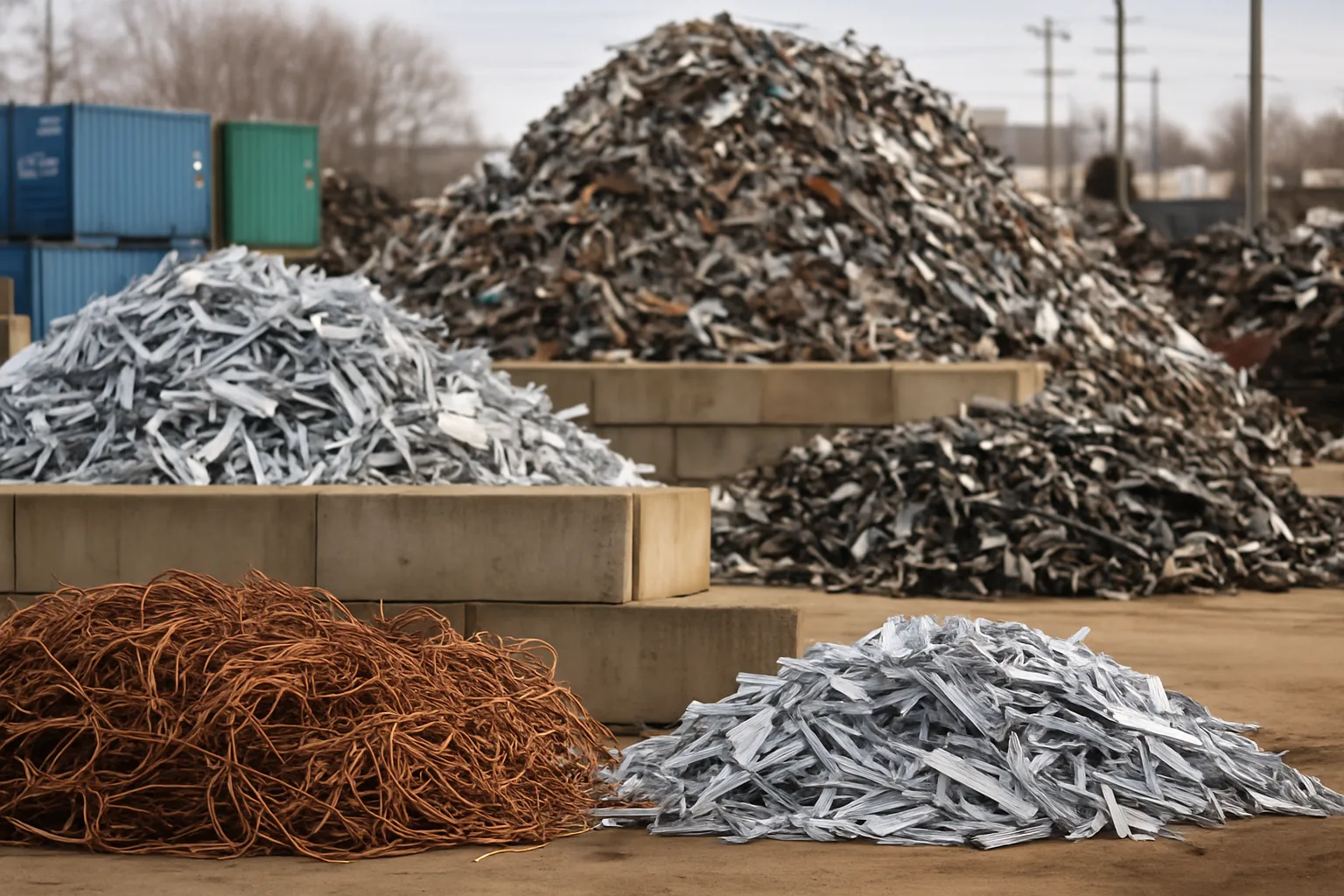
A steel mill shuts down in Shandong. Within weeks, a yard operator in Scarborough notices their HMS prices softening. That's not a coincidence — that's the global economy talking, and if you're not listening, you're leaving money on the table.
Understanding what drives best scrap metal prices Toronto means looking far beyond the 416. Copper futures in New York, aluminum smelter output in Europe, shipping container rates from Vancouver — all of it feeds into what a buyer offers you on your next load. This isn't abstract economics. It's the difference between a good week and a bad one.
This article breaks down exactly how global forces shape your local scrap values, what metals to watch, and how platforms like SMASH are helping Ontario yards stop guessing and start competing.
Why Your Local Scrap Prices Are Set Overseas
Scrap metal is a globally traded commodity. Copper doesn't care whether it came from a demolition job in Mississauga or a mine in Chile — the market prices it the same way. What changes is the spread between global benchmark prices and what your local yard pays you. That spread is where you either win or lose.
The London Metal Exchange (LME) sets benchmark prices for copper, aluminum, lead, and other non-ferrous metals every trading day. Steel scrap pricing follows Turkey's import market, U.S. shredded prices, and Asian pig iron demand. When any of those move, the ripple reaches Toronto yards within days — sometimes hours.
Key global drivers that directly affect what you're paid in Ontario:
- Chinese manufacturing output — China consumes roughly half the world's refined metals. When production slows, global demand drops and prices follow.
- U.S. Federal Reserve policy — A stronger U.S. dollar makes dollar-denominated metals more expensive for foreign buyers, which can cool demand and push prices down.
- Energy costs in Europe — European aluminum smelters are energy-intensive. When power prices spike, smelters curtail output. Less primary aluminum means more demand for scrap — which lifts aluminum scrap value per pound globally.
- Freight and shipping rates — When ocean freight is expensive, it changes the economics of moving scrap across borders. That affects what Canadian exporters will pay locally.
- Tariffs and trade policy — Cross-border metal tariffs between the U.S., Canada, and other trade partners shift where scrap flows and who's buying.
None of this is theoretical. Every one of these factors has visibly moved what Toronto yards pay for copper wire, aluminum extrusions, and shredded steel over the past several years.
The Toronto and Ontario Market: More Exposed Than You Think
Ontario is one of the most active scrap metal markets in Canada. The Greater Toronto Area alone has a dense concentration of demolition contractors, auto wreckers, manufacturers, and industrial facilities generating significant non-ferrous and ferrous volume every week.
That density is an advantage — but it also means Toronto prices are closely tied to export demand. A significant portion of non-ferrous scrap processed in Ontario moves south to U.S. consumers or gets containerized for overseas markets. When export buyers pull back, local yard prices follow. When export demand heats up, competition for material drives prices up.
This is exactly why selling through a single buyer relationship — the old way — leaves you exposed. You have no visibility into what other buyers would pay. You don't know if your regular buyer is passing on a tight market or using one as an excuse to compress their offer. You're flying blind while the global market moves around you.
Platforms like SMASH operate as a B2B scrap metal marketplace, connecting Ontario sellers with vetted buyers across North America. When you post a load, you're not asking one buyer what they'll pay. You're letting the market tell you. That's a fundamentally different position to be in — especially when global prices are moving fast.
Aluminum Scrap Value Today: A Case Study in Global Price Pressure
Aluminum is one of the clearest examples of how global economics translate into local pricing. It's also one of the most commonly sold metals at yards across Toronto — whether it's cast aluminum, aluminum extrusions, sheet, or wheels.
Here's how the chain works in practice. Global aluminum pricing is benchmarked to LME spot prices plus regional premiums. When smelter output drops — due to energy costs, bauxite supply issues, or policy shifts — the scrap-to-primary ratio tightens. Secondary smelters that use scrap as feedstock bid more aggressively. That demand signal eventually reaches your yard.
But the reverse is equally true. When primary aluminum production ramps up — as it has in periods of lower energy costs and expanded capacity in the Middle East and Asia — scrap demand softens. Aluminum scrap value today reflects all of that in real time.
What this means practically for sellers in Toronto:
- Timing your loads matters. Holding clean aluminum during a period of softening primary supply can improve what you're offered.
- Grading your material correctly is non-negotiable. Clean painted siding versus contaminated mixed aluminum isn't just a quality difference — it's a significant price difference.
- Knowing what the market actually looks like requires more than one quote. A single buyer's offer tells you what that buyer wants to pay, not what the market will bear.
This is why sellers who use a B2B scrap metal marketplace like SMASH consistently get better price discovery on aluminum loads. More buyers, real competition, documented material. That's how you capture the market instead of guessing at it. To check current Canadian scrap metal prices and benchmark what you should be getting, use current market data before you pick up the phone.
How SMASH Helps Toronto Sellers Navigate Global Price Volatility
The old playbook for selling scrap in Toronto: call your guy, get a number, load the truck. That worked fine when prices were stable and you had a long-term relationship with a reliable buyer. In a market where LME copper can move several percent in a week and aluminum premiums shift with European energy policy, that playbook is a liability.
SMASH was built for exactly this environment. When you list a load on SMASH, vetted buyers compete for it. Your inventory is documented — photos, weights, grade descriptions, VIN lookups on cats and cores, serial tracking where applicable. Buyers can evaluate what they're bidding on. That documentation confidence translates directly into stronger, more competitive bids.
No subscription fees. SMASH only wins when you win. That alignment matters — it means the platform has a real incentive to help you get the best outcome, not just process transactions.
For Toronto and Ontario yards managing regular volume — whether it's monthly loads of non-ferrous, auto bodies, or mixed industrial scrap — having access to a live competitive market instead of a single relationship is a structural advantage. Especially when global prices are moving. Especially when your buyer's margin pressure becomes your price problem.
You can learn more about how competitive auctions work for scrap sellers at smashrecycling.ca, or read Canadian scrap metal pricing guides to sharpen your understanding of how to position loads before you sell.
Reading the Signals: What to Watch Before You Sell
You don't need a Bloomberg terminal to track the signals that matter for your scrap operation. A few data points, checked regularly, give you a meaningful read on where prices are heading before you commit to a sale.
For copper: Watch LME copper spot prices and U.S. COMEX futures. When copper is trending up, hold off on selling if your inventory can wait. When it's trending down, move material faster rather than riding the drop.
For aluminum: Track LME aluminum plus the Midwest premium (P1020 aluminum delivered Midwest U.S.). The premium reflects physical tightness in North America independent of global benchmark moves. When the Midwest premium rises, aluminum scrap demand in Ontario typically strengthens too.
For steel and ferrous: Watch Turkish scrap import prices (CFR Turkey) and U.S. shredded index prices. These are the most direct leading indicators for what Canadian scrap consumers and exporters will bid on HMS, shredded, and plate.
For the Canadian dollar: A weaker CAD makes Canadian scrap more competitive for U.S. and offshore buyers — which can support prices even when global benchmarks are flat. A stronger CAD can do the opposite.
Keeping a simple weekly log of these signals alongside what you're getting quoted locally gives you leverage in every conversation with a buyer. Knowledge is a negotiating position. Find the best Canadian scrap metal prices today by combining live market data with competitive buyer access — not just the number your regular buyer throws out on a Tuesday morning.
Also explore dedicated Toronto scrap metal services to connect with buyers and pricing resources specific to your local market.
The Real Cost of Selling Without Market Data
Here's what the old way actually costs you. Imagine you have a load of clean aluminum extrusions — roughly 4,000 lbs. You call one buyer, they offer you a number that feels reasonable. You take it. What you don't know: global aluminum premiums have been tightening for three weeks. Two other buyers in the network would have bid meaningfully higher if they'd seen the load.
That gap — between what one buyer offers and what the market will actually pay — is the real cost of selling without data and without competition. It doesn't show up as a line item. It just shows up as less money in your account than you could have had.
Multiply that across a year of loads and the number gets significant fast. This isn't about being adversarial with buyers. Good buyers are essential. But competition protects both sides — it confirms prices are real and gives buyers confidence that they're winning loads at fair market value too.
The global economy will keep moving scrap prices around. That's not changing. What you can change is how much visibility and competitive leverage you bring to every sale. If you're ready to stop guessing and start getting real market prices on your loads, find the best Canadian scrap metal prices today and explore how competitive auctions can work for your operation.
Disclaimer: Scrap metal prices fluctuate daily based on global market conditions, local supply and demand, and material grade. Always verify current rates before selling.
Frequently Asked Questions
Q: What drives scrap metal prices in Toronto specifically?
Toronto scrap prices are influenced by global commodity benchmarks (LME, COMEX), U.S. scrap index prices, local yard competition, and the Canadian dollar exchange rate. Ontario's proximity to U.S. consumers and export shipping routes makes it particularly responsive to cross-border demand shifts. When U.S. or offshore buyers are actively purchasing, Toronto prices tend to strengthen.
Q: How do I find the best scrap metal prices in Toronto?
Getting the best price in Toronto means getting multiple quotes — not just accepting the first number you're given. Using a B2B scrap metal marketplace like SMASH puts your load in front of vetted competing buyers, which gives you real price discovery instead of a single buyer's offer. Checking current market benchmarks before you sell also helps you know what a fair offer looks like.
Q: What is aluminum scrap worth per pound right now in Canada?
Aluminum scrap prices vary by grade (extrusions, cast, sheet, dirty aluminum) and shift with LME aluminum prices and North American regional premiums. Rather than relying on a static number, check current rates through a live pricing resource. Prices can move week to week based on smelter demand and global supply conditions.
Q: Is it worth holding scrap metal when prices are low?
Holding material can make sense if you have storage capacity and prices are clearly in a downtrend that's likely to reverse. However, holding has real costs — storage space, tied-up cash flow, and the risk that prices drop further. The better strategy is to track market signals regularly and time sales based on actual data, not gut feel.
Q: How does SMASH work for scrap sellers in Ontario?
SMASH is a B2B scrap metal marketplace where sellers list documented loads — with photos, weights, and material specs — and vetted buyers submit competitive bids. There are no subscription fees; SMASH earns when sellers do. Ontario yards use it to move non-ferrous loads, auto cores, cats, and other material through a competitive auction process rather than a single-buyer negotiation.
Stay current on scrap metal market trends and pricing insights by following SMASH on LinkedIn — regular updates on industry conditions, market moves, and how to get the most out of every load you sell.
```