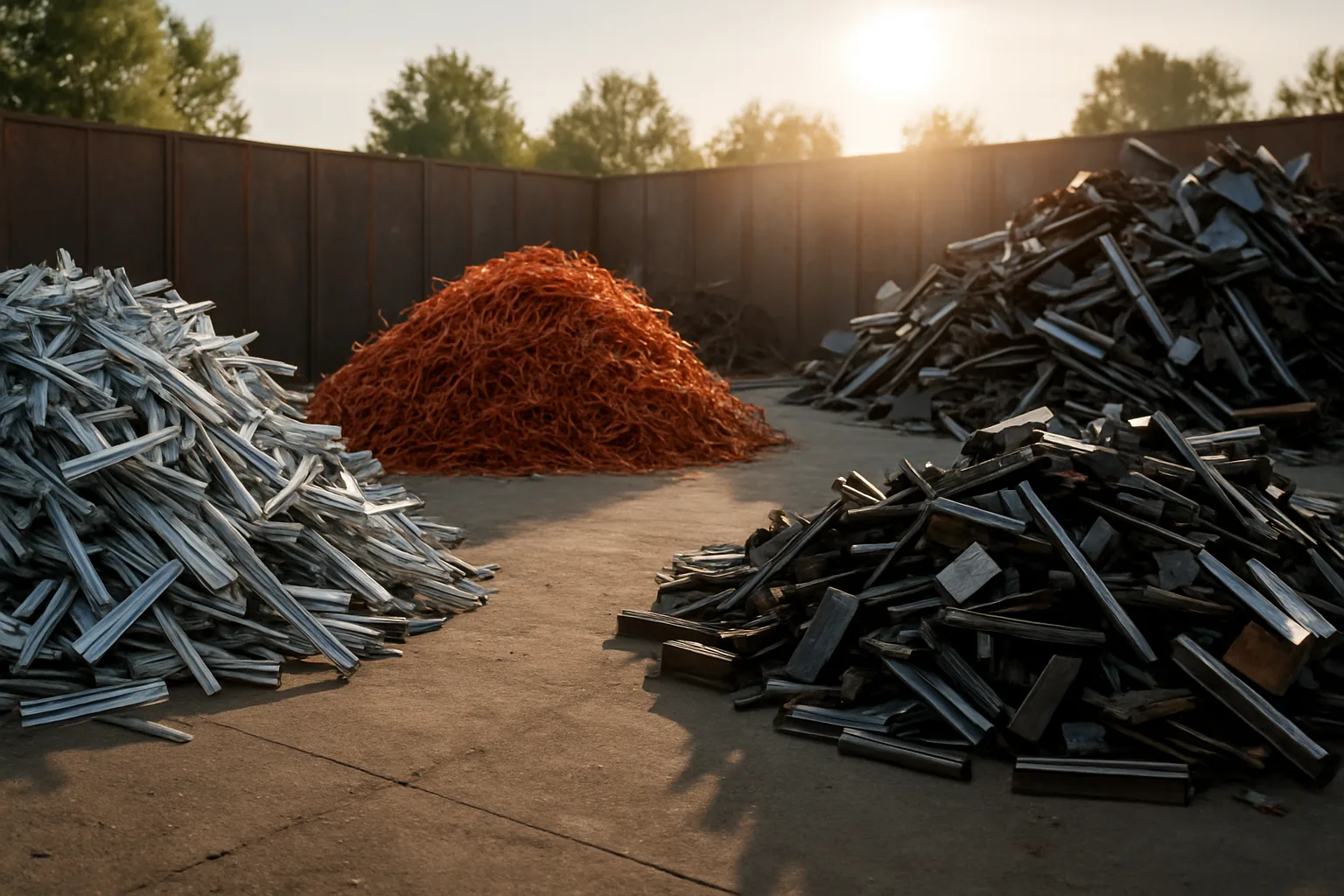
Most scrap sellers know they have metal. Fewer know what kind — and that gap costs them money every single time they show up at a yard. Ferrous and non-ferrous scrap aren't just industry jargon. They're two completely different markets, two different price ranges, and two different strategies for getting paid what your material is actually worth.
If you're selling scrap in Sudbury, Ontario — where mining and industrial activity mean heavy metal volumes are a daily reality — understanding this distinction isn't optional. It's the foundation of every smart scrap decision you'll make. Whether you're hauling steel beams, copper wire, or a load of catalytic converters, knowing which category your metal falls into tells you where to sell, what to expect, and how to avoid leaving cash on the table.
Let's break it down clearly, practically, and without the fluff.
Ferrous Metals: The Heavy Lifters of the Scrap World
Ferrous metals contain iron. That's the defining characteristic. Steel and cast iron make up the vast majority of ferrous scrap that moves through yards across Ontario. These materials are magnetic — run a magnet over an unknown piece of metal and you've got your first answer. If it sticks, you're holding ferrous.
Ferrous scrap is priced by the ton, and the volumes are enormous. Think demolished structural steel, automotive frames, appliances, rebar, I-beams, and old industrial equipment. In a city like Sudbury, where the mining and construction sectors generate significant metal waste, ferrous loads are a constant stream. The steel scrap price today fluctuates based on global steel mill demand, domestic production levels, and the price of iron ore — all of which shift with trade conditions and industrial output in 2026.
Key characteristics of ferrous scrap:
- Magnetic — easy to identify with a basic magnet test
- Lower price per pound than most non-ferrous metals
- Traded by the ton — volume matters more than per-unit value
- Subject to mill demand — prices follow steel production cycles
- Common sources: vehicles, appliances, structural steel, industrial equipment
Don't underestimate ferrous just because the per-pound rate is lower. A full load of shredded steel adds up fast, and if you're running consistent volume, the cumulative value is substantial. The problem with ferrous isn't the material — it's the lack of competition when you're locked into one buyer. More on that shortly.
Non-Ferrous Metals: Where the Real Per-Pound Value Lives
Non-ferrous metals contain no iron. They don't rust the same way, they're generally lighter, and pound for pound, they pay significantly more. Copper, aluminum, brass, stainless steel, lead, nickel, zinc, and titanium all fall into this category. Catalytic converters — which contain platinum, palladium, and rhodium — are among the most valuable non-ferrous items in the scrap market today.
The copper price in Canada and the aluminum price in Canada are benchmarked against London Metal Exchange (LME) rates, adjusted for local market conditions and buyer margins. In 2026, global copper demand driven by electrification infrastructure, EV production, and data centre buildout keeps copper pricing volatile but generally elevated. Aluminum follows similar drivers. If you're sitting on copper wire, copper pipe, or aluminum sheet, you're holding material that commands real attention from serious buyers.
Common non-ferrous scrap categories:
- Copper: wire, pipe, tubing, busbars, transformers
- Aluminum: extrusions, sheet, cast, radiators, wire
- Brass: fittings, valves, plumbing fixtures
- Stainless steel: food-grade equipment, industrial components
- Lead: batteries, weights, sheet lead
- Catalytic converters: automotive cats containing platinum group metals
Non-ferrous is where documentation and buyer competition matter most. A buyer who knows you have no alternatives will offer a number that protects their margin, not yours. That's where platforms like SMASH change the equation — but more on that below. If you want to find the best Canadian scrap metal prices today, knowing whether your load is ferrous or non-ferrous is step one.
Why the Ferrous vs. Non-Ferrous Distinction Affects Your Selling Strategy
These aren't just metal categories. They're two different sales processes, and treating them the same way will cost you. Ferrous loads often move in volume with straightforward grading — clean steel, shredded, HMS (Heavy Melting Steel), and so on. Non-ferrous loads require more precise grading, better documentation, and — critically — more buyer competition to reveal true market value.
If you're running a mixed load out of Sudbury, you need to understand which portion of that load is driving your value. A trailer of mixed demolition scrap might be 80% steel by weight, but the copper wiring pulled from that same job might represent a significant chunk of the total payout if it's properly separated and sold into the right market.
Here's where most sellers leave money behind:
- Not sorting before selling. Mixed loads get graded at the lowest denominator. Separate your material and sell each grade properly.
- Selling non-ferrous to a single buyer without competing offers. One number is just one opinion. The market might pay more.
- Ignoring documentation for high-value non-ferrous. Catalytic converters especially require serial tracking, photo documentation, and proper paperwork in 2026's tightening regulatory environment.
- Not knowing current rates before you drive to a yard. Walking in blind means you can't push back on a low offer.
For Sudbury sellers, there are additional nuances. The city's industrial and mining heritage means access to specialty metals — nickel-bearing alloys, industrial stainless, and heavy non-ferrous components — that most residential sellers never encounter. Knowing how to classify and sell those materials correctly can significantly change your outcome.
Selling Catalytic Converters: The Most Misunderstood Non-Ferrous Category
Catalytic converters deserve their own section because they're simultaneously the most valuable and most complicated non-ferrous item a seller can bring to market. The platinum group metals (PGMs) inside — platinum, palladium, and rhodium — fluctuate dramatically and independently from base metals. A converter that paid one rate in 2024 may pay differently today based on PGM spot prices alone.
If you want to sell catalytic converters online, the process has evolved. In 2026, provincial and federal regulations in Canada require proper documentation for cat sales — including vehicle identification, seller information, and in many cases photographic records of VINs and serial numbers. This isn't bureaucracy for its own sake. It's anti-theft compliance that legitimate buyers now require as a baseline.
SMASH handles this directly. The platform's VIN lookup and serial tracking tools mean your cats are documented before they go to auction. That documentation actually increases buyer confidence, which supports better price discovery. More confident buyers bid more aggressively. That's not marketing — that's how competitive markets work. You can find the best price for your scrap in Canada when buyers are competing for documented, verified material.
If you're managing converter inventory through Sudbury scrap metal services, the combination of proper documentation and auction-format selling is the most transparent path to market value available right now.
How a Scrap Metal Auction Changes the Price Discovery Game
Here's the core problem with the traditional scrap selling process: one buyer, one phone call, one number. That number might be fair. It might not be. You have no way to know. The old way depends entirely on your relationship with a single buyer and your willingness to either take what's offered or spend hours making more calls.
A scrap metal auction changes the structure of that transaction. When multiple vetted buyers compete for your material — whether it's a load of clean copper, a pallet of cats, or a mix of aluminum extrusions — the price discovery process happens in the open. You see competing bids. The market tells you what your load is worth, not one buyer's margin calculation.
SMASH is built specifically for this. The platform connects scrap sellers with vetted buyers across North America, runs competitive auctions for loads of non-ferrous and high-value ferrous material, and handles auto-invoicing so the paperwork doesn't become another job. No subscription fees — SMASH only wins when the seller wins. That structure matters. It means the incentive is aligned with getting you the best outcome, not locking you into a monthly cost regardless of results.
For sellers across Ontario — including those moving significant volumes through Sudbury — this kind of platform access was simply unavailable through traditional channels. You either knew the right buyers or you didn't. Now the infrastructure exists to run your scrap like a business, not a guessing game. Read Canadian scrap metal pricing guides to get sharper on grading, market timing, and what buyers actually look for before they bid.
Practical Steps: Sorting, Grading, and Getting Paid Right in Ontario
Whether you're a Sudbury yard operator, an independent scrapper, or a business cleaning out old equipment, the practical steps for maximizing your scrap value are consistent. The ferrous vs. non-ferrous distinction is where it starts — but execution is where it ends up in your pocket.
Step 1: Sort before you sell. Separate ferrous from non-ferrous at the source. Don't co-mingle copper with steel. Don't throw cats in with aluminum. Each material class has a grade, and that grade determines your price.
Step 2: Know the current market before you commit. The best scrap metal prices in Ontario aren't posted on a board at one yard — they exist across a network of buyers. Check current Canadian scrap metal prices before you load the truck.
Step 3: Document your high-value material. Photos, weight tickets, VINs for cats, serial numbers where required. This isn't optional anymore — it's expected by serious buyers and required by regulation for certain materials.
Step 4: Sell into competition. One offer is one data point. A scrap metal auction gives you a real market. For non-ferrous loads especially, the difference between a single-buyer quote and a competitive auction result can be significant.
Step 5: Use the right platform for the right load. Not every load needs an auction. A full trailer of HMS might sell efficiently through a direct yard relationship. A pallet of mixed cats, a load of clean copper wire, or specialty non-ferrous material — that's where SMASH earns its place in your selling process.
The metal market doesn't reward loyalty to a single buyer. It rewards sellers who understand their material, document it properly, and put it in front of real competition. That applies whether you're in Sudbury, anywhere across Ontario, or anywhere else in Canada.
Ready to stop guessing and start selling with real market data behind you? Get the best Canadian scrap metal prices — check rates at best-scrap-metal-prices.ca and see what your load is actually worth before you commit to a number.
Disclaimer: Scrap metal prices fluctuate daily based on global commodity markets, local supply and demand, and material grade. Always verify current rates before selling. Prices referenced in this article are general market context for August 2026 and are not guaranteed offers.
Frequently Asked Questions
Q: What is the difference between ferrous and non-ferrous scrap metal?
Ferrous metals contain iron — steel and cast iron are the most common examples — and are magnetic. Non-ferrous metals contain no iron, are generally non-magnetic, and include copper, aluminum, brass, and catalytic converter materials. Non-ferrous scrap typically commands a higher price per pound, while ferrous scrap is traded in larger volumes at lower per-pound rates.
Q: How does a scrap metal auction work in Canada?
A scrap metal auction connects sellers with multiple vetted buyers who compete for your load. Instead of accepting one buyer's quote, you see competing bids — which reveals the actual market value of your material. Platforms like SMASH run these auctions for non-ferrous and high-value loads, handling documentation, invoicing, and buyer verification in one place. No subscription fees — you only pay when a deal closes.
Q: Where can I find the best scrap metal prices in Sudbury, Ontario?
Scrap metal prices in Sudbury vary by yard, material grade, and daily market conditions. The most reliable approach is to check current rates across multiple buyers before committing to a sale. For high-value non-ferrous loads, a competitive auction format — like what SMASH offers — can help reveal true market value rather than relying on a single quote from one local buyer.
Q: Do I need documentation to sell catalytic converters in Ontario?
Yes. In 2026, selling catalytic converters in Ontario requires seller identification, vehicle information, and in many cases photographic records of VINs and serial numbers. This applies to both yards and online platforms. SMASH's built-in VIN lookup and serial tracking tools are specifically designed to handle this documentation requirement, which also increases buyer confidence and supports better pricing outcomes.
Q: Is copper or aluminum worth more per pound in Canada right now?
Copper consistently trades at a higher price per pound than aluminum in Canada, driven by global demand for electrical infrastructure, EV manufacturing, and data centre construction. However, both are subject to daily LME fluctuations and local buyer margins. Always check current rates before selling — prices can shift meaningfully week to week. Visit best-scrap-metal-prices.ca for up-to-date Canadian non-ferrous pricing context.
Stay sharp on scrap metal markets — follow SMASH on LinkedIn for industry updates, pricing trends, and insights that help Canadian sellers make smarter decisions.
```