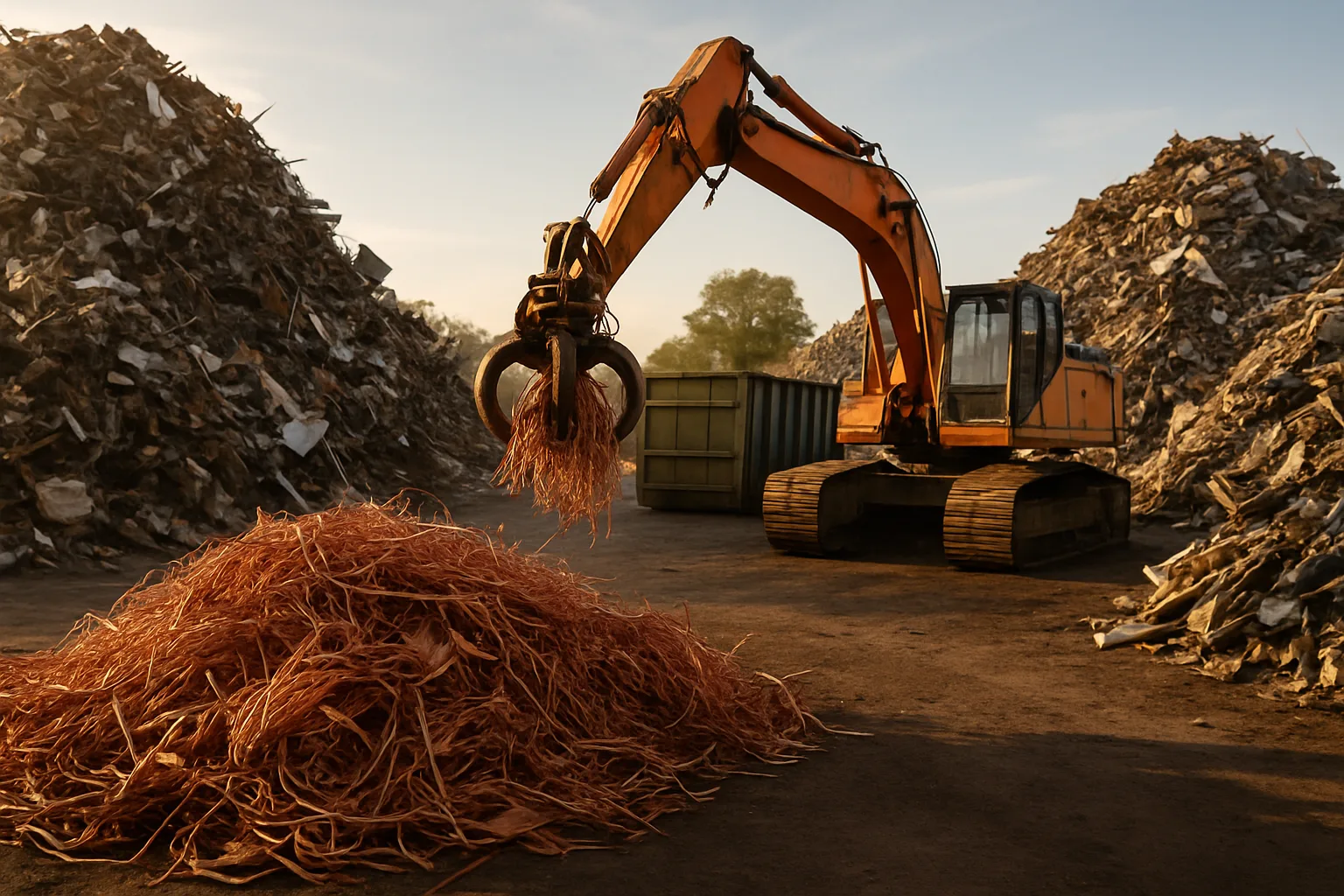
Why the Copper Scrap Price Today Isn't the Same as Yesterday — And What That Means for Your Yard
You checked the copper price on Monday. You waited until Thursday. Now the number looks different and you're not sure if you missed your window or caught a better one. This isn't a glitch — it's how scrap metal markets actually work. Understanding daily price fluctuations isn't just useful. It's the difference between leaving money on the table and timing a load right.
The copper scrap price today reflects a chain of inputs that reset constantly: London Metal Exchange (LME) spot prices, currency movements, domestic mill demand, export volumes, and what competing yards are paying. None of those inputs hold still. If you're selling scrap metal in Canada — whether you're running a yard in Brandon, processing loads in Winnipeg, or managing collections across Manitoba — daily market awareness isn't optional. It's your competitive edge.
What Actually Drives Daily Scrap Metal Price Fluctuations in Canada
Let's get specific. Scrap metal prices in Canada don't move on a whim. They follow a set of real-world signals that shift every trading day. Knowing those signals helps you read the market instead of just reacting to it.
LME and COMEX copper benchmarks set the baseline. Canadian scrap yards price copper relative to the COMEX spot — typically expressed as a discount to cathode depending on grade, cleanliness, and form. When COMEX copper moves up even slightly, the copper scrap price today at your local yard tends to follow — though not always at the same pace or the same percentage.
- Currency exchange (CAD/USD): Most base metals trade in USD internationally. A weaker Canadian dollar can actually push CAD-denominated scrap prices higher, even when LME prices are flat. A strong loonie compresses those numbers.
- Domestic mill demand: Steel mills, copper refiners, and aluminum smelters adjust buying appetite based on their own order books. When a mill is running hot, they pull more scrap. When they're slow, they get selective.
- Export market activity: Offshore demand — particularly from Asian buyers — creates competition for North American scrap. High export activity tightens domestic supply and supports prices.
- Freight and logistics costs: BOL costs, trucking rates, and rail capacity affect net returns. A strong gross price means less if getting the load out costs more.
- Seasonal demand cycles: Summer construction drives rebar and structural steel demand. Winter slowdowns in some regions can soften non-ferrous volumes temporarily.
For sellers doing scrap metal recycling in Brandon or anywhere across the Prairies, geography adds another layer. Distance to major processing hubs, regional oversupply of specific grades, and local yard competition all affect what price you actually see at the scale.
Copper, Aluminum, and Steel: How Each Metal Responds Differently
Not all metals move the same way. Watching one price doesn't tell you what's happening across your whole inventory. Each metal category has its own drivers, and understanding that breakdown helps you prioritize what to move and when.
Copper is the most sensitive to global signals. It's often called "Dr. Copper" because it tracks broader economic activity closely. Industrial output data from China, U.S. manufacturing PMI readings, and energy sector investment all move copper. For Canadian sellers, the copper price Canada benchmark can shift meaningfully within a single week when macro data surprises on either side.
Aluminum responds to energy prices more than most metals. Smelting aluminum is energy-intensive, so power cost changes affect production economics and, by extension, scrap demand. The aluminum price Canada also reflects automotive sector activity, since vehicle production drives a significant share of aluminum scrap consumption. Watch what's happening in auto manufacturing to read aluminum direction.
Steel and ferrous grades track mill utilization rates and construction demand. The steel price Canada at the shredder or mill buy level moves on infrastructure project pipelines, housing starts, and what U.S. mills are paying — since cross-border competition for ferrous scrap is real. HMS (heavy melt steel), shredded, and busheling all price differently based on chemistry and form.
If you want to check current Canadian scrap metal prices across these categories, having a single reference point saves the time of calling three different yards to triangulate what the market is actually doing.
The Old Way of Pricing — and Why It Costs You
Here's the honest problem with how most scrap gets priced and sold in Canada right now. One buyer. One phone call. You ask what they're paying, they give you a number, and you either take it or keep calling. That's it. No competition. No transparency. No way to know if the number you heard is anywhere close to what the market would actually pay.
That single-call process made some sense when logistics were harder and information moved slowly. It doesn't make sense in 2026, when real-time price data is accessible and buyer networks span the continent. The gap between what one buyer quotes and what a competitive market would reveal can be significant — and you'd never know it without testing the market.
This is exactly the problem SMASH Recycling — where verified buyers bid on your metal was built to fix. Instead of one buyer setting the price, multiple vetted buyers compete through an auction format. Competition creates price discovery. Documented inventory — photos, serial tracking, weight confirmations — gives buyers more confidence to bid aggressively. More confidence means stronger bids.
For yards in Brandon or across Manitoba looking to move non-ferrous loads, cats, cores, or mixed commodity lots, the auction model removes the guesswork. You're not accepting someone's opening offer — you're seeing what the market will actually pay.
How to Read the Market Before You Sell — Practical Steps
You don't need to be a commodities trader to time your scrap sales better. You need a simple process and the right data sources.
- Check LME and COMEX benchmarks daily. Free resources publish these numbers every trading day. COMEX copper is your primary signal for non-ferrous. LME aluminum is your aluminum baseline. These update overnight and reflect global trading.
- Track the CAD/USD rate. Because metals trade in USD, the exchange rate affects your CAD payout directly. A 1-cent move in the dollar matters on a large load.
- Watch local yard posted prices. Published buy prices at regional yards give you a spot check on what the local market looks like. They don't always reflect best available pricing, but they anchor your expectations.
- Time large loads strategically. Don't hold material for weeks hoping for a spike — market timing is unpredictable and storage costs add up. But if you're aware of a macro catalyst (major economic data release, trade policy news, seasonal demand shift), it's worth factoring into your decision.
- Document your loads well before selling. Clean documentation — photos, grades clearly separated, weights verified — makes your material more attractive to buyers and removes friction from the pricing conversation.
Platforms like SMASH make it easy to combine good documentation with buyer competition. When buyers can see exactly what they're bidding on — accurate photos, serial tracking on cats, grade confirmation on non-ferrous — they price with more confidence. That confidence shows up in the final number.
To find the best Canadian scrap metal prices today, the starting point is always market awareness. The finishing point is making sure you're selling into competition, not accepting the first number you hear.
Regulation Updates Affecting Scrap Metal Sellers in Canada — June 2026
The regulatory environment for scrap metal in Canada has continued to evolve through 2026. Provincial scrap dealer and recycler regulations vary — but the trend has moved consistently toward more documentation requirements, buyer verification standards, and record-keeping obligations. British Columbia, Ontario, and Alberta have all tightened their frameworks for metals that appear on regulated material lists.
For Manitoba operators including yards in Brandon, staying current on provincial requirements around catalytic converter records (serial numbers, seller ID, transaction documentation) remains important. Fines for non-compliance have increased in several provinces. Proper documentation isn't just good business practice — it's increasingly a legal requirement.
The good news: platforms with built-in serial tracking and photo documentation — like SMASH — satisfy many of these record-keeping requirements as a byproduct of normal use. You're not doing extra work. You're just using a system that documents by default.
To stay current on regulation changes affecting how you sell scrap in Canada, read Canadian scrap metal pricing guides and industry updates that break down what these shifts mean for your operation.
Frequently Asked Questions
Q: Why does the copper scrap price today differ from yesterday's price?
Copper scrap prices update daily because they track global benchmarks like COMEX copper, currency movements between CAD and USD, and domestic mill demand. All of these inputs change every trading day. The price you see Thursday morning reflects overnight international market activity that closed after Wednesday's session.
Q: Where can I find the best scrap metal prices in Brandon, Manitoba?
Start by checking posted prices at local yards in Brandon, then compare against regional platforms that aggregate buyer interest. A platform like SMASH connects you to vetted buyers across North America who compete for your material, which can reveal stronger pricing than a single local buyer quote. You can also check current Canadian scrap metal prices to benchmark what you're being offered.
Q: Does the Canadian dollar affect what I get paid for scrap metal in Canada?
Yes, directly. Most base metals price in USD internationally. When you sell scrap metal in Canada and receive CAD, the exchange rate between the two currencies affects your net payout. A weaker Canadian dollar can push your CAD-equivalent price higher even if the USD benchmark holds flat.
Q: What's the best way to sell scrap metal near me for cash in Canada?
Check local yard prices, have your material properly sorted and documented, and don't accept the first number you hear without testing the market. Platforms like SMASH let multiple verified buyers compete for your load, which gives you a better read on true market value than a single buyer's opening offer.
Q: How often do scrap metal prices change in Canada?
Most grades reprice daily, driven by overnight LME and COMEX settlements. Some yards update their posted prices once or twice a week for operational simplicity, but the underlying market signals move every trading day. For large loads, it's worth checking current benchmarks the morning you plan to sell.
Disclaimer: Scrap metal prices fluctuate daily based on global commodity markets, currency exchange rates, and local demand conditions. All price references in this article are general and informational only. Always verify current rates directly with buyers or platforms before selling.
If you're selling scrap metal in Canada — whether you're moving a load of bright copper out of Brandon or a pallet of cats from anywhere in Manitoba — knowing what the market is actually paying matters more than ever. Don't guess, and don't stop at one buyer. Find the best Canadian scrap metal prices today and sell into a market that's working for you, not against you.
Follow SMASH on LinkedIn for regular scrap metal market updates, regulation changes, and pricing insights across Canada and North America.