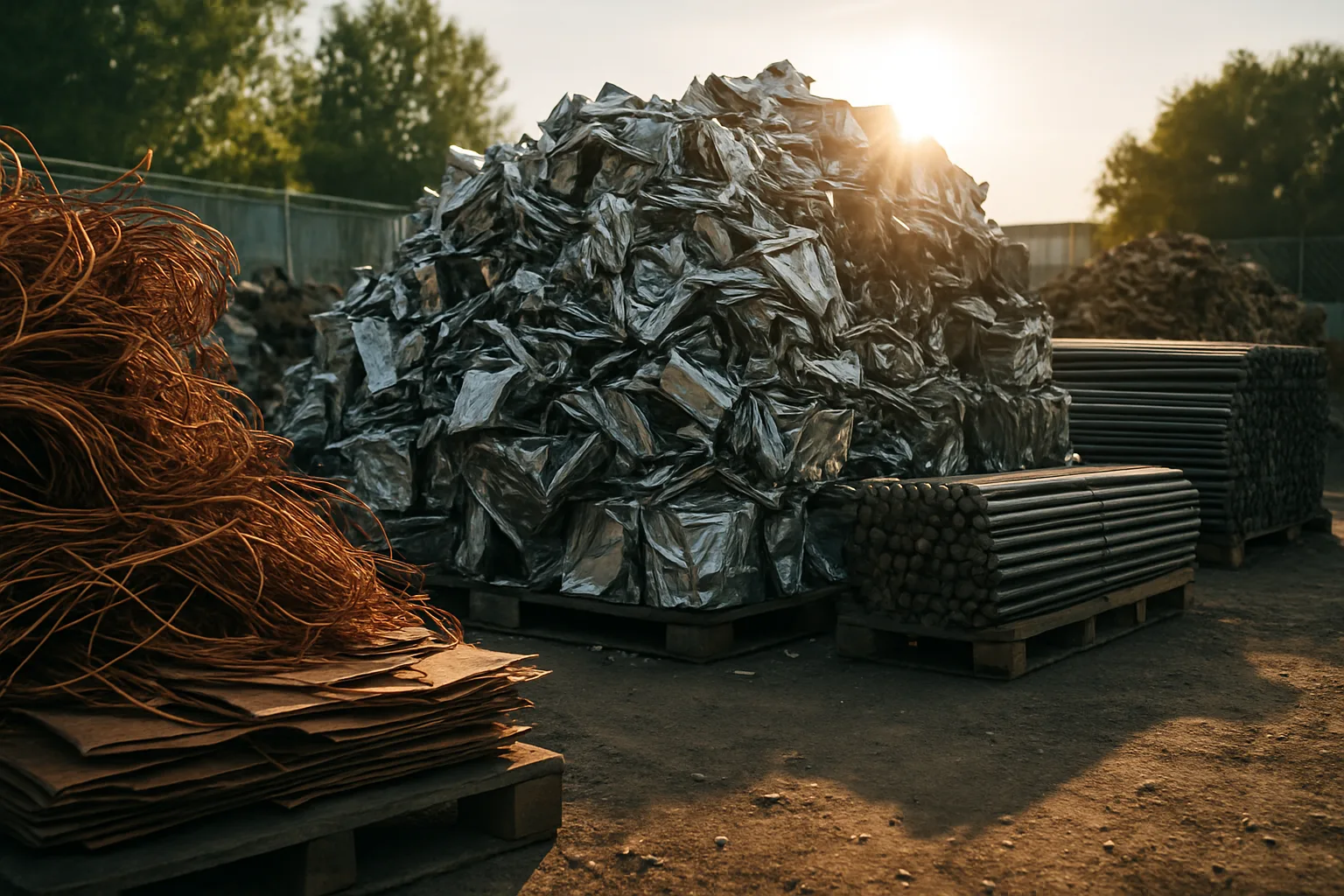
The Aluminum Scrap Price Today Is Moving — Are You Leaving Money on the Table?
Most small-scale collectors sell scrap the same way they always have: load it up, drive to the nearest yard, take whatever price they're offered. No comparison. No leverage. No real idea if that number is fair. If that sounds familiar, this article is for you.
The aluminum scrap price today shifts week to week — sometimes day to day — depending on global demand, exchange rates, and what local yards are willing to pay. If you're not tracking those moves, you're guessing. And guessing usually means leaving money behind.
This weekly roundup breaks down practical, actionable tips for small-scale collectors in Ontario who want to stop guessing and start earning more from every load. Whether you're hauling aluminum cans, copper wire, old rims, or a catalytic converter pulled from a junker, the approach is the same: know your material, know your market, and use every tool available to you.
Understand What You Have Before You Sell It
Scrap metal isn't one category — it's dozens of them, and the price difference between grades can be significant. Sorting your material before you show up at a yard is one of the fastest ways to increase your payout. Mixed loads get bought at the lowest common denominator. Clean, sorted material gets bought at the grade it actually is.
Here's a quick breakdown of the grades small collectors most commonly deal with:
- Aluminum cans (UBC — used beverage cans): Lower value per pound but easy to accumulate in volume. Clean and compacted loads move faster.
- Cast aluminum: Engine blocks, wheels, transmission housings. Heavier, higher per-pound value than cans. Strip out steel bolts and inserts before weighing.
- Extrusions and sheet aluminum: Window frames, siding, gutters. Keep these separate from cast. They price differently.
- Bare bright copper: The highest copper grade. No insulation, no coating, no oxidation. Worth significantly more than #2 copper wire.
- Insulated wire: Priced on recovery percentage. Know the jacket type before you sell.
- Catalytic converters (cats): Highly variable. Serial number, make, model, and condition all affect value dramatically. Don't sell blind.
Taking an extra hour to sort a load isn't lost time — it's earned money. Yards pay for what they see. Show them something clean and consistent, and the negotiation starts from a better place.
Track the Aluminum Scrap Price Today and Know When to Move
The aluminum scrap price today is a function of LME (London Metal Exchange) pricing, local yard spreads, and regional demand. In Ontario, yards in different cities — Kitchener, Hamilton, Barrie, Toronto — don't always pay the same rate on the same day. Supply and demand at the local level creates real variation.
Small collectors often don't have the volume to hold inventory the way a large commercial yard does. But that doesn't mean you can't be strategic about timing. A few habits that help:
- Check prices weekly, not monthly. Aluminum and copper can swing meaningfully over a few weeks. If you're sitting on a couple hundred pounds, knowing the trend matters.
- Call more than one yard. Even within Kitchener, different buyers will quote differently on the same material. One call is not a market — it's one data point.
- Watch commodity news briefly. You don't need a Bloomberg terminal. A quick scan of metal market headlines tells you whether aluminum is trending up or down before you make a trip.
- Use platforms that create competition. Services like SMASH put your material in front of multiple vetted buyers at once. More buyers means better price discovery — the market finds the real number instead of you guessing at it.
If you want to find the best Canadian scrap metal prices today, the key is consistent monitoring — not just checking once and assuming that number holds. Markets move. Your strategy should too.
Selling Catalytic Converters Online — Don't Undersell Your Cats
Catalytic converters are one of the highest-value items a small collector can come across, and one of the most commonly undersold. Walk into the wrong yard with a box of cats and you might walk out with half of what they're worth. The variation in cat pricing is enormous — a single unit can range from under $50 to several hundred dollars depending on the precious metal content inside.
The best scrap metal prices in Kitchener — or anywhere in Ontario — for catalytic converters almost never come from the first buyer you approach. Cats price on PGMs: platinum, palladium, and rhodium. Those metals fluctuate on their own separate market from base metals like aluminum and copper. A buyer who doesn't specialize in cats is likely to low-ball you because they're pricing in their own uncertainty.
This is exactly where selling catalytic converters online makes sense. Platforms that use serial tracking, VIN lookup, and photo documentation give specialized buyers the information they need to bid accurately. That documentation — real photos, real serial numbers — creates confidence. Confident buyers bid higher. Platforms like get competitive bids for your scrap in Canada through SMASH do exactly this: vetted buyers, real competition, full documentation.
Before you sell a cat:
- Photograph it clearly — top, bottom, and the serial number if visible.
- Note the vehicle it came from (year, make, model) if you have that information.
- Don't mix good units with damaged or empty shells. Separate them out.
- Get more than one offer. Always.
Best Scrap Metal Prices in Kitchener and Ontario — What Local Collectors Should Know
Kitchener sits in a competitive scrap corridor. You've got Hamilton to the east, Toronto not far beyond that, and yards scattered throughout Waterloo Region and surrounding communities. That geographic density is actually an advantage for sellers — there are multiple buyers within a reasonable driving radius, which means real competition if you're willing to use it.
The best scrap metal prices in Kitchener don't always come from the biggest yard. Sometimes smaller specialty buyers — particularly for non-ferrous material like copper, aluminum, and cats — will outpay the larger volume operations because they have lower overhead and more specific demand for quality material.
Ontario-wide, the scrap market in 2026 continues to reflect strong demand for secondary aluminum as manufacturers look to reduce their carbon footprint through recycled content. That structural demand is a tailwind for sellers — aluminum recycling is growing because the energy savings over primary production are real and measurable. Understanding that your material has industrial value beyond its weight helps you think like a seller, not just a collector.
To check current Canadian scrap metal prices and understand how regional rates compare, use resources that aggregate market data — not just one yard's posted board price. That posted number is where negotiation starts, not where it ends.
Small Load Strategy — How to Maximize Every Trip
If you're a small-scale collector, every trip costs you time and fuel. Making that trip count is as much about logistics as it is about pricing. Here's how to squeeze more out of every haul:
Batch your material by type, not by trip. Don't run to the yard with a half-load of mixed material just because you're nearby. Hold it until you have a clean, sorted load that's worth the drive. The per-pound price on a 200-lb load of clean aluminum is the same as on 50 lbs — but your fuel cost isn't four times higher.
- Keep a logbook. Track what you're collecting, approximate weight, and what you sold it for. Over time, patterns emerge — which materials move fastest, which buyers quote best, which seasons see price bumps.
- Invest in a basic scale. Knowing your approximate weight before you arrive at a yard means you can verify the weigh ticket. It also helps you decide whether a load is worth the trip yet.
- Build relationships with one or two yards — but don't be loyal to your own detriment. A good relationship with a yard operator matters for quick service and fair treatment. But loyalty shouldn't mean you never shop the price.
- Look for pickups when possible. For larger loads, some buyers and platforms offer scrap metal pickup, which eliminates your transportation cost entirely. This can be particularly useful in areas like Barrie or Hamilton where haul distance adds up.
For deeper guidance on how to approach sorting, pricing, and selling, read Canadian scrap metal pricing guides that break down the market by material type and region.
Why Competition Is the Collector's Best Tool
Here's the core truth about scrap pricing: a single buyer has no incentive to pay you more than they have to. That's not malicious — it's just how markets work. The only thing that changes that dynamic is competition.
When multiple vetted buyers are looking at the same material, they can't low-ball without losing the deal. They have to price accurately. That's the entire premise behind platforms like SMASH — not subscription fees, not guesswork, but competitive auctions where buyers bid on real documented loads. SMASH only wins when the seller wins. That alignment matters.
If you're a Kitchener scrap metal services user or anywhere else in Ontario, the auction model isn't just for commercial yards with full truckloads. It works for anyone with documented material and the willingness to let buyers compete for it.
The old way — one phone call, one buyer, one price — was always going to cost you. The market has a real number for your material. Competition finds it.
Stop guessing at aluminum scrap prices today. Get the best Canadian scrap metal prices — check rates at best-scrap-metal-prices.ca and make every load count.
Frequently Asked Questions
Q: How do I find the aluminum scrap price today in Kitchener?
The most reliable approach is to check a pricing aggregator like best-scrap-metal-prices.ca for current Canadian market rates, then call at least two or three local yards to compare. Posted board prices are a starting point — actual transaction prices depend on grade, quantity, and condition. Prices fluctuate regularly, so check before you make a trip.
Q: What are the best scrap metal prices in Kitchener right now?
Kitchener has multiple buyers for non-ferrous metals including aluminum, copper, and catalytic converters. The best price you'll get depends heavily on material grade, sort quality, and how many buyers you approach. Platforms like SMASH create real buyer competition, which typically reveals a stronger market price than any single yard quote. Always get more than one offer.
Q: Is it worth selling catalytic converters online instead of to a local yard?
For most collectors, yes — especially if you have more than one unit or if the vehicles they came from are identifiable. Online platforms that use serial tracking and photo documentation attract specialized buyers who can price cats accurately based on PGM content. Local yards without that specialization tend to price conservatively to cover their uncertainty.
Q: Does SMASH work for small-scale collectors, or just commercial yards?
SMASH works for anyone with documented scrap material — you don't need to be running a full commercial yard. The key is that your load is sorted, photographed, and described accurately. Vetted buyers on the platform bid based on real information, which means better price discovery whether you're selling one catalytic converter or a pallet of aluminum extrusions.
Q: How much does the aluminum scrap price vary across Ontario?
Meaningfully — and more than most collectors expect. Yards in different cities price based on their own supply levels, transportation costs, and buyer demand. A yard in Hamilton might quote differently than one in Kitchener or Barrie on the same day for the same material. That's why comparison and competition are the most powerful tools a seller has.
Disclaimer: Scrap metal prices fluctuate daily based on commodity markets, local supply and demand, and material condition. All pricing information is general in nature. Always verify current rates directly with buyers or through a current pricing resource before selling.
Follow SMASH on LinkedIn for weekly scrap metal market insights, pricing trends, and industry updates across North America.
```