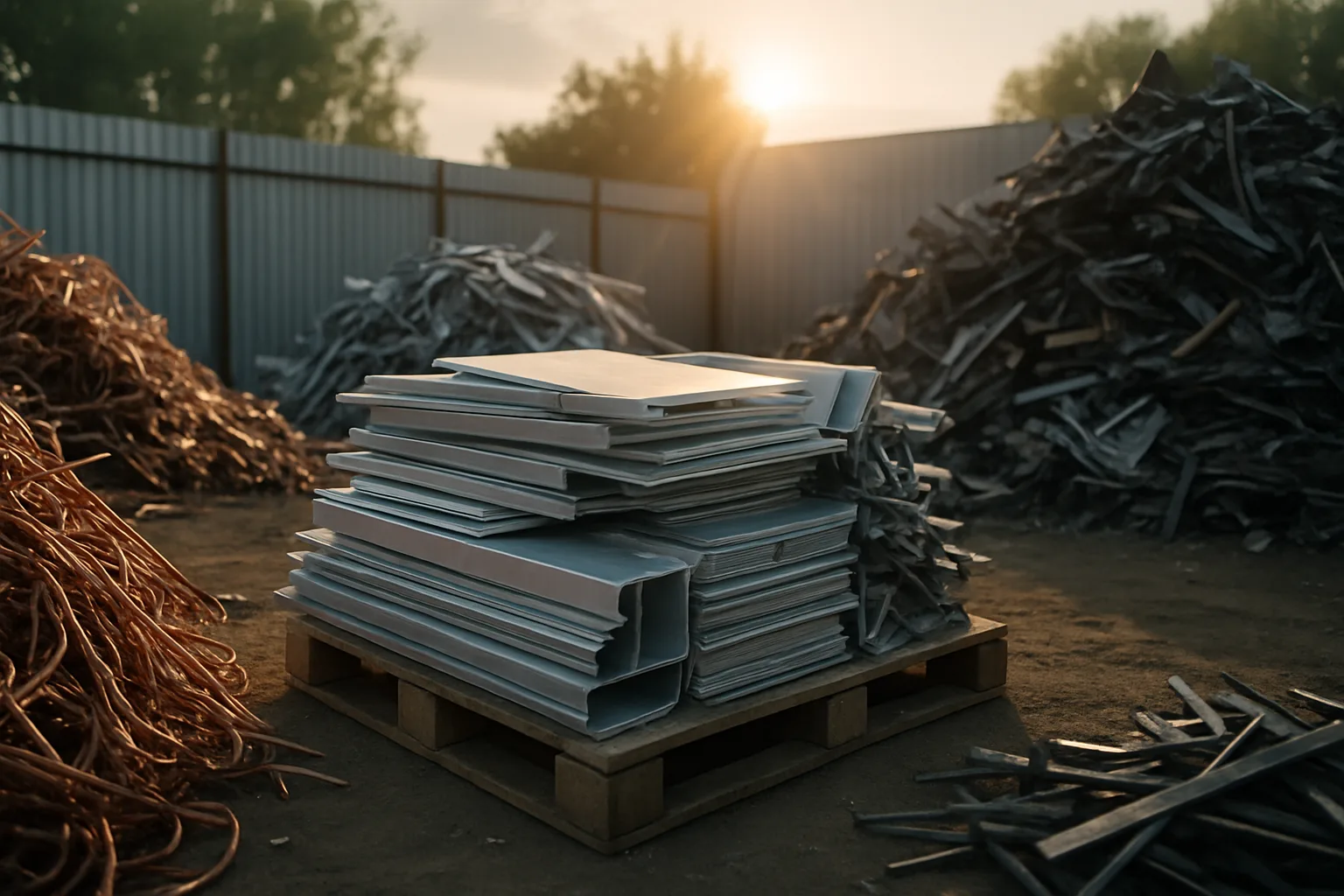
Most aluminum sellers leave money on the table — not because the market is bad, but because they don't know what grade they're sitting on. If you're hauling mixed aluminum to a Calgary yard and getting paid like it's shred, you're likely underpricing some of your best material.
This guide breaks down aluminum scrap grades, explains how grading affects your payout, and shows you how to position your loads for better price discovery. And yes — we'll connect this to copper scrap prices Calgary sellers are tracking too, because smart scrap sellers don't just watch one metal.
Why Aluminum Grades Matter More Than You Think
Aluminum isn't one price. It's a dozen prices depending on alloy, contamination, form factor, and who's buying. A yard paying $0.55/lb for mixed aluminum might pay $0.90/lb or more for clean 6061 extrusion. That's not a small gap — on a 2,000 lb load, that's $700 left on the table.
Grades exist because smelters need predictable chemistry. When you mix 2000-series aerospace alloys with cast transmission housings, the buyer can't use either efficiently. Clean, sorted, correctly identified aluminum means less processing cost on the buyer's end — and they'll pay for that.
The major categories you'll encounter in Alberta yards:
- Zorba — shredded mixed non-ferrous, lowest value per pound
- Taint/Tabor — mixed low-copper aluminum, sheet and castings combined
- Painted siding / Irony aluminum — lower grade, ferrous content discounts
- Extrusion (6063/6061) — clean architectural aluminum, strong pricing
- MLC (Mixed Low Copper) — common industrial category
- Thermo / Old Sheet — clean aluminum sheet, coil, or litho
- Clips (clean aluminum wire/sheet scrap) — manufacturing drops, high purity
- Cast aluminum — engine blocks, transmission cases, machinery housings
- Wheels (aluminum alloy rims) — often priced by piece or per pound with a premium
Knowing which bucket your material falls into is step one. Sorting it before you show up at a Calgary yard — or before you post it to a compare scrap metal bids from Canadian buyers — is step two.
How to Sort and Prepare Aluminum for Maximum Payout
Preparation is leverage. A buyer looking at a clean, sorted, photographed load has fewer excuses to discount it. A buyer looking at a wet bin of mixed cans, castings, and painted siding has every reason to lowball you.
Here's what actually moves the needle on price:
- Remove iron and steel. Even small bolts or brackets in an extrusion load can drop the grade. Use a magnet. Takes five minutes, changes your classification.
- Separate castings from wrought. Cast aluminum (engine blocks, pump housings) has different alloy chemistry than extruded or rolled product. Mixing them costs you.
- Pull the copper-bearing material. Radiators, electric motors attached to aluminum housings — strip them or flag them. Don't contaminate a clean aluminum load with copper-bearing components.
- Keep wheels separate. Alloy rims almost always command a premium per pound compared to mixed cast. Don't let them get buried in a general cast aluminum pile.
- Document what you have. Weights, photos, load description. Platforms like SMASH use photo documentation and inventory tools so buyers can bid with confidence — which means better price discovery for you.
Clean loads get competitive bids. Messy, ungraded loads get a single lowball number from whoever you happened to call that morning. That's the old way. It costs yards and individual sellers real money every week.
Scrap Metal Prices Calgary: What's Driving Aluminum Markets in 2026
Aluminum pricing in 2026 is being shaped by a handful of forces worth understanding if you're a regular seller. LME aluminum benchmarks, North American smelter capacity, and regional scrap supply all feed into what a Calgary buyer offers you today versus last month.
The energy cost story matters here. Alberta's industrial electricity rates affect local smelting economics — smelters running higher energy costs need tighter margins on scrap purchases. That doesn't mean prices crater, but it does mean the premium for clean, well-graded material gets larger when smelters need to minimize processing cost.
Automotive demand remains one of the biggest consumption drivers for secondary aluminum. With vehicle lightweighting programs accelerating through the mid-2020s, cast and wrought aluminum from end-of-life vehicles is in consistent demand. Calgary's position as a hub for Alberta's oilfield services sector also means industrial aluminum scrap — equipment housings, structural components, fabrication drops — moves through local yards in meaningful volume.
For sellers tracking find the best Canadian scrap metal prices today, aluminum and copper often move in the same direction because both are non-ferrous metals heavily tied to manufacturing and construction activity. When one softens, check the other. When both are strong, that's your window to move larger loads.
Disclaimer: Aluminum and copper scrap prices fluctuate daily based on LME benchmarks, local supply, and buyer demand. Always check current Canadian scrap metal prices before committing to a sale.
Copper Scrap Prices Calgary: The Non-Ferrous Price You Can't Ignore
If you're sorting aluminum, you're almost certainly generating copper scrap too. Wire, fittings, pipe, bus bar — copper shows up alongside aluminum in demolition, electrical work, HVAC teardown, and manufacturing scrap. Understanding both markets makes you a smarter seller.
Copper scrap grades follow a similar logic to aluminum. Bare bright copper wire commands the top price. Contaminated or insulated copper gets discounted based on recovery percentage. #1 copper (clean pipe and fittings, no solder) sits just below bare bright. #2 copper (dirty fittings, mixed plumbing scrap) gets a further step down.
For Calgary sellers, copper scrap prices track LME copper closely, with a local basis that reflects transport costs and regional yard competition. The more buyers competing for your load, the tighter that basis gets. A B2B scrap metal marketplace like SMASH creates exactly that competition — multiple vetted buyers seeing the same documented load and bidding against each other instead of you calling one number and taking whatever they offer.
If you want to understand how competitive your local bids actually are, post a clean, documented copper or aluminum load to SMASH and see what the market says. That's not a sales pitch — that's just how price discovery works. One buyer gives you one data point. Five buyers give you a market.
Using a B2B Scrap Metal Marketplace to Capture More Value
The traditional scrap selling process hasn't changed much in decades. You call a buyer, they quote you a number based on their current inventory and margin needs, you accept or walk. You rarely know if that number was fair. You never know what the next yard would have paid.
SMASH changes that dynamic. It's a B2B scrap metal marketplace built for yards and serious sellers — not hobbyists with a trunk load of cans. When you list a load on SMASH, vetted buyers across North America can see it, evaluate it, and bid on it. The auction format means buyers compete, not you.
Features that matter for aluminum and copper sellers specifically:
- Inventory tool — log your grades, weights, and descriptions before posting
- Photo documentation — show buyers exactly what they're bidding on
- Serial tracking — relevant for cores, catalytic converters, and tagged industrial material
- Auto-invoicing — paperwork handled, including GST/HST treatment for Canadian sellers
- Vetted buyers only — no tire kickers, no wasted time
- No subscription fees — SMASH only wins when you win
For Calgary-area sellers moving regular volume of non-ferrous material, this kind of platform pays for itself fast. If you're already Calgary scrap metal services and looking to get more competitive bids on your loads, SMASH is worth understanding.
You can also read Canadian scrap metal pricing guides to sharpen your market knowledge before you sell.
Getting Top Dollar: The Checklist Before You Sell
Whether you're moving a single pallet of clean extrusion or a full truckload of mixed non-ferrous from a demolition job, the same principles apply. Price is partly market, partly preparation, and partly who's bidding.
Before you sell aluminum or copper scrap in Alberta, run through this:
- Have you sorted by grade? (Extrusion separate from cast, clean wire separate from insulated)
- Have you removed ferrous contamination with a magnet?
- Have you weighed or estimated your load so you're not flying blind?
- Have you documented the load with photos — especially for larger volumes?
- Have you gotten more than one quote? (One quote is not a market price)
- Do you know where aluminum and copper are trading today, not last week?
If you answered no to any of these, you're likely leaving money on the table. The good news: every one of these is fixable before your next load moves.
The best scrap sellers treat their material like any other inventory — with documentation, market awareness, and a process for getting competitive bids. That's not complicated. It's just discipline. And in a volatile non-ferrous market, that discipline compounds fast.
If you're ready to stop guessing and start selling with real market data behind you, find the best Canadian scrap metal prices today and see what your material is actually worth in 2026.
Frequently Asked Questions
Q: What aluminum grade gets the highest scrap price in Calgary?
Clean extruded aluminum — particularly 6063 and 6061 architectural extrusion with no paint, no iron, and no mixed alloys — typically commands the highest price per pound. Aluminum alloy wheels (clean rims) also price well. The cleaner and more consistent your material, the stronger the bid you can expect from Calgary buyers.
Q: How are copper scrap prices Calgary yards pay calculated?
Calgary copper scrap prices are benchmarked against the London Metal Exchange (LME) copper spot price, adjusted for a local basis that reflects transport, processing, and regional supply. Grade is the biggest variable — bare bright wire pays more than #2 copper with solder or insulation. Always check current rates before selling, as LME prices move daily.
Q: What's the difference between #1 and #2 copper scrap?
#1 copper is clean, uncoated, unalloyed copper pipe, fittings, or bus bar with no solder and no paint. #2 copper includes mixed plumbing scrap, fittings with solder joints, or slightly contaminated material. The price gap between the two can be significant — sorting and cleaning your copper before selling almost always pays off.
Q: Is it worth separating aluminum grades before going to a scrap yard in Alberta?
Yes — almost always. Mixing cast aluminum with extruded aluminum or contaminating a clean load with irony material can cost you a significant premium per pound across the entire load. Even a basic sort by form (extrusion vs. cast vs. sheet) before you arrive at an Alberta yard can noticeably improve your payout.
Q: How can a B2B scrap metal marketplace help me get better prices on aluminum and copper?
A B2B scrap metal marketplace like SMASH brings multiple vetted buyers to your load instead of relying on a single phone call to one yard. When buyers compete for the same documented load, you get real price discovery rather than one buyer's margin calculation. More competition generally means better outcomes for sellers — especially on larger or higher-grade loads.
Stay sharp on market moves and industry news — follow SMASH on LinkedIn for regular scrap metal market insights and platform updates.